


Did you know that following the five daily Prophetic traditions can cut anxiety by up to 60% for Muslims? In today’s fast world, 76% of British Muslims struggle to mix faith with modern life. Yet, these timeless teachings offer profound benefits.
The traditions of Prophet Muhammad (peace be upon him) are a complete guide for living. They add to the Quran’s teachings with real-life examples for worship, ethics, and social life.
As British Muslims, we face challenges balancing our spiritual heritage with modern life. This guide shows how ancient wisdoms are still relevant today. They offer solutions to today’s problems and deepen our bond with Allah.
Morning and evening rituals can centre your day and improve sleep. These traditions are more than religious duties. They are a complete way to live a balanced, meaningful life.
Key Takeaways
- Prophetic traditions offer practical guidance for modern challenges
- Following the Sunnah creates balance between spiritual and worldly needs
- These practices can be gradually incorporated into contemporary British Muslim life
- The Prophet’s example covers all aspects from personal hygiene to social interactions
- Implementing these traditions strengthens your connection with Islamic heritage
- Many Sunnah practices align with modern wellness and mindfulness approaches
The Significance of Following Sunnah in Modern Times
In today’s world, the Prophetic traditions guide British Muslims. They help us deal with modern life while keeping our faith strong. The Sunnah’s wisdom is timeless, offering practical advice for all ages and cultures.
It’s not easy to mix old Islamic ways with new British life. But the beauty of these teachings is that they work for everyone, everywhere.
The Sunnah is more than old habits. It’s a complete guide for living, covering all parts of our lives. It teaches us about hygiene, business, family, and community. Following these teachings connects us with a timeless spiritual heritage that meets today’s needs.
Defining Sunnah and Its Importance
The term Sunnah means the sayings, actions, and approvals of the Prophet Muhammad (peace be upon him). It’s a key source of Islamic guidance, after the Quran. It shows us how to apply Quranic teachings in our daily lives.
The Sunnah is crucial for understanding Islamic law (Sharia). It helps us interpret the Quran and clear up any doubts. The Quran itself says:
“Say (O Muhammad), If you love Allah, then follow me, and Allah will love you and forgive your sins.” (Surah Aal-e-Imran 3:31)
Following the Sunnah is not just a duty. It’s a way to honour Prophet Muhammad’s teachings. It links today’s Muslims to the earliest believers, keeping our spiritual knowledge alive.
Connecting with Prophetic Traditions in the 21st Century
The Sunnah is timeless and fits all eras and cultures. For British Muslims, it offers solutions to today’s problems. It guides us to live with integrity and faith, without leaving society.
Today’s world is different from the Prophet’s time. Yet, the Sunnah’s principles of moderation, ethics, mindfulness, and compassion are still relevant. They help us decide about privacy, work-life balance, and interfaith relations.
The Sunnah teaches us to find balance in our lives. The Prophet Muhammad (peace be upon him) said: “The best of affairs is the middle course.” This approach helps us stay true to our faith while being part of British society.
Spiritual and Practical Benefits of Sunnah
Following the Sunnah has many benefits for our spiritual and daily lives. It strengthens our bond with Allah by guiding our actions. Every Sunnah we follow is a way to worship, helping us grow spiritually.
The practical benefits are also significant. Many Sunnah practices are good for our health. For example, eating in moderation is a Sunnah and good for our health.helpful
The Sunnah also helps us build strong communities and ethical relationships. By following the Prophet’s examples, we create a more harmonious society. It teaches us honesty, kindness, and respect for diversity, aligning with British values.
Most importantly, following the Sunnah gives us a sense of authenticity and connection. In a world of disconnection, these practices remind us of our purpose. They show us that our actions can have spiritual meaning with the right intention.
Essential Sunnah Practices for Everyday Life
Following the Sunnah daily gives us a clear guide to excellence. These practices are not just rituals but enrich our lives and connect us with Allah. By adopting these traditions, we live our faith in a way that fits modern British society.
Sunnah practices are useful in many areas of life. They cover personal care, social interactions, eating, and sleeping. Each practice holds wisdom that benefits us, even if science confirms it later.
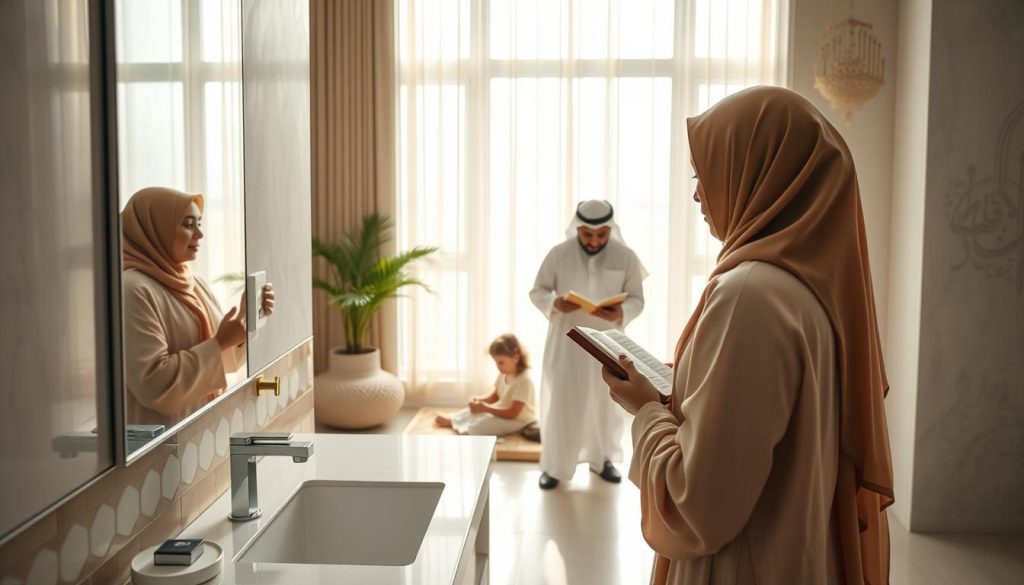
The Concept of Ihsan in Daily Actions
Ihsan is at the heart of Sunnah. It means doing everything with excellence, knowing Allah is watching. The Prophet Muhammad (peace be upon him) said Ihsan is worshipping Allah as if you see Him, even when you don’t.
This mindset turns everyday actions into acts of worship. Eating according to Sunnah is not just about table manners. It’s a devotion. Greeting others with Islamic greetings is more than saying hello; it’s asking Allah to bless them.
Ihsan makes our daily routines spiritual. It teaches us that even small actions please Allah and benefit us. This awareness brings blessings and keeps us connected to Allah all day.
Balancing Obligatory and Recommended Acts
It’s important to know the difference between fard (obligatory) and sunnah (recommended) acts. Obligatory acts are the foundation of our faith, while sunnah acts enhance our worship.
The Prophet (peace be upon him) taught us to focus on obligatory acts first and then add recommended ones. This balance helps us meet our religious duties without feeling overwhelmed.
| Category | Obligatory (Fard) | Recommended (Sunnah) | Approach |
| Prayer | Five daily prayers | Duha, Tahajjud, Rawatib | Master obligatory prayers first, then gradually add sunnah prayers |
| Fasting | Ramadan | Mondays, Thursdays, Ayyam al-Bid | Complete Ramadan fasting, then incorporate voluntary fasts |
| Charity | Zakat | Regular sadaqah | Fulfil zakat obligations, then add consistent voluntary charity |
| Character | Avoiding major sins | Developing excellent manners | Abstain from prohibitions, then cultivate positive character traits |
Keeping a balance in our religious practices is key. The Prophet (peace be upon him) taught us moderation. This is crucial in our fast-paced British society, where balance is hard to find.
Implementing Sunnah Gradually in a Modern British Context
For British Muslims, adapting Sunnah practices to our culture is essential. We believe in a gradual, sustainable approach. The Prophet (peace be upon him) valued consistent good deeds, even small ones.
We suggest starting with simple, consistent practices that we can keep up with:
- Start your day with morning adhkar (supplications)
- Maintain personal hygiene according to Sunnah
- Practice mindfulness during meals
- End your day with evening supplications
In our busy British lives, starting small is key. Small actions build lasting habits. We face challenges like work schedules and social situations where Sunnah practices might be unfamiliar.
Adapting Sunnah doesn’t mean losing its essence. It’s about finding ways to honour these traditions in modern British life, such as keeping a prayer mat at work or using apps for reminders.
By starting with intention and gradually adding more, we make lasting changes. This approach helps us avoid burnout from trying too much too soon.
The journey of following Sunnah is one of growth and learning. Each step brings us closer to the Prophet (peace be upon him) and living as British Muslims today.
Morning Sunnah Practices to Start Your Day
Starting your day with Sunnah practices can make it spiritually nourishing. The way we begin our mornings sets the tone for the day. By following the Prophet Muhammad’s ﷺ morning routine, we align our day with Islamic etiquette and invite blessings into our lives.
Waking Up Supplications and Right-Side Rising
When we wake up, we have a chance to do righteous deeds. The Sunnah suggests saying this beautiful prayer:
“Alhamdulillahi alladhi ahyana ba’da ma amatana wa ilayhi nushur” (Praise be to Allah who gave us life after causing us to die and unto Him is the resurrection).
This prayer reminds us of the resurrection and starts our day with gratitude. The Prophet ﷺ also taught us to get up from the right side of our bed. This might seem small, but it has spiritual importance.
It’s good to keep Sunnah items near your bed for easy access. The Prophet ﷺ kept things like the miswak (natural toothstick) close. Using the miswak in the morning is good for our teeth and earns spiritual rewards.
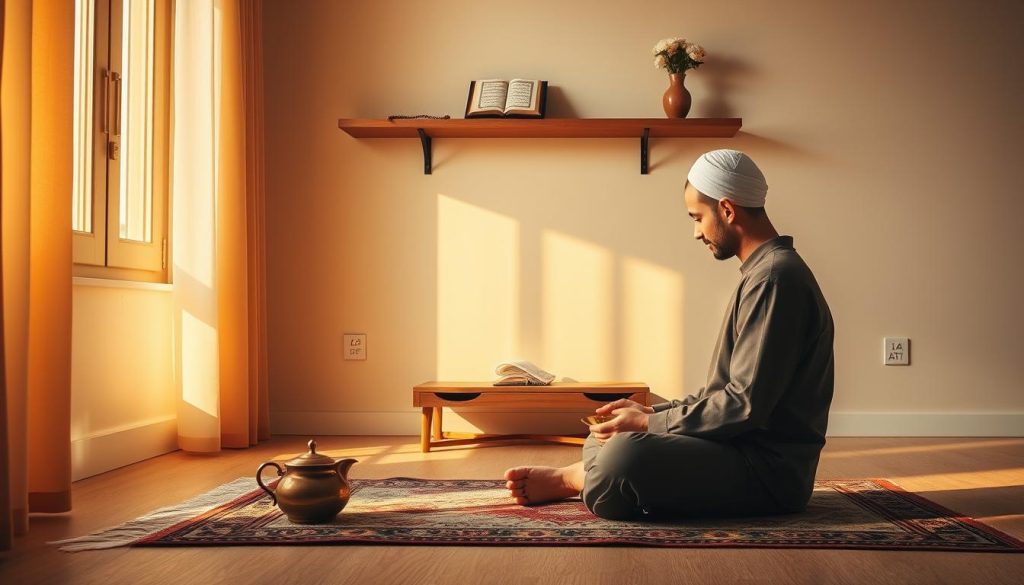
Morning Adhkar and Their Virtues
The morning remembrances (adhkar) act as a spiritual shield for believers. These special prayers are best said after the Fajr prayer until sunrise, but they are still beneficial whenever we say them in the morning.
Some of the most powerful morning adhkar include:
- Reciting Ayatul Kursi (The Throne Verse)
- The last two verses of Surah Al-Baqarah
- Reciting “Subhanallah” (Glory be to Allah) 33 times
- Saying “Alhamdulillah” (All praise is due to Allah) 33 times
- Declaring “Allahu Akbar” (Allah is the Greatest) 34 times
These prayers earn great rewards and help us stay grateful and mindful of Allah. Many British Muslims find that spending 5-7 minutes after Fajr on these adhkar greatly improves their day.
Sunnah Elements of Morning Prayer
The Fajr prayer is special among the five daily prayers. It has unique Sunnah elements that increase its spiritual value. The Prophet ﷺ was very careful about the two rak’ahs of Sunnah prayer before the obligatory Fajr prayer.
Aisha (may Allah be pleased with her) reported that the Prophet ﷺ said these two rak’ahs are better than the world and all it contains. This shows their great spiritual value, even though they are short.
For these Sunnah prayers, we suggest being cautious:
- Reciting Surah Al-Kafirun in the first rak’ah
- Reciting Surah Al-Ikhlas in the second rak’ah
- Keeping them brief but performed with the presence of heart
For busy British Muslims, adding these morning Sunnah practices requires waking up 15-20 minutes earlier. This small change brings enormous spiritual benefits that improve our daily productivity and wellbeing.
| Morning Sunnah Practice | Time Required | Spiritual Benefit | Practical Benefit |
| Waking Supplication | 30 seconds | Begin the day with gratitude | Sets a positive mindset |
| Using Miswak | 2 minutes | Multiply prayer rewards | Improves oral hygiene |
| Morning Adhkar | 5-7 minutes | Spiritual protection | Reduces anxiety |
| Fajr Sunnah Prayer | 3-5 minutes | “Better than the world and all it contains” | Establishes discipline |
By adding these morning Sunnah practices to our daily routines, we start our day with righteous deeds. This beautiful framework of Islamic etiquette connects us to our Prophet’s ﷺ way of life. It also brings practical benefits that improve our productivity, well-being, and spiritual growth.
Personal Hygiene and Appearance in Sunnah
In Islamic tradition, keeping clean and dignified shows our faith and character. The Prophet Muhammad (peace be upon him) stressed the importance of hygiene long before science proved its benefits. His teachings show how to care for ourselves, blending cleanliness with spiritual purity.
Following these Sunnah practices in our daily lives honours the Prophetic tradition and brings health benefits. IslamicThe islamic lifestyle includes these practices as key parts of moral conduct. Cleanliness is seen as a form of worship, not just for health.

Miswak and Oral Hygiene Practices
The miswak is a natural toothbrush, a special Sunnah practice. The Prophet (peace be upon him) said he would have ordered everyone to use it before every prayer if it weren’t too much.
Studies show miswak fights plaque and gum disease, just like the Sunnah said 1400 years ago. For British Muslims, using miswak daily can enhance dental care while keeping this beautiful Sunnah alive.
It’s best to use miswak before prayer, waking, sleeping, and noticing bad breath. Many Muslims in the UK use miswak and toothbrushes, blending tradition with modern dental care.
Bathing, Wudu and Cleanliness
Ritual purification through wudu and ghusl is key to physical cleanliness in Islam. Wudu is not just for prayer; it keeps us clean all day. The Prophet (peace be upon him) said that only a believer always keeps wudu.
For British Muslims, wudu five times a day for prayers is a natural way to stay clean. This fits well with modern advice to wash hands often.
The Sunnah also talks about ghusl (full bathing) at certain times, like:
- Before Friday (Jumu’ah) prayer
- After intimate relations
- Following menstruation or post-natal bleeding
- Upon accepting Islam
These practices keep us clean and meet spiritual needs. Even in Britain’s cooler weather, these bathing practices connect us to the Prophetic tradition.
Grooming, Clothing and Modest Appearance
The Prophet Muhammad (peace be upon him) taught moderation in appearance. He said to trim the moustache and let the beard grow. The beard should be about fist-length, with trimming below considered disliked.
For all Muslims, wearing clean, modest clothes that cover the awrah shows Islamic values. The Prophet (peace be upon him) liked white clothes but wore different colours. He taught that neatness and cleanliness are more important than specific styles.
In Britain, Muslims can follow these principles while adapting to local customs and weather. Modest clothing can be stylish and practical, showing that modesty is not out of place.
The Prophet (peace be upon him) also encouraged regular grooming practices such as:
- Trimming nails
- Removing unwanted body hair
- Using pleasant scents (non-alcoholic for prayer times)
- Combining hair and keeping it neat
These practices make our appearance reflect the beauty of the Islamic lifestyle. When we follow these guidelines, our appearance becomes a silent invitation to Islam, showing the balance and beauty of Islamic teachings.
By following these Sunnah hygiene and appearance practices, we benefit physically and spiritually. Each act of cleanliness is an opportunity to remember and follow the Prophet’s example, making self-care meaningful worship.
Eating and Drinking According to Prophetic Traditions
The Sunnah guides us on eating and drinking, turning these daily acts into moments of worship and mindfulness. In today’s fast-paced world, meals are often rushed. Yet, by following Prophet Muhammad’s teachings, we can make these moments memorable. They can help us grow spiritually, stay healthy, and be more mindful.
The Prophet’s way with food and drink teaches us to be moderate, thankful, and community-focused. These lessons are still important today. They help us deal with food waste and overeating, big issues in Britain.
Pre-meal Etiquette and Supplications
Starting meals mindfully sets a positive tone. The Prophet Muhammad (peace be upon him) showed us how to be grateful and aware before eating.
Saying “Bismillah” (In the name of Allah) at the start of meals makes eating sacred. It reminds us of the blessings in our food and keeps us connected to God.
Washing hands before eating is good for health and the spirit. The Prophet taught this long before science proved its benefits. Today, it’s even more important to stay healthy.
Sitting on the floor for meals, as the Prophet did, makes us more mindful. It’s not always easy in modern homes. But trying it now and then can help us enjoy our food more.
Manners While Eating and Drinking
The Prophet’s way of eating was thoughtful and careful. He taught us to use our right hand, take small bites, and chew well. These habits help with digestion and keeping a healthy weight, as experts now agree.
Eating in moderation was crucial for the Prophet. He said, “The son of Adam does not fill any vessel worse than his stomach.” He recommended eating just enough to keep our backs straight. If we need to eat more, he advised one-third for food, one-third for drink, and one-third for air.
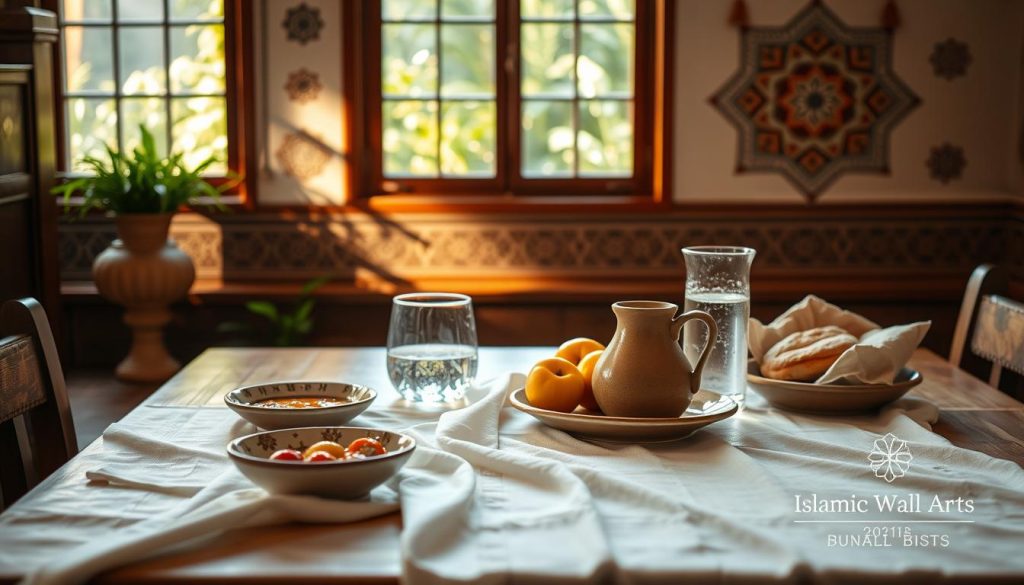
Healthy Eating and Drinking Habits
This advice on portion control is still good today. Many British Muslims find it helps them keep a healthy weight and avoid digestive problems.
The Prophet would sip slowly, taking three breaths between drinks. He also didn’t drink while standing. These habits help us stay hydrated and digest spiritually and scientifically better.
Ending meals with “Alhamdulillah” (All praise is due to Allah) adds a spiritual touch. It helps us be thankful for our food, counteracting the consumerist culture in Britain.
Beneficial Foods Recommended in Sunnah
The Prophet’s diet included foods now known to be very nutritious. These “superfoods” of the sunnah are easy to find in British supermarkets and can be added to our meals.
Dates were the Prophet’s favourite snack, often eaten to break his fast. They’re full of fibre, potassium, and natural sugars, giving quick energy and supporting digestion. For British Muslims, keeping dates at home connects them to the Prophet’s tradition and provides a healthy snack.
Honey, mentioned in the Quran as healing, was highly valued by the Prophet. Its antibacterial and anti-inflammatory properties make it a great addition to our diets, helping during cold and flu season in the UK.
Black seed (Nigella sativa), which the Prophet said, “It is a cure for every disease except death,” has been studied for its immune-boosting effects. Many British Muslims now take black seed oil supplements or use the seeds in cooking.
| Sunnah Food | Prophetic Recommendation | Modern Health Benefits | Easy UK Incorporation |
| Dates | Used to break fast; eaten in odd numbers | High in fibre, potassium, and antioxidants | Morning porridge, smoothies, energy balls |
| Honey | “There emerges from its belly a drink… in which there is healing for people” | Antibacterial, anti-inflammatory, cough suppressant | Tea sweetener, a natural remedy for sore throats |
| Black Seed | “A cure for every disease except death” | Immune-boosting, respiratory support | Sprinkled on bread, added to curries |
| Olive Oil | “Eat olive oil and use it as an ointment” | Heart-healthy fats, anti-inflammatory | Salad dressings, cooking, and bread dipping |
| Barley | Regularly consumed as talbinah (barley porridge) | High in fibre, it helps regulate blood sugar | Soups, a replacement for rice, and breakfast porridge |
Fasting Practices Beyond Ramadan
While Ramadan is Muslims’ most well-known fasting time, the Prophet encouraged fasting all year. These practices offer spiritual and health benefits that science is now recognising.
Fasting on Mondays and Thursdays was a sunnah practice of the Prophet. He said deeds are presented to Allah these days, and he liked to fast. This twice-weekly fasting fits well with modern intermittent fasting, which is good for health.
For British Muslims with busy lives, fasting on Mondays and Thursdays is easier. It helps them fit regular fasting into their schedules.
Research shows this type of fasting can lower cholesterol, improve blood sugar control, and stabilise blood pressure. These benefits are essential in the UK, where lifestyle diseases are common.
The Prophet also fasted in Sha’ban (the month before Ramadan) and encouraged fasting six days in Shawwal (the month after Ramadan). These practices keep the spiritual momentum of Ramadan going all year.
By following these sunnah practices for everyday life related to eating and drinking, British Muslims can grow spiritually and improve their health. The Prophet’s guidance on food and drink is timeless, showing the wisdom of his teachings in our modern world.
Sunnah in Social Interactions and Family Relations
The Sunnah shows us how to behave in social situations and with our families. It teaches us to be kind and respectful. These prophetic traditions are still valuable today in Britain. They help us build a community like the Prophet Muhammad (peace be upon him) did in Madinah, even with our different backgrounds.
Islamic Greetings and Meeting Etiquette
Starting with “Assalamu Alaikum” (Peace be upon you) connects us spiritually. It sets a positive tone for our interactions. This greeting is more than just saying hello; it’s a wish for others’ wellbeing.
The Prophet (peace be upon him) said the person who greets first gets more reward. So, we should always be the first to say hello. When someone greets us, we should reply with “Wa Alaikum Assalam” or “Wa Alaikum Assalam Wa Rahmatullahi Wa Barakatuhu”. This follows the Islamic etiquette of improving the greeting.
Smiling is also a form of charity, as the Prophet taught. Handshakes, eye contact, and respectful language are all part of these traditions.
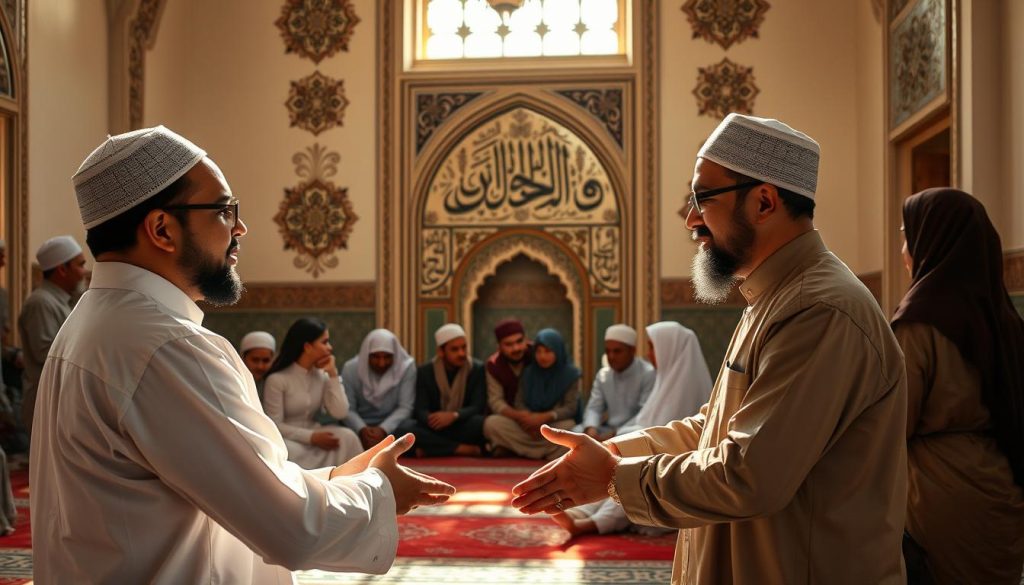
Rights of Neighbours and Community Members
Dealing with neighbours is very important in prophetic traditions. The Prophet (peace be upon him) said treating neighbours well shows faith. He said: “He who believes in Allah and the Last Day should not harm his neighbour” (Bukhari).
This advice is for all neighbours, no matter their faith or background. It’s very relevant in Britain’s diverse society. Ways to follow this Sunnah include:
- Sharing food and gifts occasionally
- Checking on elderly or vulnerable neighbours
- Avoiding disturbances like loud noises
- Offering assistance during difficulties
- Respecting privacy and property boundaries
These actions help build bridges of understanding. They create a respectful atmosphere in our communities. They show how Islamic etiquette helps us live together better in Britain today.
Visiting the Sick and Offering Support
Visiting the sick (Iyadah) is a beautiful Sunnah. It strengthens our community bonds. The Prophet (peace be upon him) would often visit the sick, showing compassion and care.
When we visit someone who is ill, we can follow these guidelines:
- Inquire genuinely about their condition
- Offer reassurance and hope
- Make dua (supplication) for their recovery
- Keep visits brief unless requested
- Offer practical help with daily needs
The Prophet (peace be upon him) taught a special supplication for visiting the sick: “La ba’sa, tahurun in sha Allah” (No harm, it is a purification, if Allah wills). These words bring comfort and acknowledge the spiritual aspect of illness.
Maintaining Family Ties and Household Harmony
Family relationships are key in the prophetic model. It teaches mutual respect, consultation (shura), and shared responsibilities. The Prophet (peace be upon him) said: “The best among you are those who are best to their families, and I am the best to my family” (Tirmidhi).
This advice helps counter cultural practices that may neglect family rights. It encourages kindness in our homes. Practical aspects of family Islamic etiquette include:
- Consulting family members in decisions that affect them
- Showing extraordinary kindness to parents and elders
- Maintaining regular contact with extended family
- Resolving conflicts promptly and fairly
- Balancing individual needs with family obligations
Silatur-rahim (maintaining kinship ties) is essential in prophetic traditions. The Prophet (peace be upon him) said: “Whoever believes in Allah and the Last Day, let him maintain good relations with his kindred” (Bukhari). This includes relatives we may have grown distant from.
By following these social Sunnahs, we honour the Prophet’s example and help build more harmonious communities. These Islamic etiquette practices are timeless and offer wisdom for social relationships in Britain today.
Daily Prayer and Worship Enhancements
Islamic worship is layered, with extra prayers and remembrances adding depth to the basics. The five daily prayers connect us to Allah, while Sunnah practices deepen this bond. These practices enrich our worship, making it meaningful and soul-nourishing.
Salah is key in a Muslim’s life, linking us directly to Allah. Adding Prophetic traditions to our prayers can lift our spiritual state. These practices are not extra burdens but chances for spiritual guidance and growth.
Voluntary Prayers (Nawafil) Throughout the Day
The Prophet Muhammad ﷺ taught us to add extra prayers to our day. These nawafil prayers give us more chances to worship and gain spiritual rewards.
- Regular Sunnah Prayers – These are done before and after the main prayers, acting as spiritual buffers.
- Duha Prayer – This mid-morning prayer thanks Allah for the day’s blessings.
- Tahajjud Prayer – Offered late at night, it’s a special prayer that shows devotion.
For British Muslims with busy lives, even two rak’ahs of Tahajjud can change things. The Prophet ﷺ taught us to focus on quality, making these practices available to all.
Dhikr and Dua Practices for Various Occasions
Dhikr (remembrance of Allah) makes every moment a chance for spiritual growth. It keeps us connected to Allah, making daily tasks righteous deeds.
After salah, the Prophet ﷺ taught us to say specific remembrances:
- Recite “SubhanAllah” (Glory be to Allah) 33 times
- Say “Alhamdulillah” (All praise is due to Allah) 33 times
- Declare “Allahu Akbar” (Allah is the Greatest) 34 times
- Recite Ayatul Kursi for protection from Shaytan
“The example of one who remembers his Lord and one who does not is like that of the living and the dead.”
Sahih al-Bukhari
The Prophet ﷺ also taught us to use specific supplications for different times. These short phrases, easy to remember, help us stay spiritually connected to Allah.
Mosque Etiquette and Communal Worship
The mosque is a place of worship and community. The Prophet ﷺ gave us rules for mosque etiquette to improve our worship experience.
When at the mosque, remember these teachings:
- Arrive early and enter with your right foot, reciting the appropriate dua
- Maintain cleanliness and wear pleasant fragrances
- Avoid disturbing others with loud conversations or phone usage
- Fill the front rows first and close the gaps between worshippers
“Salah in congregation is twenty-seven times better than Salah performed alone.”
Sahih al-Bukhari, 645
This hadith shows the spiritual benefits of praying together. When we can, praying in congregation increases our rewards and strengthens community ties. For British Muslims, this might mean adjusting work schedules or starting prayer groups at work or university.
By adding these enhancements to our daily routine, we make our spiritual practice richer and more fulfilling. Each prayer, remembrance, and gathering is a chance to get closer to Allah and follow the Prophet Muhammad ﷺ’s example.
Sunnah Practices in Work and Business
Adding sunnah acts to our work life builds a strong base for ethical business and meaningful work. For British Muslims in today’s workplaces, the Prophet’s teachings are invaluable. They guide us in all work areas, helping us see our jobs as a way to worship and grow spiritually.
Ethical Principles in Financial Transactions
Islamic business ethics are based on honesty and openness. The Prophet Muhammad (peace be upon him) made ethical business a spiritual virtue. He said honest merchants will be with prophets and martyrs on Judgment Day.
In today’s economy, these values apply to all, from retail to digital services. Following Sunnah in business means:
- Complete transparency about what we sell
- Not taking too much profit that hurts customers
- Keeping promises and contracts on time
- Not lying or exaggerating in ads
“The truthful, trustworthy merchant will be with the prophets, the truthful, and the martyrs.”
– Prophet Muhammad (peace be upon him), Tirmidhi
For Muslims in finance, these rules guide what products to make and sell. The sunnah encourages us to earn money in ways that are halal and avoid interest.
Time Management According to Prophetic Guidance
The Prophet’s way of managing time is handy today. He divided his time for worship, family, helping others, and personal needs. This balanced life honoured all his duties.
One key teaching is:
“Take advantage of five before five: your youth before old age, your health before sickness, your wealth before poverty, your free time before preoccupation, and your life before death.”
– Prophet Muhammad (peace be upon him), Al-Hakim
This wisdom tells us to plan well and not delay. In our daily lives, this means:
- Starting work with intention and Bismillah
- Praying during the day
- Keeping work and family time separate
- Not wasting time on things that don’t help us
Balancing Worldly Affairs and Spiritual Obligations
The Prophet taught us to find a middle path. This path is neither too worldly nor too focused on spirituality. For Muslims in busy careers, this is very important.
Earning a living can be a form of worship if we do it with the right heart. Working to support our families and give to charity makes our jobs spiritually meaningful.
Here are some ways to keep this balance:
- Keeping prayer times even when busy
- Giving a part of our earnings to charity
- Remembering Allah while we work
- Seeing work as a way to support our worship, not just for money
This balance helps us avoid extremes. We don’t neglect our duties for spirituality, nor do we let work take over our spiritual life.
Workplace Interactions and Professional Conduct
The Prophet’s leadership and work conduct teach us to be dignified, respectful, and fair. These values can improve workplace culture.
| Workplace Scenario | Common Approach | Sunnah-Inspired Approach | Benefits |
| Leadership Style | Authority-based command | Consultation (shura) and leading by example | Greater team buy-in and respect |
| Employee Relations | Strictly transactional | Compassionate with clear boundaries | Increased loyalty and productivity |
| Conflict Resolution | Confrontational or avoidant | Direct, respectful communication with forgiveness | Healthier workplace relationships |
| Work Quality | Meeting minimum requirements | Ihsan (excellence) in all tasks | Superior outcomes and personal growth |
For Muslims in different workplaces, following the sunnah doesn’t mean being openly religious. It shows in our ethical behaviour, quality work, and respect for colleagues.
The Prophet taught employers to pay workers quickly, showing the value of fair treatment. He also showed that leadership is about serving, not just being in charge—a new idea in today’s business world.
Working with Ihsan and starting tasks with Bismillah makes our jobs a chance for spiritual growth. These daily sunnahs help us blend our faith and work. This way, we stay true to our Islamic values while doing well in our careers.
Evening and Nighttime Sunnah Rituals
The twilight hours and night are special in Islamic tradition. They have specific Sunnah practices to end our day spiritually. These rituals protect us and help us reflect and connect with Allah.
By doing these practices, we turn our nights into times for spiritual growth and renewal.
Evening Adhkar and Protection Supplications
The time between Asr and Maghrib is special for spiritual protection. The Prophet Muhammad ﷺ would do evening adhkar here, creating a shield of divine protection for him and his family.
Reciting the last three surahs of the Quran—Al-Ikhlas, Al-Falaq, and An-Nas—three times each is powerful. The Prophet ﷺ said these chapters protect a believer all night.
“Recite Surat Al-Ikhlas, Surat Al-Falaq, and Surat An-Nas three times in the morning and evening. They will suffice you against everything.”
Sunan Abu Dawud
We suggest adding these adhkar to your daily routine. Set a reminder on your phone before Maghrib. This aligns with the Prophetic tradition and meets our modern needs.
Pre-Sleep Etiquette and Bedtime Dua
The moments before sleep are precious. They offer a chance to end the day with Sunnah practices. These practices improve both physical rest and spiritual peace.
The Prophet’s ﷺ pre-sleep ritual included several practices we can follow:
- Performing wudu (ablution) before lying down
- Dusting the bed three times while reciting specific supplications
- Reciting Ayatul Kursi (the Verse of the Throne)
- Reading the last two verses of Surah Al-Baqarah
- Lying on the right side facing the qiblah
The bedtime dua, “Bismika Allahumma amutu wa ahya” (With Your name, O Allah, I die and I live), reminds us of our mortality and dependence on Allah. This dua is key to moral conduct by acknowledging our Creator before sleep.
Practising Sunnah in Daily Life
The Prophet ﷺ had a special tooth-stick near his bed. He used it before sleep. He said it cleanses the mouth and pleases Allah. Using a miswak before sleep is a Sunnah that promotes good oral hygiene.
Night Prayer (Tahajjud) and Its Benefits
The night prayer, or Tahajjud, is the highest form of voluntary worship in Islam. The Prophet Muhammad ﷺ never missed it, even when travelling. It shows how important it is for our relationship with Allah.
Tahajjud is performed in the last third of the night after some sleep. It consists of eight rak’ahs (units of prayer). For British Muslims with early work, even two rak’ahs can be transformative.
“The best prayer after the obligatory prayers is the night prayer.”
Sahih Muslim
Tahajjud offers more than spiritual rewards. It improves focus, emotional balance, and brings tranquility. This shows how Sunnah practices benefit our wellbeing.
Managing Sleep According to Sunnah
The Prophet’s ﷺ approach to sleep is valuable for us today. He encouraged sleeping early after Isha prayer and rising for Fajr. This pattern is good for our health.
While not encouraging too much sleep, the Prophet ﷺ taught moderation. This shows the moral conduct in Sunnah practices. It respects our physical needs while prioritising spiritual duties.
For British Muslims with busy lives, we suggest these sleep management tips inspired by the Sunnah:
- Aim to sleep within two hours after Isha prayer
- Set your alarm to wake 15-20 minutes before Fajr time
- If possible, take a short afternoon nap (qaylulah) to refresh yourself
- Avoid heavy meals and screen time immediately before sleep
By following these Prophetic sleep patterns, we honour our spiritual and physical health. This shows how Sunnah naturally leads to balanced, healthy living in our British context.
Conclusion: Integrating Sunnah into Contemporary British Muslim Life
Sunnah practices are timeless and always relevant. For British Muslims, they provide practical guidance for everyday life. By following these traditions, we enrich our daily routines and honour our heritage.
Small changes can make a big difference. Starting with one Sunnah practice for everyday life can change our spiritual connection. The Prophet Muhammad (peace be upon him) showed us the value of consistent good deeds, even in our busy lives.
Many Sunnah customs share universal values. Practices like ethical business, caring for the environment, and being kind to neighbours help us connect with others. This way, we can live our faith authentically and positively contribute to society.
The Sunnah offers a balanced approach for today’s world. It covers all areas of life, from personal hygiene to social interactions. This guidance helps us stay true to our Islamic identity while connecting with others.
By embracing these traditions, we grow closer to Allah and improve our wellbeing. The path to a more fulfilling Islamic lifestyle starts with these small steps. May Allah help us follow the Sunnah sincerely and make it a part of our daily lives.
FAQ
What exactly is the Sunnah, and why is it important for Muslims today?
The Sunnah is the sayings, actions, and approvals of Prophet Muhammad (peace be upon him). It’s key for Muslims today because it offers a complete lifestyle. It balances spiritual and worldly life.
Following the Sunnah connects us to our Islamic heritage. It also gives practical solutions to today’s challenges. The Prophet’s teachings are still relevant today, guiding us in all aspects of life.
How can I begin implementing Sunnah practices if I’m new to them?
Start with simple, consistent practices. Begin with morning and evening supplications (adhkar). Also, maintain personal hygiene according to Sunnah.
Focus on one aspect of the Prophet’s lifestyle that you connect with. Remember, the Prophet loved consistency in good deeds, even small ones. As these practices become habitual, you can add more to your daily routine.
What are the most essential morning Sunnah practices I should try to implement?
Key morning Sunnah practices include: reciting the waking supplication, rising from the right side of the bed, and using miswak for oral hygiene. Also, perform wudu, offer the two rak’ahs Sunnah prayer before Fajr, and recite the morning adhkar after Fajr prayer.
Even implementing a few of these practices can change your morning routine. It sets a spiritual foundation for your day.
How can I follow the Sunnah when eating in today’s fast-paced world?
Start meals with “Bismillah” and end with “Alhamdulillah”. Eat with your right hand and sit while eating. Practice moderation by stopping before feeling full.
The Prophet (peace be upon him) encouraged sharing meals and never criticising food. Incorporate Sunnah foods like dates, honey, olive oil, and black seed into your diet. These practices make eating a mindful, spiritual experience.
What are some Sunnah practices for maintaining good relationships with non-Muslim neighbours?
The Prophet (peace be upon him) taught treating all neighbours well, regardless of their faith. Greet neighbours politely, offer assistance when needed, and share food occasionally.
Respect their privacy, avoid causing disturbance, and visit them when ill. These practices build community cohesion and reflect Islamic values of compassion and kindness.
How can I balance following the Sunnah with my professional responsibilities?
The Prophetic model enhances professional life through principles like excellence, honesty, punctuality, and fair dealings. Start work with “Bismillah,” treat colleagues respectfully, and maintain ethical transaction standards.
Manage time effectively and schedule prayers around work commitments. Brief adhkar can be recited throughout the day. The Prophet (peace be upon him) was actively engaged in society while maintaining his spiritual practices.
What are the key Sunnah practices before sleeping?
Before sleeping, the Prophet (peace be upon him) performed wudu, dusted his bed, and recited Ayatul Kursi and the last two verses of Surah Al-Baqarah. He slept on his right side facing the qiblah and recited the bedtime supplication: “Bismika Allahumma amutu wa ahya” (With Your name, O Allah, I die and I live).
He also recommended reconciling with anyone you have differences with before sleeping and reflecting on your day’s actions. These practices promote both spiritual protection and better sleep quality.
Are specific Sunnah practices related to personal hygiene particularly relevant today?
Yes! The Prophet’s (peace be upon him) emphasis on cleanliness is centuries ahead of modern hygiene practices. Using a miswak (natural toothbrush) aligns with dental health recommendations. Maintaining wudu throughout the day keeps you in a state of physical cleanliness.
Regular bathing (ghusl), trimming nails, removing unwanted body hair, and using pleasant scents (without alcohol for Muslims) are all Sunnah practices that align perfectly with contemporary hygiene standards.
How can I incorporate voluntary prayers (nawafil) into my busy schedule?
Even with a busy schedule, you can incorporate nawafil by focusing on those with the greatest virtue. The two rak’ahs Sunnah before Fajr are highly recommended. Also, perform the Sunnah prayers associated with the five daily prayers, Duha prayer during a morning break, and Witr prayer after Isha.
If you can wake up just 10-15 minutes before Fajr for the Sunnah prayer, or stay a few minutes after obligatory prayers for the associated Sunnah, you’ll implement significant nawafil without major time commitment.
What are some practical ways to revive the Sunnah of moderation in today’s consumer culture?
Revive the Sunnah of moderation by practising mindful consumption. Purchase what you need rather than what you desire, avoid waste, and repair items instead of replacing them. Share resources within communities, give regularly to charity, and be content with what you have.
The Prophet (peace be upon him) lived simpl, such asy despite having access to resources. He taught us that moderation brings both spiritual and practical benefits, such as reduced debt, less environmental impact, and greater appreciation for Allah’s blessings.


