


In the rich tapestry of Allah’s 99 beautiful names (Asma ul-Husna), AL-MUQSIT stands as a powerful testament to divine justice and equity. This name reveals how Allah, سُبْحَٰنَهُۥ وَتَعَٰلَىٰ, establishes perfect balance in all matters, ensuring that every soul receives exactly what it deserves. By understanding this magnificent attribute, we gain insight into both divine justice and how we might embody fairness in our own lives. Join us as we explore this profound divine name’s linguistic roots, Quranic foundations, and practical applications.
The Linguistic and Theological Meaning of AL-MUQSIT
AL-MUQSIT (in Arabic: ٱلْمُقْسِطُ) derives from the root letters qaf-sin-ta (ق س ط), which carries several interconnected meanings in classical Arabic. This root conveys the concepts of justice, fairness, equity, and establishing perfect balance.
Root Word Analysis
The linguistic variations of this root reveal its depth:
- Qist (قسط) – Equity, fairness, or a just portion
- Aqsata (أقسط) – To implement justice
- Qasata (قسط) – To become inequitable or unfair
- Qasit (قاسط) – An unfair person or oppressor
- Muqsit (مقسط) – One who is fair in judgment
Theological Significance
As a divine attribute, AL-MUQSIT represents Allah as:
- The One who establishes perfect justice
- The Equitable, who gives everyone their due rights
- The one who restores balance where injustice has occurred
- The Fair Judge, whose decisions are based on ideal wisdom
- The One who neither wrongs anyone nor allows injustice to prevail
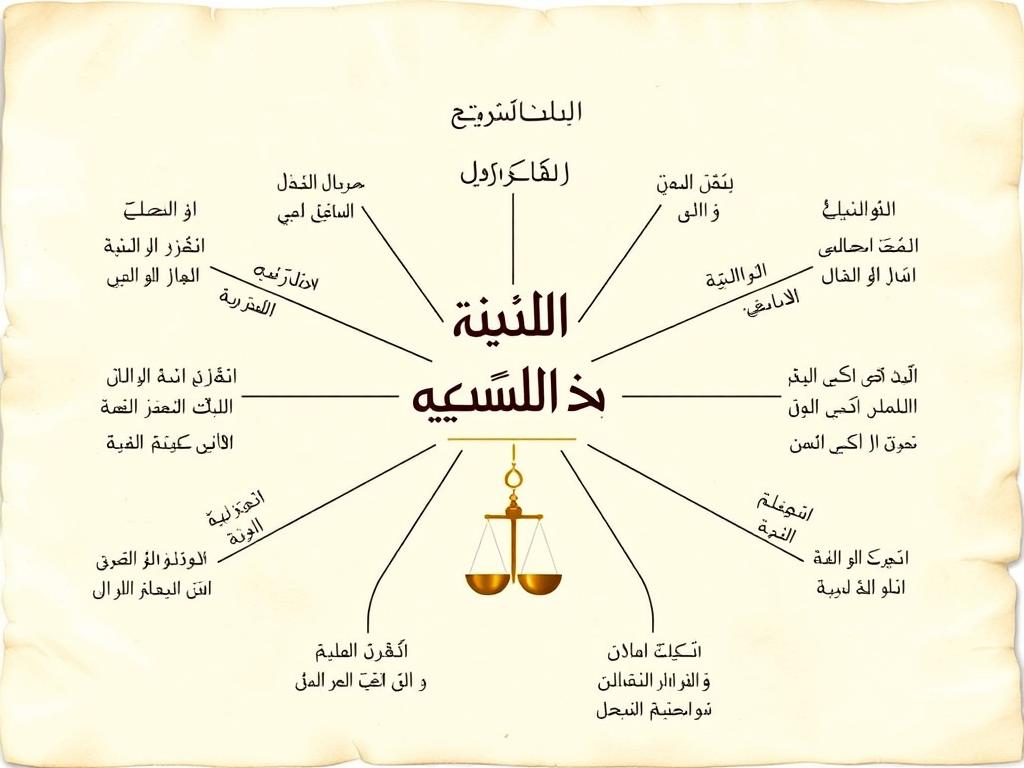
AL-MUQSIT is closely related to other divine names that reflect Allah’s justice, including Al-Adl (The Embodiment of Justice) and Al-Hakam (The Impartial Judge). Together, these names form a comprehensive understanding of divine justice that balances mercy with accountability perfectly.
“Allah’s justice as AL-MUQSIT means He gives each creation exactly what it deserves – no more, no less. He brings satisfaction to the victim while holding the perpetrator accountable in perfect measure.”
AL-MUQSIT in the Quran and Hadith
While the name AL-MUQSIT itself is not explicitly mentioned in the Quran as one of Allah’s names, the concept of divine justice (qist) appears throughout the sacred text. Several verses highlight Allah’s perfect justice and the importance of equity in creation.
Key Quranic Verses About Divine Justice
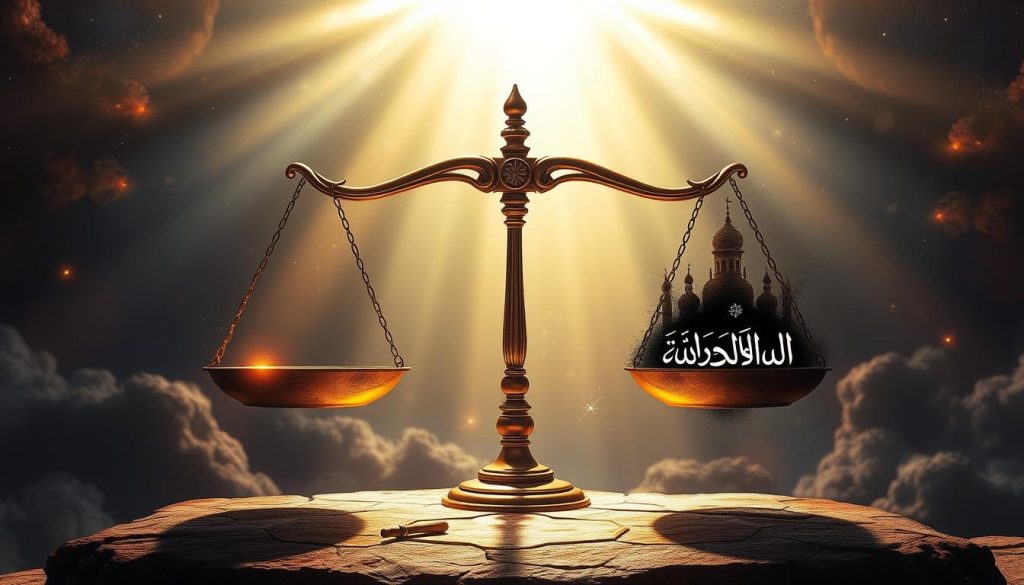
The Scales of Justice on the Day of Judgment
وَنَضَعُ ٱلۡمَوَٰزِينَ ٱلۡقِسۡطَ لِيَوۡمِ ٱلۡقِيَٰمَةِ فَلَا تُظۡلَمُ نَفۡسٞ شَيۡـٔٗاۖ وَإِن كَانَ مِثۡقَالَ حَبَّةٖ مِّنۡ خَرۡدَلٍ أَتَيۡنَا بِهَاۗ وَكَفَىٰ بِنَا حَٰسِبِينَ
“And We place the scales of justice for the Day of Resurrection, so no soul will be treated unjustly at all. And if there is [even] the weight of a mustard seed, We will bring it forth. And sufficient are We as accountant.”
— (Quran 21:47)
This powerful verse illustrates how Allah as AL-MUQSIT will ensure absolute justice on the Day of Judgment, where even the smallest deed will be accounted for with perfect equity.
Allah's Testimony of Justice
شَهِدَ ٱللَّهُ أَنَّهُۥ لَآ إِلَٰهَ إِلَّا هُوَ وَٱلۡمَلَـٰٓئِكَةُ وَأُوْلُواْ ٱلۡعِلۡمِ قَآئِمَۢا بِٱلۡقِسۡطِۚ لَآ إِلَٰهَ إِلَّا هُوَ ٱلۡعَزِيزُ ٱلۡحَكِيمُ
“Allah witnesses that there is no deity except Him, and [so do] the angels and those of knowledge – [that He is] maintaining [creation] in justice. There is no deity except Him, the Exalted in Might, the Wise.”
— (Quran 3:18)
Here, Allah describes Himself as “maintaining creation in justice” (قَآئِمَۢا بِٱلۡقِسۡطِ), emphasizing that justice is fundamental to His governance of the universe.
Allah Loves Those Who Act Justly
The Quran repeatedly mentions that “Allah loves those who act justly” (إِنَّ ٱللَّهَ يُحِبُّ ٱلۡمُقۡسِطِينَ), encouraging believers to embody this divine attribute in their own lives:
Justice in Judgment
“…And if you judge, judge between them with justice. Indeed, Allah loves those who act justly.”
— (Quran 5:42)
Justice Among Believers
“…And if it returns, then make settlement between them in justice and act justly. Indeed, Allah loves those who act justly.”
— (Quran 49:9)
Justice Toward Non-Muslims
“…from being righteous toward them and acting justly toward them. Indeed, Allah loves those who act justly.”
— (Quran 60:8)
Hadith on Divine Justice
“O My slaves, I have forbidden injustice for Myself and have made it forbidden among you, so do not oppress one another.”
— (Sahih Muslim)
This powerful Qudsi hadith (divine narration) emphasizes that Allah has forbidden injustice for Himself, reinforcing His nature as AL-MUQSIT, and commands believers to follow this example by avoiding oppression.
Deepen Your Understanding of Divine Names
Explore the connections between AL-MUQSIT and other divine names that reflect Allah’s justice and wisdom.
The Significance of Allah as the Ultimate Judge
Understanding Allah as AL-MUQSIT has profound implications for both our worldview and spiritual development. This divine attribute reveals several important aspects of Allah’s relationship with creation:
Perfect Balance
As AL-MUQSIT, Allah maintains perfect balance in all aspects of creation. From the physical laws governing the universe to the moral order of human society, divine justice ensures that everything exists in its proper measure.

Ultimate Accountability
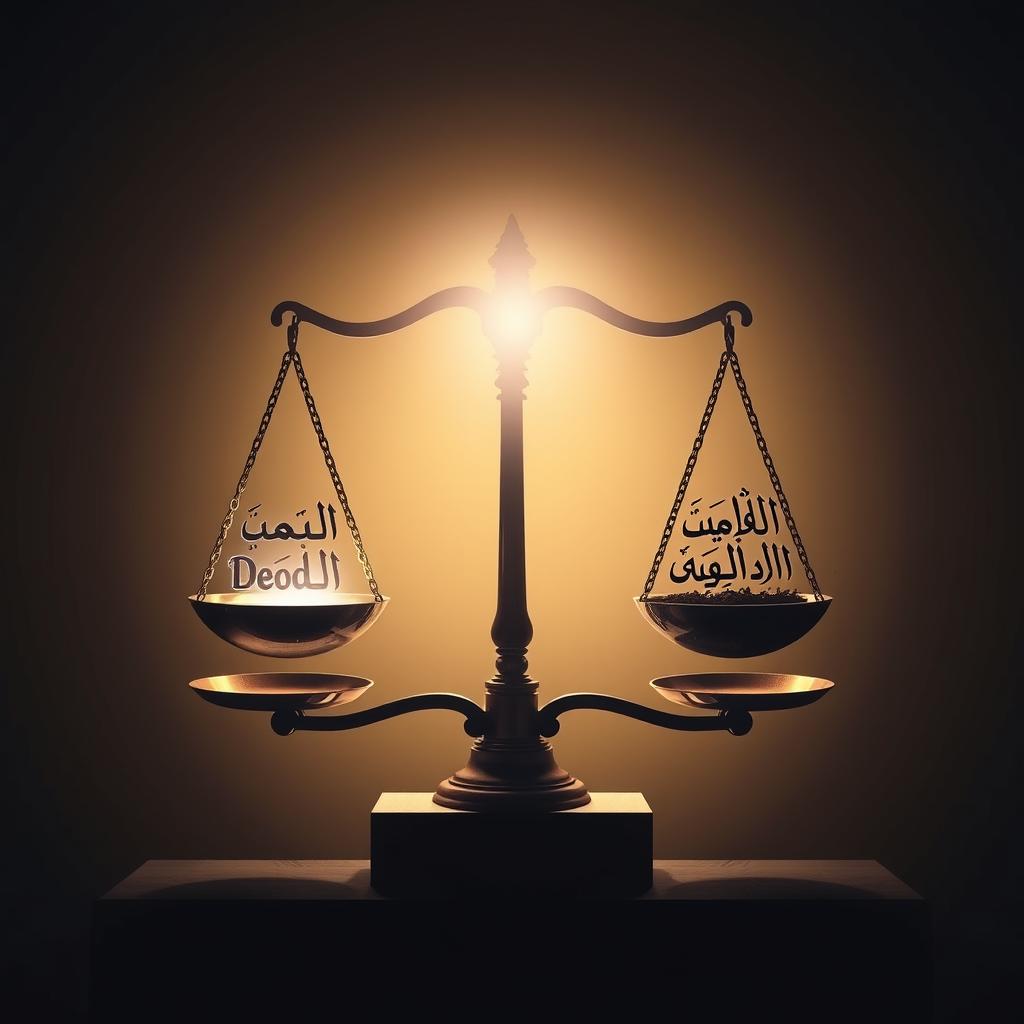
The name AL-MUQSIT reminds us that every action will be judged with perfect fairness. On the Day of Judgment, Allah will weigh our deeds with absolute precision, ensuring that no soul is treated unjustly, even by the weight of a mustard seed.
Divine Reassurance
For the oppressed and vulnerable, Allah’s name AL-MUQSIT offers profound reassurance. It promises that no injustice will ultimately prevail and that Allah will restore balance by compensating the wronged and holding oppressors accountable.

The Harmony of Justice and Mercy
One of the most beautiful aspects of understanding AL-MUQSIT is seeing how divine justice harmonises with Allah’s mercy. While Allah’s justice ensures that every action receives its due consequence, His mercy often prevails, especially for those who sincerely seek forgiveness.
“None can enter Paradise through his good deeds alone.” The companions asked, “Not even you, O Messenger of Allah?” He replied, “Not even myself, unless Allah bestows His favour and mercy on me.”
— (Sahih al-Bukhari)
This hadith reminds us that while Allah is AL-MUQSIT (The Just), He is also Ar-Rahman and Ar-Rahim (The Most Compassionate, The Most Merciful). His perfect justice is tempered by boundless mercy for those who turn to Him in sincere repentance.

Practical Lessons: Embodying Fairness in Daily Life
Understanding Allah as AL-MUQSIT isn’t merely theoretical knowledge—it carries profound implications for how we should live. By reflecting on this divine attribute, we can learn to embody justice and equity daily.

Ways to Embody Divine Justice
In Personal Conduct
- Self-accountability – Hold yourself to high standards of honesty and integrity.
- Fair judgment – Avoid jumping to conclusions about others without evidence
- Balanced perspective – Consider multiple viewpoints before forming opinions
- Proportionate response – React to situations with an appropriate measure, neither excessive nor deficient
- Seeking forgiveness – Acknowledge when you’ve wronged others and seek to make amends
In Social Interactions
- Fair dealings – Conduct business with honesty and transparency
- Defending the vulnerable – Stand up for those who cannot protect themselves
- Equitable treatment – Treat people based on their actions, not their status or relationship to you
- Reconciliation – Help resolve conflicts with fairness and without bias
- Advocating justice – Support systems and policies that promote equity in society
“The believers in their mutual kindness, compassion and sympathy are just like one body. When one limb suffers, the whole body responds with wakefulness and fever.”
— (Sahih al-Bukhari and Muslim)
Seeking Forgiveness Before Judgment
One powerful lesson from understanding AL-MUQSIT is the importance of seeking forgiveness from those we’ve wronged before the Day of Judgment:
“Whoever has wronged his brother should ask for his pardon (before his death), as (in the Hereafter) there will be neither a Dinar nor a Dirham. (He should secure a pardon in this life) Before some of his good deeds are taken and paid to his brother, or, if he has done no good deeds, some of the bad deeds of his brother are taken to be loaded on him (in the Hereafter).”
— (Sahih al-Bukhari)
Reflection Exercise: Examining Your Justice
Take time to reflect on these questions:
- Have I been fair in my judgments of others?
- Are there people I need to seek forgiveness from for past injustices?
- Do I hold myself to the same standards I expect from others?
- How can I better advocate for justice in my community?
- In what ways might I be contributing to inequity without realizing it?
Test Your Understanding
How well do you understand the concept of AL-MUQSIT and its applications? Please take our short quiz to find out.
Examples of Divine Justice in Islamic Teachings
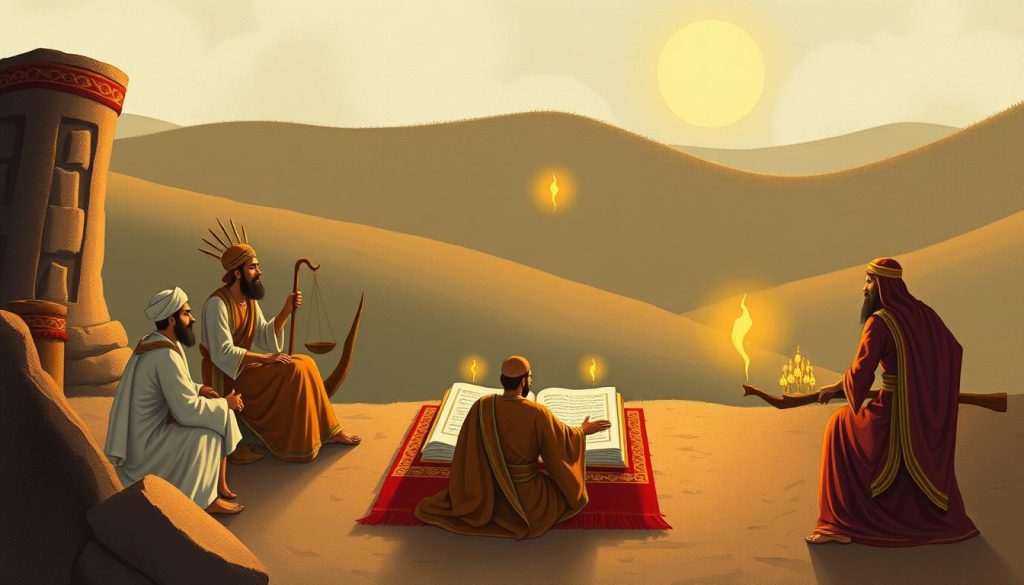
The Quran and Hadith contain numerous examples illustrating Allah’s justice as AL-MUQSIT. These stories provide powerful lessons about divine equity and its manifestations.
Quranic Examples of Divine Justice
The People of Noah
After Noah preached for 950 years, Allah’s justice was manifested when those who persistently rejected the truth faced the flood, while believers were saved in the ark. This demonstrates how AL-MUQSIT gives appropriate time for repentance before judgment.
Pharaoh and Moses
The story of Pharaoh’s oppression and ultimate downfall illustrates how Allah, as AL-MUQSIT, eventually brings tyrants to justice. Despite Pharaoh’s power, Allah’s justice prevailed, liberating the oppressed Israelites and punishing the oppressor.
The People of 'Ad and Thamud
These nations were given abundant resources but became arrogant and unjust. Allah’s justice as AL-MUQSIT was demonstrated when, after clear warnings and opportunities to repent, they faced divine judgment for their persistent wrongdoing.
The Day of Judgment: Ultimate Manifestation of AL-MUQSIT
The most comprehensive manifestation of Allah as AL-MUQSIT will be witnessed on the Day of Judgment, where absolute justice will prevail:
يَوۡمَ تَأۡتِي كُلُّ نَفۡسٖ تُجَٰدِلُ عَن نَّفۡسِهَا وَتُوَفَّىٰ كُلُّ نَفۡسٖ مَّا عَمِلَتۡ وَهُمۡ لَا يُظۡلَمُونَ
“On the Day when every soul will come disputing for itself, and every soul will be fully compensated for what it did, and they will not be wronged.”
— (Quran 16:111)
On this day, Allah, as AL-MUQSIT, will ensure that:
- Every deed, however small, will be accounted for
- No soul will bear the burden of another’s sins
- Justice will be administered with perfect precision
- The oppressed will receive full compensation
- The truth of all matters will be revealed
“The simple principle we should try applying in our life is to deal with people the way you would like Allah, سُبْحَٰنَهُۥ وَتَعَٰلَىٰ, to deal with you.”
This profound wisdom reminds us that by understanding Allah as AL-MUQSIT, we should strive to embody justice in our dealings, knowing that we will face perfect justice for our actions.
Embracing the Wisdom of AL-MUQSIT
As we conclude our exploration of Allah’s beautiful name AL-MUQSIT, we are reminded of the perfect balance of justice and mercy that characterizes divine governance. This name invites us to trust in Allah’s perfect justice, even when we witness apparent injustice in the world, knowing that ultimate equity will prevail.
Understanding Allah as AL-MUQSIT also challenges us to examine our conduct. Are we fair in our dealings? Do we stand for justice even when it’s difficult? Do we trust in divine justice when we face hardship? By reflecting on these questions, we can grow closer to embodying this beautiful attribute in our limited, human way.
“O you who believe! Stand firmly for justice, as witnesses to Allah, even if it be against yourselves, your parents, or your relatives. Whether one is rich or poor, Allah is more worthy of both. So follow not your desires, lest you not be just. And if you distort your testimony or refuse to give it, then indeed Allah is Ever-Acquainted with what you do.”
— (Quran 4:135)
May our understanding of AL-MUQSIT inspire us to uphold justice in all aspects of our lives, to trust in Allah’s perfect judgment, and to find peace in knowing that ultimate equity awaits in the hereafter.
Continue Your Spiritual Journey
Deepen your connection with Allah by exploring His beautiful names and attributes.


