


Dhul-Jalaali wal-Ikraam
Dhul-Jalaali wal-Ikraam. Among Allah’s beautiful names, Dhul-Jalaali wal-Ikraam (ذو الجلال والإكرام) stands as a profound testament to the divine balance of majesty and generosity. This noble name, mentioned twice in the Qur’an, invites us to contemplate the perfect harmony between Allah’s awe-inspiring greatness and His boundless generosity. When we understand this name deeply, we discover a pathway to balance reverence and hope in our relationship with our Creator.
Linguistic Roots and Meaning
To understand this magnificent name, we must first examine its linguistic components:
Dhul (ذو)
The word “Dhul” means “Owner of” or “Possessor of.” It indicates that what follows is an attribute that belongs exclusively to Allah in its perfect form.
Jalaal (جلال)
Derived from the root jim-lam-lam (ج ل ل), “Jalaal” refers to majesty, glory, greatness, and sublimity. It encompasses Allah’s supreme greatness, loftiness, and independence from all creation.
Wal (و)
This is simply the Arabic conjunction “and,” connecting the two attributes.
Ikraam (إكرام)
From the root kaf-ra-mim (ك ر م), “Ikraam” means honour, generosity, nobility, and bounty. It signifies Allah’s generosity, kindness, and honouring of His creation.
As Ibn Katheer (Rahimahullaah) explains, this name means “The One possessing Majesty and Honour” – the One who deserves to be glorified and never denied, remembered and never forgotten.
Deepen Your Understanding
Discover the profound meanings of Allah’s beautiful names through our comprehensive guide.
Quranic References and Context
Dhul-Jalaali wal-Ikraam appears twice in the Qur’an, both times in Surah Ar-Rahman (The Most Merciful):
“Whatsoever is on it (the earth) will perish. And the Face of your Lord, the Owner of Majesty and Honor (Dhul-Jalaali wal-Ikraam) will remain forever.” (Qur’an 55:26-27)
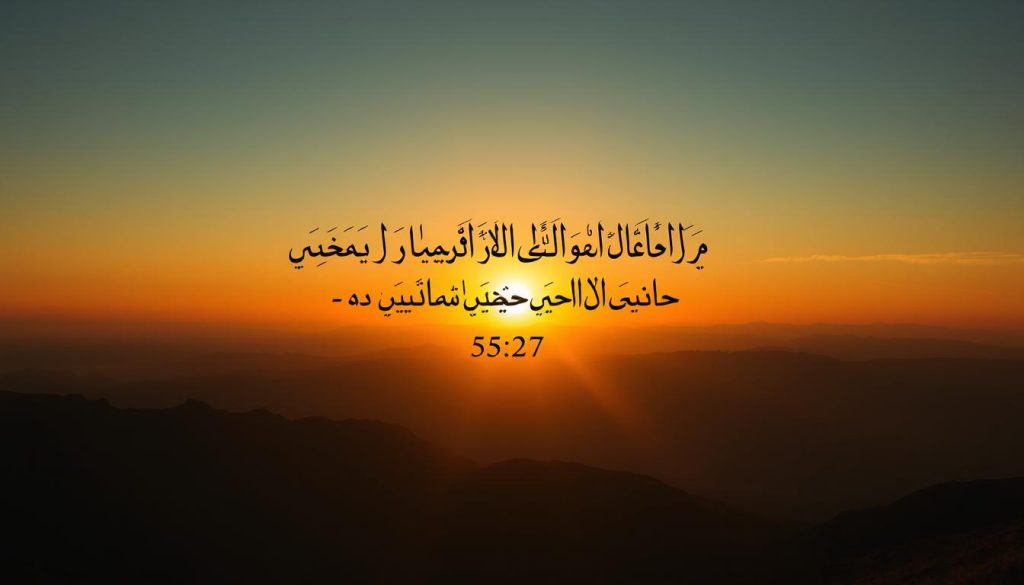
In this powerful verse, Allah contrasts the temporary nature of all creation with His eternal existence. Everything on earth will perish, but Allah, the Possessor of Majesty and Honour, remains forever. This reminds us of His absolute permanence and sovereignty.
“Blessed is the Name of your Lord, Owner of Majesty and Honour (Dhul-Jalaali wal-Ikraam).” (Qur’an 55:78)
This verse concludes Surah Ar-Rahman, a chapter repeatedly asking, “Then which of the favours of your Lord will you deny?” After enumerating countless blessings, the surah ends by glorifying the source of all these blessings – Allah, the Owner of Majesty and Honour.
Teachings from Hadith
The Prophet Muhammad ﷺ emphasised the importance of this name in several authentic hadith:
The Prophet's Supplication After Prayer
Aisha (may Allah be pleased with her) reported: “When the Prophet ﷺ would say the Salaam after completing the Salaat, he would only sit as long as it would take him to say:
“O Allah! You are As-Salaam, and peace comes from you. Blessed be You Yaa Dhal-Jalaali wal-Ikraam (O Owner of Majesty and Honour).”
Sahih Muslim
Persistence in Supplication
The Prophet ﷺ advised: “Persist (in invoking Allah) with, ‘Yaa Dhal-Jalaali wal-Ikraam (O Owner of Greatness and Honor).'”
This hadith encourages us to frequently call upon Allah using this magnificent name, recognizing both His majesty and His generosity.
The Greatest Name of Allah
The Prophet ﷺ once heard a man supplicating:
“O Allah! Indeed I ask You, by the fact that to You belongs all praise; no one deserves to be worshiped except You, You Alone, You have no partners; Bestower of Favors; Originator of the heavens and earth; O One that is Full of Majesty and Honor; O Living One, O Eternal One…”
The Prophet ﷺ then said: “By Him in Whose Hand is my soul, he has supplicated Allah with His Mightiest Name, with which if He is supplicated, He answers and with which if He is asked, He gives.”
Enhance Your Daily Worship
Learn how to incorporate these powerful supplications into your daily prayers.
Theological Significance
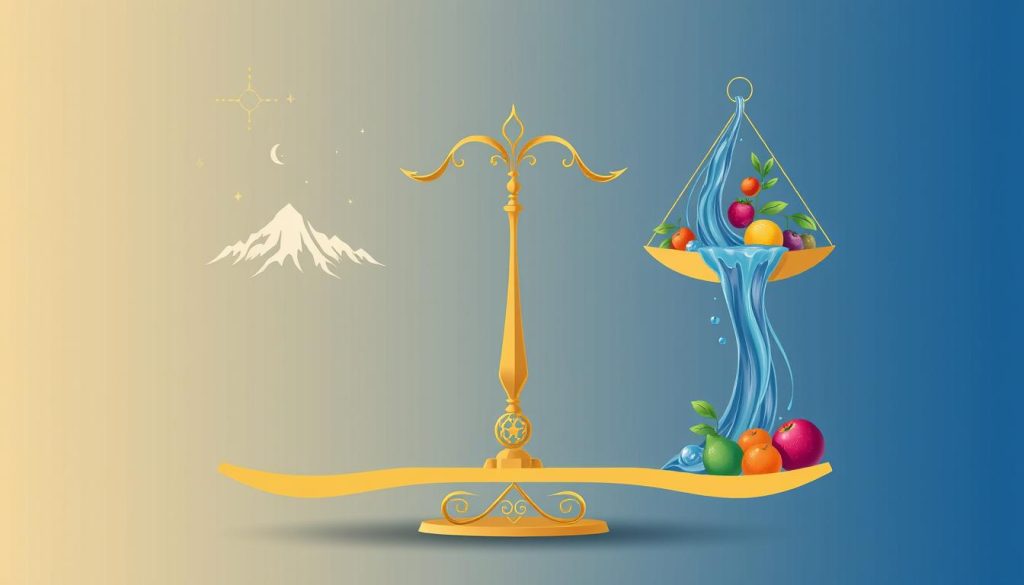
The name Dhul-Jalaali wal-Ikraam holds profound theological significance as it combines two seemingly opposite divine qualities:
The Aspect of Jalaal (Majesty)
- Allah alone possesses perfect majesty and greatness
- He deserves to be feared, respected, and revered
- His majesty encompasses His power, knowledge, wisdom, and sovereignty
- This aspect reminds us of His transcendence above creation
The Aspect of Ikraam (Generosity)
- Allah honours His creation through countless blessings
- He especially honours His believing servants
- His generosity is manifest in both worldly and spiritual gifts
- This aspect reminds us of His immanence and closeness
As Al-Qurtubi explains: “His Jalaal is an attribute which He deserves due to His Essence.” This means that majesty belongs inherently to Allah, while His Ikraam (honouring) extends outward to His creation.
Shaikh as-Sa’dee (Rahimahullaah) beautifully summarises: “Dhul Jalaali wal-Ikraam means the One possessing Greatness and Grandeur, possessing Mercy and Generosity. The One Who shows beneficence in both its general and specific aspects. The One Who honours His Awliyaa’ (friends) and close ones – those who glorify, exalt and love Him.”
Key Insight: This name teaches us that Allah’s majesty does not prevent His generosity, and His generosity does not diminish His majesty. Instead, these attributes exist in perfect harmony within His divine nature.
Common Misconceptions
Correct Understanding
- Jalaal and Ikraam are complementary, not contradictory attributes
- Allah’s honouring of His creation is a manifestation of His greatness
- Both aspects of the name should be reflected upon equally
- Ikraam refers to both Allah’s generosity and the honour He deserves
Common Misunderstandings
- Focusing only on Allah’s majesty while neglecting His generosity
- Assuming worldly blessings alone indicate Allah’s pleasure
- Separating the two qualities rather than seeing their interconnection
- Limiting Ikraam to material generosity rather than spiritual honour
As mentioned in the Qur’an (Surah Al-Fajr 89:15-16): “As for man, when his Lord tries him and thus is generous to him and favours him, he says: ‘My Lord has honoured me.’ But when He tries him and restricts his provision, he says: ‘My Lord has humiliated me.'”
This verse highlights a common misconception – equating worldly prosperity with Allah’s honour and worldly restriction with humiliation. In reality, Allah’s Ikraam (honouring) of His servants may manifest through both ease and hardship, as both can be means of spiritual elevation.
Practical Applications in Worship
Supplications Using This Name
اللَّهُمَّ أَنْتَ السَّلاَمُ وَمِنْكَ السَّلاَمُ تَبَارَكْتَ ذَا الْجَلاَلِ وَالإِكْرَامِ
Allahumma antas salam wa minkas salam tabarakta dhal jalali wal ikram
“O Allah: You are Peace, and peace comes from You, blessed are You, Possessor of Glory and Honor”
Incorporating This Name in Daily Life
Transform Your Spiritual Practice
Join our online workshop to learn how to embody the lessons of Allah’s beautiful names in your daily life.
Balancing Awe and Hope
One of the most beautiful lessons from Dhul-Jalaali wal-Ikraam is learning to balance khashyah (awe/fear) and rajaa (hope) in our relationship with Allah:
Cultivating Khashyah (Awe)
Reflecting on Allah’s Jalaal (Majesty) naturally produces a sense of awe and reverence. This healthy fear reminds us of Allah’s power, justice, and perfection. It motivates us to avoid sin and strive for excellence in worship.
As the Qur’an states: “The scholars among His servants fear Allah.” (35:28)
Nurturing Rajaa (Hope)
Contemplating Allah’s Ikraam (Generosity) fills our hearts with hope and optimism. We recognise His mercy and forgiveness and desire to honour His servants. This hope motivates us to turn to Allah in all circumstances.
As the Prophet ﷺ taught us about Allah’s words: “I am as My servant thinks of Me.”
The scholar Ibn al-Qayyim beautifully described the believer’s heart as travelling to Allah “with the wings of love and fear.” Just as a bird cannot fly with only one wing, our spiritual journey requires both the wing of awe (inspired by Allah’s Jalaal) and the wing of hope (inspired by Allah’s Ikraam).
Reflection Question: In your spiritual journey, do you tend to focus more on Allah’s majesty or His generosity? How might you cultivate a more balanced approach?
Conclusion
Dhul-Jalaali wal-Ikraam is one of Allah’s most comprehensive names, encompassing both His transcendent majesty and His immanent generosity. By understanding and reflecting on this magnificent name, we develop a more balanced relationship with our Creator—one built on reverence and love, awe and hope.
As we navigate life’s challenges and blessings, may we always remember that we worship the Owner of Majesty and Honor, who deserves our utmost reverence while simultaneously showering us with His boundless generosity.
Continue Your Spiritual Journey
Subscribe to receive monthly reflections on Allah’s Beautiful Names and their application in daily life.


