


Did you know 70% of Muslim households in the U.S. display faith-inspired decor as part of their daily spiritual practice? This surge reflects a deeper truth: sacred aesthetics are no longer confined to mosques. They’ve become cornerstones of modern living spaces, transforming walls into silent teachers of devotion.
At its core, this art form serves as visual dhikr — a constant reminder of faith woven into daily life. Quranic verses, divine names, and intricate Arabic calligraphy aren’t merely decorative elements. They anchor our surroundings in spiritual intentionality, turning ordinary rooms into sanctuaries of reflection.
Contemporary creators blend tradition with innovation. From metal calligraphy panels to digital installations, these pieces honor centuries-old techniques while meeting modern design sensibilities. The result? Timeless works that resonate across generations.
Our collection celebrates this evolution. Each piece undergoes meticulous craftsmanship, whether it’s gold-leafed Surahs or geometric patterns echoing historic Islamic architecture. As highlighted in this exploration of the art form’s legacy, every stroke carries ancestral wisdom adapted for today’s spaces.
Key Takeaways
- Faith-inspired decor serves as daily spiritual reminders, not just aesthetic enhancements
- Modern designs blend traditional calligraphy with contemporary materials like metal and glass
- Digital art options meet growing demand for tech-integrated sacred spaces
- Quality craftsmanship ensures pieces function as heirlooms, not temporary decorations
- Strategic placement transforms living areas into environments of continuous remembrance
Introduction: More Than Just Decoration
What transforms four walls into a sanctuary of faith? Unlike standard wall art, pieces rooted in spiritual tradition carry layered meanings that transcend visual appeal. These creations merge sacred texts with artistic mastery – think flowing Arabic scripts of Quranic verses or geometric patterns symbolizing divine unity.
Defining Islamic Wall Art and Its Spiritual Essence
At its core, this art form acts as breathing scripture. When Wall Art Istanbul artisans craft metal calligraphy panels or gold-accented pieces, they’re encoding devotion into tangible form. Our collaborators at RASM articulate it best: “Every curve in our moon dome jars whispers reminders of the divine.”
Modern families increasingly choose pieces serving dual purposes – aesthetic centerpieces that double as spiritual waypoints. A calligraphy sign above the doorway isn’t merely decorative; it’s a daily reaffirmation of values as one enters and exits their personal space.
The Role of Art in Daily Dhikr and Modern Home Aesthetics
Contemporary designers reimagine tradition through new mediums. Digital displays now cycle through 99 divine names, while glass sculptures refract light into crescent-shaped patterns. These innovations meet practical needs too – our bestselling tabletop sets combine functional candle holders with engraved supplications.
The surge in Ramadan-themed installations reveals deeper trends. Families seek adaptable pieces that transition from sacred months to everyday use, proving spiritual intentionality needn’t clash with modern minimalism. As one client noted: “Our living room’s rectangle canvas sparks more faith conversations than any sermon.”
The Significance of Calligraphy in Islam
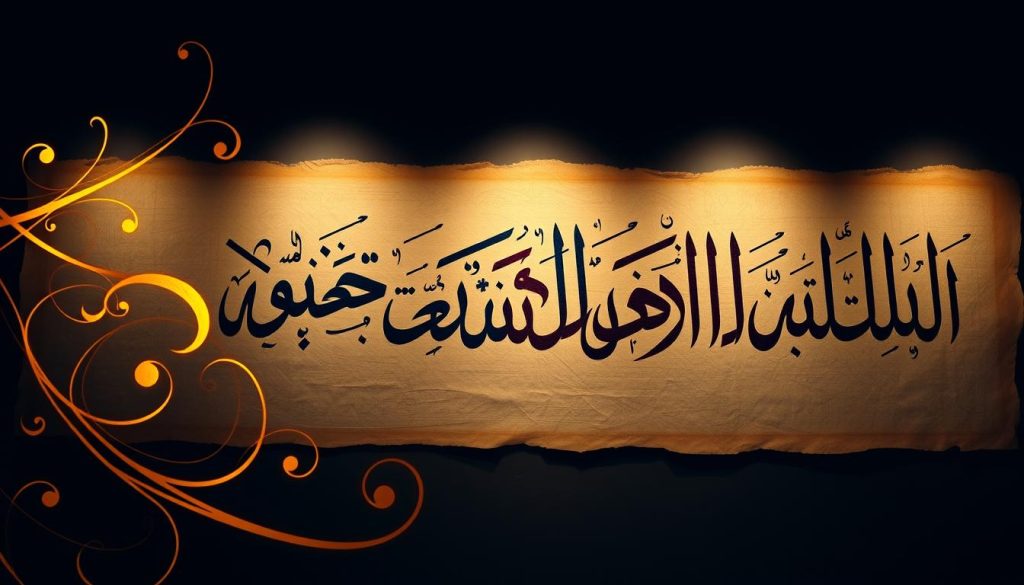
Within sacred artistic traditions, script transforms into worship. Arabic calligraphy emerged as Islam’s visual heartbeat – a divine dance between language and devotion. This art form elevates sacred texts beyond words, turning them into visual meditations that honor the prohibition against figurative imagery.
Elevating Quranic Verses and Divine Names Through Art
Master calligraphers approach their craft as spiritual practice. As noted in this exploration of sacred art forms, each stroke carries intention. Our collection features:
- Allah and Muhammad inscriptions in gold-leaf Thuluth script
- Surat Al-Fatiha panels blending Naskh clarity with modern metalwork
- Ayatul Kursi pieces where glass reflects light like divine wisdom
These creations transform walls into spaces of continuous remembrance. The First Kalima carved into oxidized steel isn’t mere decoration – it’s armor for the soul.
Exploring Calligraphy Styles: Kufic, Thuluth, Naskh, and Diwani
Four historic styles dominate sacred script art:
- Kufic: Angular majesty, perfect for architectural statements
- Thuluth: Fluid elegance for Quranic chapter headings
- Naskh: Readable simplicity in daily supplication pieces
- Diwani: Ornamental Ottoman flourishes for ceremonial texts
Our metal islamic wall pieces reimagine Kufic geometry in brushed aluminum, while glass islamic wall installations give Diwani scripts luminous depth. Each style, as explored in this study of Prophet Muhammad’s honorifics, carries centuries of spiritual legacy.
From Basmala door plaques to entire Surah displays, these works make divine words tangible. They don’t just adorn spaces – they consecrate them.
islamic home decorations That Inspire Faith
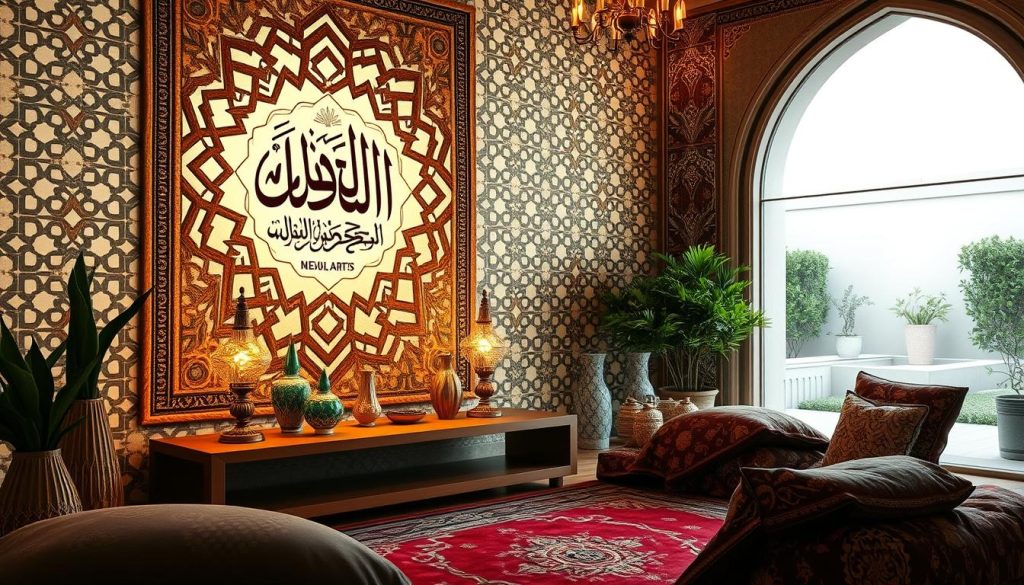
Contemporary living spaces demand solutions that honor tradition while embracing innovation. Our approach bridges centuries-old artistry with today’s design language, creating pieces that resonate spiritually and aesthetically.
Harmonizing Timeless Traditions with Current Trends
Metal craftsmanship takes center stage in our reimagined sacred art. Brushed aluminum calligraphy panels maintain the fluidity of Thuluth script while introducing industrial elegance. These pieces work particularly well in loft-style interiors, proving spiritual elements needn’t clash with urban aesthetics.
Our tempered glass collections demonstrate how ancient motifs thrive in modern contexts. The Ayatul Kursi centerpiece exemplifies this fusion – its tulip-shaped frame nods to Ottoman influences while employing scratch-resistant mounting systems. Such innovations allow sacred texts to become functional art in active households.
Key integration principles guide our designs:
- Material alchemy: Combining oxidized metals with LED backlighting for dimensional depth
- Modular systems: Interchangeable glass panels featuring protection surahs
- Cultural continuity: Crescent motifs reworked as minimalist tabletop accents
With installations in over 40,000 residences globally, we’ve perfected the balance between reverence and relevance. Our pieces don’t just occupy walls – they spark dialogues between generations, making spiritual connection feel effortlessly contemporary.
The Meaning Behind Common Islamic Phrases in Wall Art
What transforms script into soulful dialogue? Sacred phrases become bridges between earthly spaces and eternal truths when rendered through artistic mastery. Our collection decodes this spiritual vocabulary, turning walls into interactive maps of faith.
Unpacking the Spiritual Significance of Ayatul Kursi and Surahs
The Ayatul Kursi panel isn’t just decor – it’s a visual fortress. This throne verse encapsulates Allah’s dominion over creation, its metallic curves symbolizing divine protection. Our glass Surah sets transform entire walls into armor, with each piece featuring defensive chapters like Al-Falaq and An-Nas.
Surat Al-Fatiha’s opening lines shine in gold-leaf calligraphy, transforming entryways into portals of guidance. As RASM artisans explain: “We craft these pieces to function as silent mentors, reinforcing core beliefs through daily exposure.”
Interpreting Divine Names and Islamic Phrases in Art Pieces
Allah’s 99 names become tactile lessons in our dimensional works. The Ar-Rahman (Most Merciful) panel uses flowing script softened by rounded edges, while Al-Quddus (Most Holy) appears in crisp geometric forms. These visual translations help believers internalize divine attributes.
Our First Kalima installations distill Islamic monotheism into minimalist designs. Brushed metal declarations of faith serve as grounding points in modern spaces, their simplicity echoing the purity of tawhid (divine unity).
Understanding these layered meanings transforms decorative choices into devotional acts. Whether through protective Surahs or illuminated divine names, each piece becomes a catalyst for contemplation – turning walls into witnesses of faith.
FAQ
How do your calligraphy pieces maintain authenticity with Quranic verses?
We collaborate with certified Arabic calligraphers who adhere to traditional script rules while incorporating modern layouts. Each piece undergoes rigorous verification by Islamic art scholars to ensure textual accuracy and respectful representation of sacred content.
Can contemporary designs still honor traditional Islamic aesthetics?
Absolutely. Our artists blend timeless elements like geometric patterns and gold-leaf accents with minimalist framing and space-conscious formats. This approach preserves spiritual symbolism while complementing modern interiors from studio apartments to open-concept homes.
Why is Ayatul Kursi prominently featured in your collections?
As the Quran’s most powerful verse for divine protection, Ayatul Kursi serves as both spiritual armor and artistic focal point. We present it in layered glass etchings and brushed metal finishes, creating pieces that inspire reflection while enhancing wall spaces above mantels or entryways.
What materials ensure durability for daily spiritual engagement?
We use museum-grade acrylics for canvas prints, tempered glass for 3D designs, and rust-resistant alloys for metalwork. These materials preserve intricate details like the flowing curves of Thuluth script or the angular precision of Kufic lettering across years of use.
How do you balance decorative appeal with religious reverence?
Every design undergoes a dual evaluation process – assessing both artistic innovation through color gradients/texture contrasts and theological compliance through script proportions/surahs placement. This ensures pieces like our crescent-motif Surah Al-Fatiha panels remain visually striking yet doctrinally sound.
Are your Ramadan/Eid collections suitable for year-round display?
Yes. While featuring seasonal motifs like lanterns or moon-phase designs, these pieces use neutral metallic tones and modular shapes that transition seamlessly into daily decor. The removable crescent ornaments on our star-and-moon tabletop sets exemplify this versatile approach.
What packaging standards protect delicate items during shipping?
Fragile items like glass-etched Kalima artworks ship in triple-layer crates with shock-absorbent inserts. We use humidity-controlled packaging for gilded pieces and offer real-time tracking through our partnered logistics network to ensure secure global delivery.


