






Among Allah’s 99 beautiful names, AL-‘AFUWW (العفو) holds profound significance for believers seeking divine forgiveness. Unlike other names for forgiveness, AL-‘AFUWW represents Allah’s ability to completely erase sins without leaving any trace. This comprehensive guide explores the linguistic roots, Quranic mentions, and practical applications of this merciful attribute, AL-AFUWW, that offers believers a path to spiritual renewal. Embracing the quality of Al-Afuww encourages believers to foster a spirit of forgiveness, reflecting Allah’s infinite mercy in their daily lives. Al-Afuww is a reminder that no sin is beyond His forgiveness.
اللغوي التحليل: Linguistic Analysis of AL-‘AFUWW (العفو)
The name AL-‘AFUWW derives from the Arabic root “ayn-fa-waw” (ع ف و), which carries several interconnected meanings in classical Arabic. Understanding these linguistic nuances helps us grasp the full depth of this divine attribute. Al-Afuww signifies a complete removal of sins and is central to the believer’s journey of repentance.
Root Meanings of العفو
- To forgive and pardon completely
- To obliterate all traces and efface
- To remove and eliminate entirely
- To pass over and forgo punishment
- To give spontaneously without constraint
- To make unapparent and imperceptible
The linguistic essence of AL-‘AFUWW extends beyond simple forgiveness. When Allah pardons as AL-‘AFUWW, He eliminates the sin so entirely that it is as if it never occurred. This differs significantly from merely covering or concealing wrongdoing – it represents total erasure and a fresh beginning for the believer. Al-Afuww provides hope and reassurance for those seeking redemption.
القرآنية الآيات: Quranic References to AL-‘AFUWW
Allah’s name AL-‘AFUWW appears five times in the Holy Quran, each revealing different dimensions of this divine attribute. These verses provide profound insights into Allah’s pardoning nature. Al-Afuww embodies the essence of mercy through divine verses.
“Whether you disclose a good deed or conceal it, or pardon an evil, verily, Allah is Ever Pardoning, All-Powerful.” (Quran 4:149)
In this verse, Allah links His name AL-‘AFUWW with Al-Qadeer (All-Powerful), showing that His ability to pardon is connected to His unlimited power. True forgiveness requires strength, not weakness. Al-Afuww signifies hope, encouraging believers to strive for forgiveness.
“That [is so]. And whoever responds [to injustice] with the equivalent of that with which he was harmed and then is tyrannised – Allah will surely aid him. Indeed, Allah is Pardoning and Forgiving.” (Quran 22:60)
Here, AL-‘AFUWW is paired with Al-Ghafoor (The Forgiving), demonstrating the complementary nature of these attributes. While Al-Ghafoor covers sins, AL-‘AFUWW erases them, allowing believers to experience true relief. Al-Afuww encourages sincere repentance, leading to spiritual growth.
“And it is He who accepts repentance from His servants and pardons misdeeds, and He knows what you do.” (Quran 42:25)
النبوية الأحاديث: Hadiths About Divine Forgiveness
The Prophet Muhammad ﷺ provided valuable guidance about seeking Allah’s pardon through his teachings and personal practice. These authentic hadiths illuminate the practical application of connecting with Allah as AL-‘AFUWW. Al-Afuww inspires believers to seek a deeper connection with the Creator.
The Most Beloved Supplication on Laylatul Qadr
“Allahumma innaka ‘afuwwun tuhibbul ‘afwa fa’fu ‘anni”
“O Allah, You are the Pardoner, You love to pardon, so pardon me.” (Tirmidhi)
The Prophet’s Regular Practice of Seeking Forgiveness
“By Allah! I ask for forgiveness from Allah and turn to Him in repentance more than seventy times a day.”
The Mercy of Ramadan
“Whoever established prayers on the night of Qadr out of sincere faith and hoping for a reward from Allah, then all his previous sins will be forgiven; and whoever fasts in the month of Ramadan out of sincere faith, and hoping for a reward from Allah, then all his previous sins will be forgiven.”
العلماء تفسير: Theological Interpretation by Islamic Scholars
Islamic scholars have provided valuable insights into the meaning and significance of Allah’s name AL-‘AFUWW, distinguishing it from other names related to forgiveness. Al-Afuww is often referenced in discussions about divine mercy and compassion.
Distinction Between AL-‘AFUWW and Other Names
Scholars explain that while Allah is Al-Ghaffar (The Forgiver) and Al-Ghafoor (The Great Forgiver), these names imply concealment of sins while the record still exists. However, AL-‘AFUWW goes further by eliminating all traces of sin. Al-Afuww represents an unparalleled depth of mercy.
As noted by Ibn Al-Qayyim: “When Allah pardons as AL-‘AFUWW, it is as if the sin never occurred. The difference between forgiveness and effacement is that with effacement, there will be no trace or record of the offence being committed.”

Comparison with Related Divine Names
| Divine Name | Meaning | Distinction |
| AL-‘AFUWW (العفو) | The Pardoner | Completely erases sins, leaving no trace |
| Al-Ghafoor (الغفور) | The Great Forgiver | Covers sins but the record remains |
| At-Tawwab (التواب) | The Ever-Returning | Repeatedly accepts repentance |
| Ar-Rahman (الرحمن) | The Most Merciful | Shows comprehensive mercy to all creation |
العملية التطبيقات: Practical Applications for Muslims
Understanding Allah as AL-‘AFUWW has profound implications for how Muslims approach daily repentance, forgiveness, and spiritual growth. Al-Afuww reinforces the importance of seeking forgiveness regularly.
Steps to Seek Allah’s Pardon
- 1 Makeorse
- Abandon the sin completely with firm resolve not to return to it
- Rectify any harm caused to others when possible
- 4 Increase bad ones
- 5 Maintainiveness)
Download Our Free Guide
Deepen your understanding of Allah’s forgiveness with our comprehensive PDF guide on the Names of Divine Mercy: AL-‘AFUWW, Al-Ghafoor, and At-Tawwab. Al-Afuww is a key component of this spiritual journey.
Embodying AL-‘AFUWW in Our Character
Muslims are encouraged to adopt divine attributes in their character to the extent humanly possible. Embodying the quality of AL-‘AFUWW means:
- Forgiving others completely without holding grudges
- Not reminding others of past mistakes
- Removing traces of harm in relationships
- Being generous in pardoning, even when justified in anger

التاريخية الأمثلة: Examples from Islamic History
Islamic history provides powerful examples of Allah’s forgiveness and how the Prophet Muhammad ﷺ and his companions embodied the attribute of pardoning. Al-Afuww is evident in these historical instances.
The Conquest of Makkah
When the Prophet Muhammad ﷺ conquered Makkah, he faced those who had persecuted him and his followers for years. Instead of seeking revenge, he declared: “Go, for you are free.” This exemplified the divine attribute of AL-‘AFUWW, completely pardoning past offences without retribution.
Abu Bakr As-Siddiq and Mistah
Abu Bakr As-Siddiq used to financially support his poor relative Mistah. When Mistah participated in spreading false rumors about Aisha (Abu Bakr’s daughter), Abu Bakr vowed to stop supporting him. Allah then revealed verse 24:22 encouraging forgiveness:
“And let not those of virtue among you and wealth swear not to give to their relatives and the needy and the emigrants for the cause of Allah, and let them pardon and overlook. Would you not like it if Allah forgave you? And Allah is Forgiving and Merciful.” (Quran 24:22)
Upon hearing this verse, Abu Bakr said, “Yes, by Allah, I would love that Allah forgive me,” and resumed his financial support of Mistah, embodying the quality of AL-‘AFUWW.
العملية الأدعية: Practical Duas for Seeking Pardon
The Prophet Muhammad ﷺ taught several powerful supplications for seeking Allah’s pardon that Muslims can incorporate into their daily lives. Al-Afuww is central to these prayers.
Daily Supplications for Forgiveness
“O Allah, I ask You for pardon and well-being in this life and the next. O Allah, I ask You for pardon and well-being in my religious and worldly affairs, and my family and my wealth. O Allah, veil my weaknesses and set at ease my dismay.”
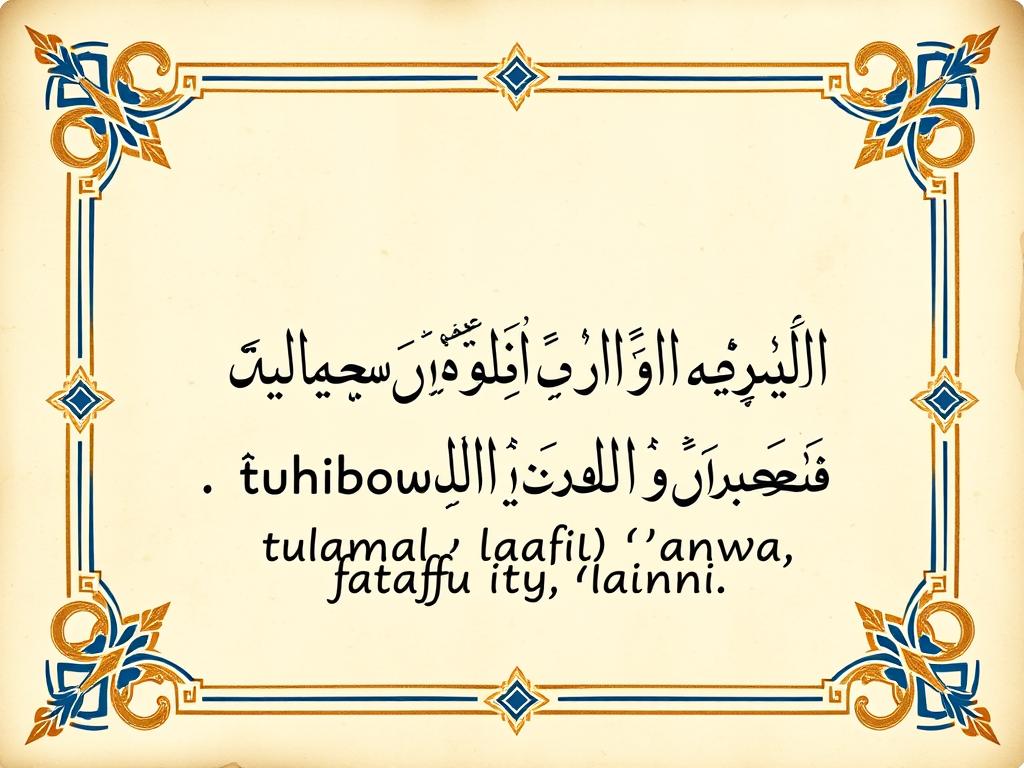
Download Printable Dua Cards
Keep these powerful supplications with you wherever you go. Our beautifully designed dua cards include Arabic text, transliteration, and translation.
Best Times for Seeking Forgiveness
- During the last third of the night
- Between the adhan and iqamah
- While in prostration (sujood)
- During Laylatul Qadr in Ramadan
- On the Day of Arafah during Hajj
- After performing obligatory prayers
الخاتمة: Reflection and Call to Action
Understanding Allah as AL-‘AFUWW (العفو) gives believers hope and motivation to continuously seek His pardon. No sin is too great for Allah’s mercy, and His door of forgiveness is always open to those who turn to Him sincerely. Al-Afuww symbolizes the endless opportunity for repentance.
As we reflect on this beautiful name, let us remember that Allah not only forgives but completely erases our sins when we turn to Him in sincere repentance. Let us also embody this attribute by being forgiving toward others, removing traces of hurt, and giving people fresh starts. Al-Afuww inspires us to extend forgiveness in our lives.
“Say, ‘O My servants who have transgressed against themselves [by sinning], do not despair of the mercy of Allah. Indeed, Allah forgives all sins. Indeed, it is He who is the Forgiving, the Merciful.'” (Quran 39:53)
Join Our Online Study Circle
Deepen your understanding of Allah’s Beautiful Names through our weekly online study circles led by qualified scholars.
Embracing the quality of Al-Afuww encourages believers to foster a spirit of forgiveness, reflecting Allah’s infinite mercy in their daily lives.


