


In the rich tapestry of Islamic theology, the 99 Beautiful Names of Allah hold profound significance for believers. Among these sacred attributes is AL-AWWAL (الأوّل)—The First—a name that invites us to contemplate the eternal nature of the Divine. This name reveals Allah as the One whose existence precedes all creation, The Origin without beginning, The Source from which everything emanates. As we explore this divine attribute, we embark on a journey of spiritual understanding that connects us to the foundation of Islamic belief.
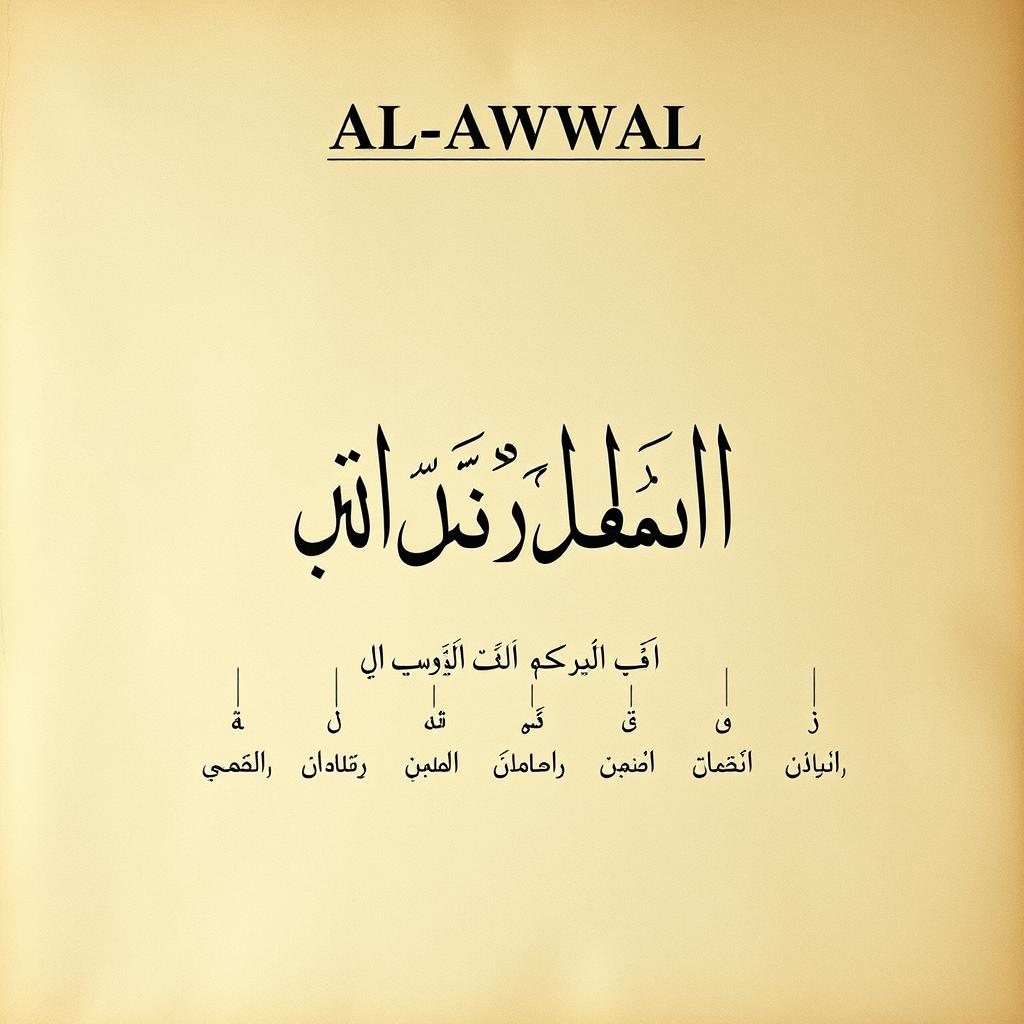
The divine name AL-AWWAL (الأوّل) in traditional Arabic calligraphy
Linguistic Meaning and Etymology of AL-AWWAL (الأوّل)
AL-AWWAL derives from the Arabic root hamza-waw-lam (أ و ل), which carries several interconnected meanings in classical Arabic. This linguistic foundation helps us understand the depth of this divine attribute.
Root Word Analysis
The trilateral root أ و ل (hamza-waw-lam) encompasses precedence, priority, and origination meanings. In its most basic sense, it denotes “to be first” or “to precede.” This root gives us words related to primacy, beginning, and returning to an origin point.
When we examine classical Arabic dictionaries, we find that AL-AWWAL signifies:
- The One who exists without beginning
- The First, before whom nothing existed
- The Foremost in existence
- The Origin to which everything returns
“AL-AWWAL means He was first or is the first. But this does not mean that there was nothing before. Rather, the beginning was Him. He exists without a beginning and is the source from which everything comes into existence.”
— Classical Islamic Scholarship
Unlike temporal firstness that we experience in our limited reality, Allah’s attribute of being AL-AWWAL transcends time. It describes an absolute primacy that exists beyond the constraints of chronology – a concept that invites deep contemplation about the nature of existence.
Theological Significance in Islamic Creed (Aqeedah)

The name AL-AWWAL occupies a central position in Islamic theology. It establishes fundamental principles about Allah’s nature and relationship to creation. Understanding this divine attribute helps us grasp core elements of Islamic belief.
Establishing Tawhid (Divine Oneness)
The AL–AWWAL concept reinforces tawhid–Allah’s absolute oneness – by affirming that He alone exists without beginning. This distinguishes the Creator from all creation, which has a definite starting point. As Imam Al-Ghazali explains in his seminal work “The Ninety-Nine Beautiful Names of God”:
“AL-AWWAL means He whose existence is without beginning. Everything other than Him comes after Him in terms of both essence and time. He is the First, not in the sense that He began and others followed, but that His existence has no beginning, while everything else begins from Him.”
— Imam Al-Ghazali
Relationship with Divine Attributes
AL-AWWAL connects intimately with other divine names, particularly AL-AKHIR (The Last), AZ-ZAHIR (The Manifest), and AL-BATIN (The Hidden). Together, these four names appear in Surah Al-Hadid (57:3) and form a complementary quartet that describes Allah’s all-encompassing nature:
هُوَ الْأَوَّلُ وَالْآخِرُ وَالظَّاهِرُ وَالْبَاطِنُ ۖ وَهُوَ بِكُلِّ شَيْءٍ عَلِيمٌ
“He is the First and the Last, the Ascendant and the Intimate, and He is, of all things, Knowing.”
— Quran 57:3
Sheikh Tosun Bayrak writes in “The Name & the Named” that “It is proper to read, recite, and consider the attributes ‘The First’ and ‘The Last’ together because the meaning is like a circle where the first and the last are one.” This circular understanding helps us comprehend how Allah encompasses all existence from beginning to end.
Quranic References and Contextual Analysis
The Quran provides us with profound insights into the meaning of AL-AWWAL through direct mentions and contextual references. These sacred verses help us understand this divine attribute in its full spiritual depth.
Direct Mention in Surah Al-Hadid
The most explicit reference to AL-AWWAL appears in Surah Al-Hadid:
هُوَ الْأَوَّلُ وَالْآخِرُ وَالظَّاهِرُ وَالْبَاطِنُ ۖ وَهُوَ بِكُلِّ شَيْءٍ عَلِيمٌ
“He is the First (AL-AWWAL) and the Last (AL-AKHIR), the Ascendant (AZ-ZAHIR) and the Intimate (AL-BATIN), and He is, of all things, Knowing.”
— Quran 57:3
In his renowned tafsir (exegesis), Ibn Kathir explains that this verse establishes Allah’s eternal existence before all creation and His continued existence after everything perishes. Pairing these four names creates a comprehensive understanding of Allah’s all-encompassing nature across all dimensions of existence.
Conceptual References in Other Verses
While the explicit name AL-AWWAL appears only once in the Quran, the concept of Allah being the First is reinforced throughout the scripture:
إِنَّا لِلَّهِ وَإِنَّا إِلَيْهِ رَاجِعُونَ
“Indeed, we belong to Allah, and indeed to Him we will return.”
— Quran 2:156
This verse, often recited during times of difficulty, reinforces the concept that Allah is both our origin (AL-AWWAL) and our ultimate destination (AL-AKHIR). We come from Him and return to Him, completing the circle of existence.
كُلُّ شَيْءٍ هَالِكٌ إِلَّا وَجْهَهُ
“Everything will perish except His Face.”
— Quran 28:88
This verse emphasises that while all creation has a beginning and an end, Allah transcends these limitations as AL-AWWAL and AL-AKHIR. His existence precedes all things and continues after all things perish.

Practical Applications in Muslim Worship and Daily Life
Understanding Allah as AL-AWWAL has profound implications for how Muslims approach worship, spirituality, and daily challenges. This divine name offers practical guidance for living a God-centered life.
In Supplication (Dua)
The Prophet Muhammad ﷺ incorporated the name AL-AWWAL in his supplications, teaching us how to connect with this divine attribute. One beautiful example is this dua he would recite before sleeping:
اللَّهُمَّ أَنْتَ الأَوَّلُ فَلَيْسَ قَبْلَكَ شَىْءٌ وَأَنْتَ الآخِرُ فَلَيْسَ بَعْدَكَ شَىْءٌ…
“O Allah, You are AL-AWWAL, there is nothing before You; and You are AL-AKHIR, there is nothing after You…”
— Sahih Muslim 2713
By reciting this dua, believers acknowledge Allah’s eternal nature and trust the One who encompasses all existence. This brings comfort, especially when facing life’s uncertainties.

Cultivating Tawakkul (Reliance on Allah)
Understanding Allah as AL-AWWAL strengthens tawakkul (reliance on Allah) by reminding us that all causes originate from the First Cause. When we recognize that Allah precedes all things, we naturally place our trust in Him rather than in temporary worldly means.
How does understanding AL-AWWAL help with anxiety about the future?
When we internalise that Allah is AL-AWWAL, we recognise He is the origin of all events and circumstances. This understanding helps us trust that the One who began all things completely controls how they unfold. Our anxiety diminishes as we realise nothing occurs outside His knowledge and wisdom.
How can we reflect on AL-AWWAL in our daily lives?
We can contemplate AL-AWWAL by regularly reflecting on the origins of everything we encounter. When we see a tree, we can think about its beginning as a seed and then trace that back to Allah, the First, who created the very concept of growth. This practice helps us see Allah’s hand in all aspects of creation.
Benefits of Reciting AL-AWWAL
Many Islamic spiritual traditions suggest that regular contemplation and recitation of Allah’s name AL-AWWAL brings specific benefits:
- Strengthens faith by deepening our understanding of Allah’s eternal nature
- Helps find solutions to overwhelming problems by connecting to the Source of all wisdom
- Cultivates patience during difficulties by reminding us of Allah’s perfect plan
- Reduces attachment to temporary worldly matters
- Increases gratitude by recognising Allah as the origin of all blessings

Relationship with Other Divine Names
AL-AWWAL exists in beautiful harmony with other divine names, creating a tapestry of understanding Allah’s nature. These relationships deepen our appreciation of this attribute.
AL-AWWAL & AL-AKHIR

These complementary names appear together in Quran 57:3. AL-AWWAL (The First) and AL-AKHIR (The Last) form a complete circle of existence. Imam Ghazali notes, “He is last concerning wayfaring, and first concerning existence: the first beginning was from Him; and to Him is the last return and destination.”
AL-AWWAL & AL-KHALIQ
AL-AWWAL (The First) provides the foundation for understanding AL-KHALIQ (The Creator). Because Allah is the First, He alone can be the uncreated Creator of all things. His attribute of being AL-AWWAL establishes that He is not part of the chain of creation but its independent source.
AL-AWWAL & AL-QAYYUM

AL-AWWAL (The First) connects with AL-QAYYUM (The Self-Subsisting) to show that Allah began all existence and continuously sustains it. As the First, He established everything, and as the Self-Subsisting, He maintains everything moment by moment.
Explore the Beautiful Names of Allah
Deepen your understanding of how AL-AWWAL connects with other divine names through our comprehensive guide to Allah’s 99 Beautiful Names.
Scholarly Interpretations from Classical Sources
Throughout Islamic history, scholars have offered profound insights into the meaning of AL-AWWAL, enriching our understanding of this divine name.
Imam Al-Ghazali's Perspective
In his masterwork “The Ninety-Nine Beautiful Names of God,” Imam Al-Ghazali (1058-1111 CE) provides a nuanced explanation of AL-AWWAL:
“AL-AWWAL is He whose existence has no beginning… Everything other than Him is temporally originated and created by Him. He is the First, not in the sense that He began and was followed by others, but in the sense that there is nothing before Him.”
— Imam Al-Ghazali
Al-Ghazali emphasizes that Allah’s firstness is unlike the firstness we experience in our limited reality. It is an absolute firstness that transcends time itself.
Ibn Arabi's Mystical Insights
The great Sufi mystic Ibn Arabi (1165-1240 CE) explored the deeper dimensions of AL-AWWAL in his writings on divine names:
“AL-AWWAL points to the reality that Allah is the beginning of all things, not in a temporal sense, but in the sense that all existence emanates from Him. He is the First regarding ontological priority, not chronological sequence.”
— Adapted from Ibn Arabi’s teachings
Ibn Arabi’s perspective helps us understand that Allah’s firstness is about His essential priority as the source of all being, rather than simply being first in a timeline.
Contemporary Scholarly Views
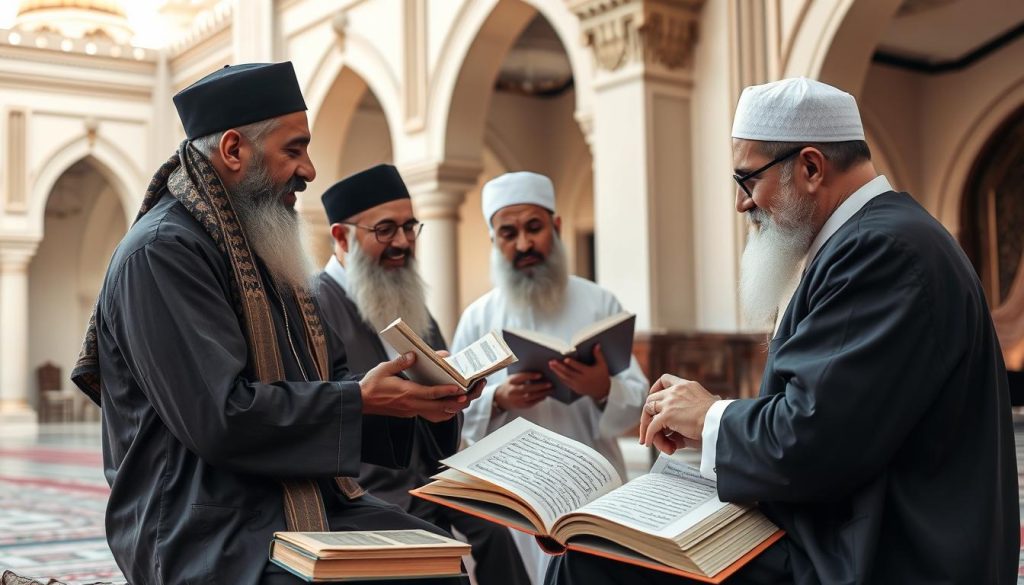
Modern scholars continue to explore the relevance of AL-AWWAL in contemporary Islamic thought. They emphasise how this name helps Muslims navigate the complexities of modern existence by providing an anchor point in the eternal Divine reality that transcends our fast-changing world.
Modern Relevance in Contemporary Life
The divine name AL-AWWAL offers profound guidance for Muslims navigating the challenges of contemporary life. Its timeless wisdom provides perspective in our rapidly changing world.
Finding Purpose in a Materialistic World
In today’s materialistic society, understanding Allah as AL-AWWAL reminds us that all existence originates from a sacred source. This knowledge counters the emptiness of consumerism by connecting us to our true origin and purpose.
When we recognise Allah as the First, we understand that our existence has profound meaning beyond material accumulation. Our lives become oriented toward our Creator rather than toward temporary possessions.

Scientific Discovery and AL-AWWAL
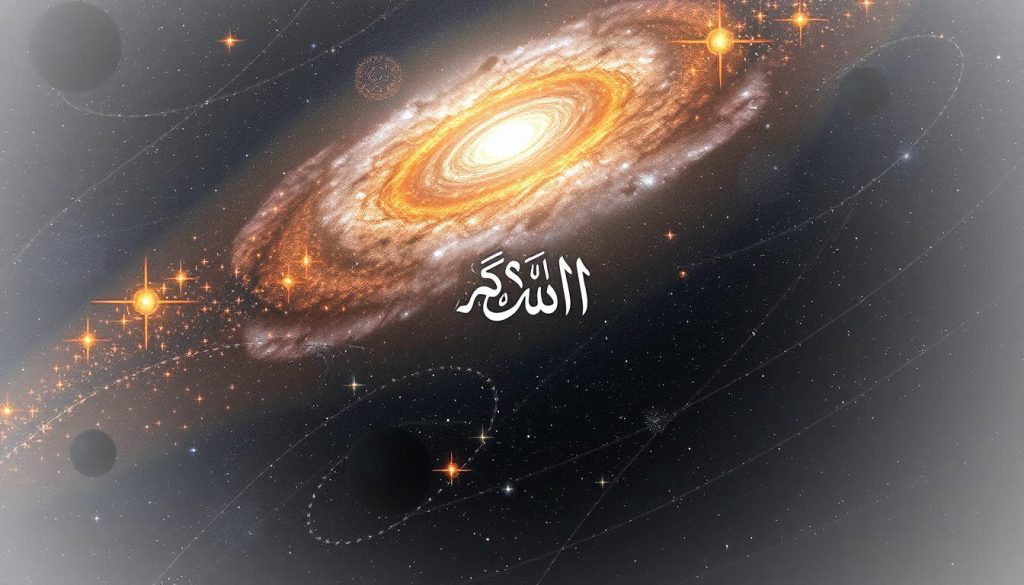
Modern scientific discoveries about the universe’s origins resonate with the concept of AL-AWWAL. As science explores the Big Bang and the beginning of time, believers find AL-AWWAL a reminder that Allah transcends even these cosmic beginnings as the First who exists without beginning.
Rather than creating conflict between science and faith, AL-AWWAL offers a perspective that embraces scientific exploration while maintaining the understanding that Allah is the ultimate origin beyond physical processes.
Digital Age and Remembering Our Origin
In the digital age where information overwhelms us and attention spans diminish, contemplating Allah as AL-AWWAL provides a centring practice. By regularly returning our thoughts to The First, we find stability amidst constant change and distraction.
This practice of remembrance (dhikr) of AL-AWWAL helps maintain spiritual focus in a world designed to capture and fragment our attention.
Conclusion: Embracing the Wisdom of AL-AWWAL
As we conclude our exploration of Allah’s divine name, AL-AWWAL (الأوّل), we recognize the profound depths of wisdom contained within this sacred attribute. Understanding Allah as the First transforms our perspective on existence itself, reminding us that all creation flows from an eternal source that transcends time and space.
By contemplating AL-AWWAL, we gain clarity about our place in the universe – as beings created by and returning to The One who is both our beginning and end. This knowledge brings comfort in times of uncertainty, purpose in times of confusion, and direction in times of loss.
May our understanding of AL-AWWAL deepen our connection to Allah and inspire us to live with greater awareness of our sacred origin and ultimate destination.

Continue Your Spiritual Journey
Deepen your connection with Allah through our comprehensive guide to His 99 Beautiful Names. Download our free resource to explore the divine attributes and their application in daily life.
Glossary of Arabic Terms
- AL-AWWAL (الأوّل) – The First; one of Allah’s 99 Beautiful Names
- AL-AKHIR (الآخِر) – The Last; one of Allah’s 99 Beautiful Names
- AZ-ZAHIR (الظَّاهِرُ) – The Manifest/Apparent; one of Allah’s 99 Beautiful Names
- AL-BATIN (الْبَاطِنُ) – The Hidden; one of Allah’s 99 Beautiful Names
- Tawhid (توحيد) – The concept of the absolute oneness of Allah
- Dhikr (ذِكْر) – Remembrance of Allah; spiritual practice of reciting divine names
- Dua (دُعَاء) – Supplication; personal prayer to Allah
- Tawakkul (تَوَكُّل) – Reliance on Allah; trusting in divine plan
- Asma ul-Husna (أسماء الله الحسنى) – The Beautiful Names of Allah
- Aqeedah (عقيدة) – Islamic creed or belief system
- Tafsir (تفسير) – Exegesis; scholarly interpretation of the Quran
- Hadith (حديث) – Recorded sayings and actions of Prophet Muhammad ﷺ


