


Islamic architecture is renowned for its beauty and spiritual depth. We are drawn to the grand AL-MAAJID. It has played a significant role in Islamic heritage for centuries.
The detailed designs and calligraphy on these buildings inspire faith. They also bring people together, creating a sense of community and spiritual bond.
As we explore Islamic architectural wonders, we see how al-maajid helps us understand Islamic art and culture better.
Key Takeaways
- Understanding the significance of AL-MAAJID in Islamic architecture
- Exploring the role of Islamic art in inspiring faith
- Discovering the cultural importance of architectural masterpieces
- Learning about the intricate designs and calligraphy in Islamic structures
- Appreciating the community and spiritual connection fostered by these structures
The Divine Beauty of AL-MAAJID: Understanding Islamic Architectural Philosophy
The beauty of AL-MAAJID shows the deep Islamic architectural philosophy. It combines spirituality, community, and art. This philosophy goes beyond just making pretty buildings. It is deeply connected to Islamic society’s spirit and culture.
The Spiritual Significance Behind Mosque Design
Mosques are more than places of worship. They are majestic spaces that show the Islamic community’s spiritual hopes. Mosque design focuses on humility, unity, and spiritual growth. Every part, from minarets to mihrab, holds spiritual value.
“The mosque is a sacred space that connects the believer with the divine, fostering a sense of community and spiritual growth.”
Mosque design helps with prayers and other religious acts. It makes a space for spiritual thinking and community bonding.
Key Elements of Islamic Architectural Language
Islamic architecture has its own special language. It includes arches, domes, minarets, and detailed geometric patterns. These elements are not just for looks. They have glorious meanings that show Islamic beliefs and values.
| Architectural Element | Symbolic Meaning |
| Dome | Represents the celestial vault and the unity of God |
| Minaret | Symbolizes the connection between heaven and earth |
| Geometric Patterns | Reflect the infinite nature of God and the unity of all creation |
Using these elements in mosques and Islamic buildings makes a magnificent visual language. It shares the heart of Islam, inspiring wonder and respect in those who see these structures.
The Majestic Blue Mosque of Istanbul: Ottoman Grandeur
The Blue Mosque is a stunning example of Ottoman architecture. It shows the grandeur of Istanbul’s history. Sultan Ahmed I commissioned it in 1609 to display the Ottoman Empire’s power and beauty.
Historical Context and Construction
Building the Blue Mosque was a huge task. Built between 1609 and 1616, it needed thousands of skilled workers. Architect Sedefkar Mehmed Ağa, a student of Sinan, designed it. The mosque’s design reflects the Ottoman society’s spiritual and cultural values.
Distinctive Architectural Features
The Blue Mosque has six minarets and a large central dome. It’s surrounded by smaller domes. Its exterior boasts an impressive courtyard and a cascade of domes, adding to its grandeur. The design combines traditional Ottoman elements with innovative features, making it a unique example of Islamic architecture.
The Breathtaking Interior Design Elements
Inside the Blue Mosque, visitors find a stunning interior. It’s covered in thousands of Iznik tiles in blue, earning it its name. The interior showcases Ottoman decorative arts with intricate patterns and calligraphy. The central dome, supported by four massive pillars, creates a sense of openness and spirituality.
The Cordoba Mosque-Cathedral: A Testament to Andalusian Brilliance
The Cordoba Mosque-Cathedral is a stunning example of Andalusian architecture. It has seen the rise and fall of many civilizations. Yet, it still shines with majesty and spiritual importance. Let’s dive into its history and marvels to understand its significance.
The Historical Evolution of the Structure
The Cordoba Mosque-Cathedral has changed a lot since it was first built. It started as a mosque in the 8th century and became a cathedral in the 13th. Its design shows both Islamic and Gothic styles. “The mosque-cathedral’s complex history is a testament to the cultural and religious diversity of Spain.”
Historians say its growth added new architectural features. This mix of styles makes it truly unique.
The Forest of Columns: Engineering Marvel
The Cordoba Mosque-Cathedral is famous for its forest of columns. It has over 850 columns, creating a stunning sight. These columns, from marble and jasper, support arches that have lasted for centuries.
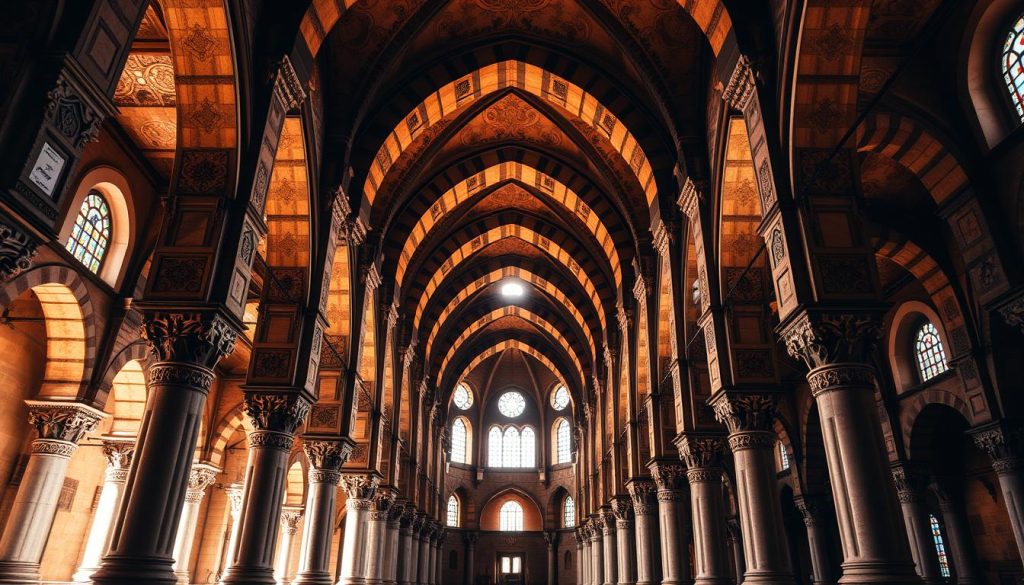
Mihrab and Decorative Elements
The mihrab, a semicircular niche, is beautifully decorated. It features geometric patterns and calligraphy. These designs add beauty and spiritual value. The calligraphy, in particular, shows the Quran’s importance in Islam.
“The intricate calligraphy and geometric patterns that adorn the mihrab are a testament to the artistic excellence of Islamic craftsmanship.”
The Cordoba Mosque-Cathedral is a true architectural wonder. It showcases Andalusia’s rich culture and spirituality. Its history, columns, and mihrab make it a place of majesty. It’s a must-see for history, architecture, or spirituality enthusiasts.
The Sheikh Zayed Grand Mosque: Contemporary Magnificence
In Abu Dhabi, the Sheikh Zayed Grand Mosque is a stunning example of modern Islamic design. It shows the beauty of Al-Maajid. This grand mosque is more than a place for prayer; it’s a symbol of Islamic culture and heritage.
Blending Traditional and Modern Design
The mosque’s design is a perfect mix of old and new. It combines traditional Islamic designs with modern building methods. This creates a truly magnificent building.
- Use of traditional Islamic calligraphy and geometric patterns
- Innovative use of materials such as white marble and gold
- Integration of modern lighting and acoustic systems
The Spectacular White Marble Façade
The mosque’s white marble façade is truly striking. The white marble makes the mosque look stunning and reflects the simplicity and purity of Islamic architecture.
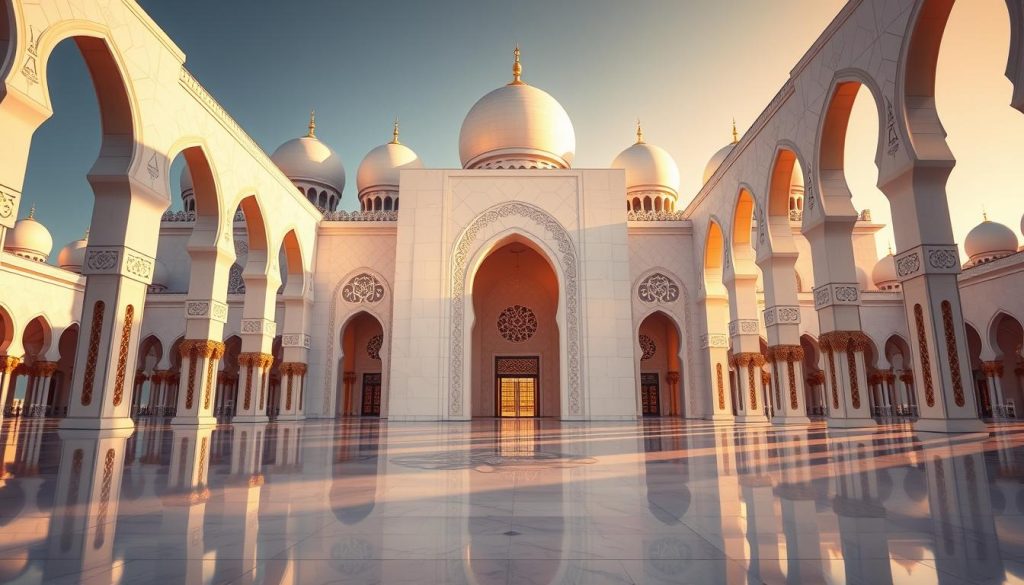
Interior Opulence and Artistic Elements
The mosque’s interior is truly stunning. It’s filled with lavish decorations and detailed art. The main prayer hall boasts beautiful chandeliers and ceiling designs.
Key interior features include:
- The world’s largest hand-knotted carpet
- Impressive chandeliers that combine traditional and modern design
- Intricate calligraphy and geometric patterns adorning the walls and ceilings
The Sheikh Zayed Grand Mosque is a marvel. It beautifully blends old and new. It’s a place of spirituality and architectural wonder.
The mosque showcases the enduring beauty of Islamic architecture. It brings people together, creating a sense of unity.
The Badshahi Mosque: Mughal Architectural Excellence
The Badshahi Mosque is a standout with its red sandstone and tall domes. It was built in 1673 by Mughal Emperor Aurangzeb. It’s a key landmark in Lahore, Pakistan.
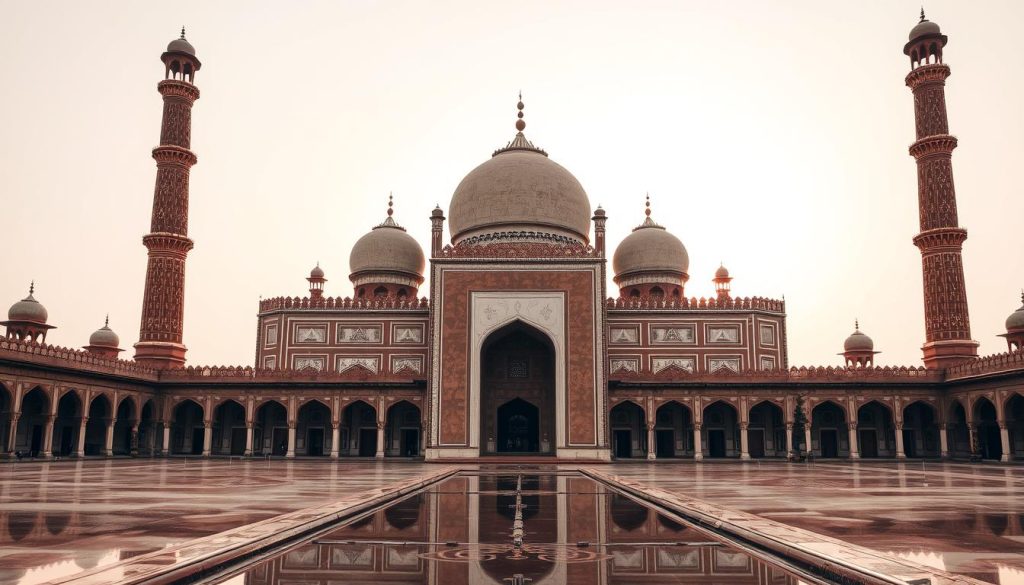
Historical Context in the Mughal Empire
Aurangzeb’s time was filled with great building projects. The Badshahi Mosque shows the Mughal Empire’s strength and culture. It mixes Indian, Persian, and Islamic styles.
The mosque was a key place for religion and social life back then. It saw many important events and watched empires grow and fall.
Distinctive Red Sandstone Construction
The Badshahi Mosque is famous for its distinctive red sandstone. This gives it a unique look. The marble and calligraphy inside make it even more stunning.
- The mosque’s façade has big arches and domes, making it look grand.
- The red sandstone has stayed bright over the years.
- The marble work inside shows the skill of Mughal craftsmen.
Spatial Layout and Decorative Elements
The mosque’s design lets many people pray together. Its big courtyard and prayer hall make it one of the largest mosques.
The mosque’s decorations are amazing, with patterns, calligraphy, and flowers. These add to its beauty and show the Mughal culture.
The Badshahi Mosque is a magnificent example of Islamic architecture. It shows the beauty, harmony, and unity of Islamic art and culture.
The Al-Aqsa Mosque: Sacred Heritage in Jerusalem
The Al-Aqsa Mosque in Jerusalem is a key site in Islam. It stands as a symbol of architectural and spiritual beauty. Its history and majesty show the depth of Islamic heritage.
Historical Significance and Evolution
The Al-Aqsa Mosque has been important to Muslims since early Islam. It’s linked to Jerusalem, a city valued by many faiths. Over time, the mosque has changed, influenced by different rulers and dynasties.
First built in the 7th century, it has grown and been updated. This shows the cultural and religious exchanges in the area.
Architectural Features Through the Ages
The mosque’s design mixes Umayyad, Abbasid, and Crusader styles. Its architecture reflects the religious and cultural context of its time. It features arches, domes, and minarets.
The prayer hall has grown over the years. The mosque’s layout and design show a deep understanding of architecture.
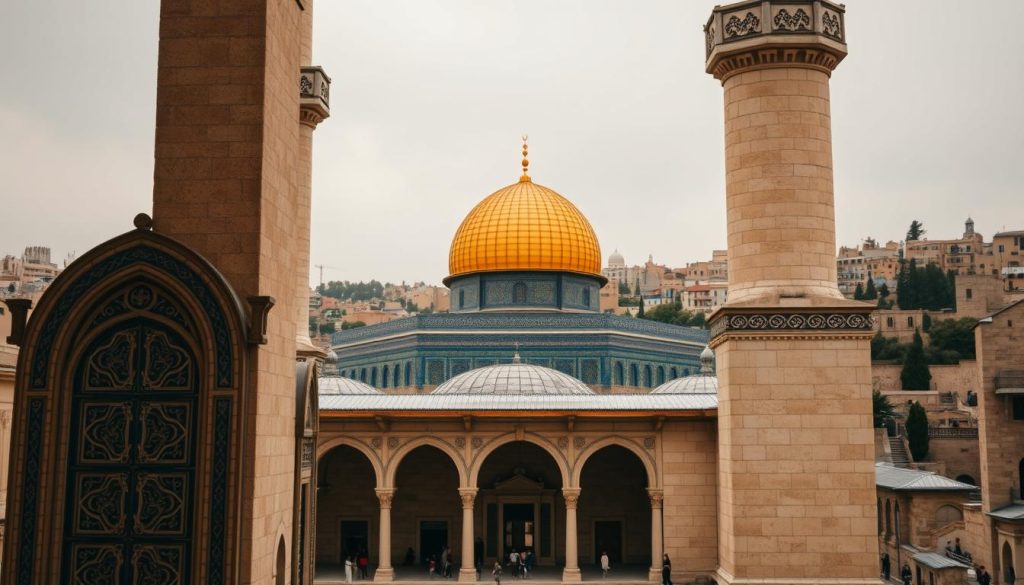
The Dome of the Rock Connection
The Al-Aqsa Mosque is connected to the Dome of the Rock in Jerusalem. Both are key Islamic sites in the Haram al-Sharif compound. They hold deep religious and historical value.
Together, they represent a sacred area of architectural and religious importance. The Dome of the Rock is famous for its dome. The Al-Aqsa Mosque is a main place of worship.
| Feature | Description | Significance |
| Architectural Style | Blend of Umayyad, Abbasid, and Crusader influences | Reflects cultural and religious exchanges |
| Prayer Hall | Expanded over the centuries | Accommodates large congregations |
| Dome of the Rock Connection | Part of the Haram al-Sharif compound | Enhances religious and historical significance |
The Al-Aqsa Mosque’s beauty goes beyond its structure. It holds deep spiritual and historical value for Muslims. Its lasting presence shows the rich legacy of Islamic architecture and faith.
The Great Mosque of Samarra: The Iconic Spiral Minaret
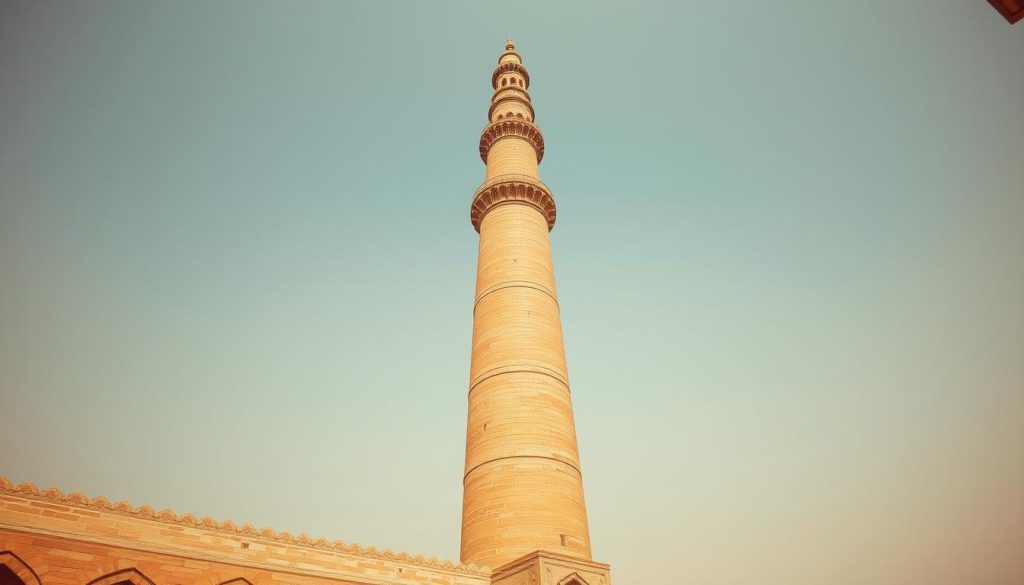
In Samarra’s heart, the Great Mosque stands tall with its glorious spiral minaret. This marvel shows Islamic engineering’s skill. It’s a symbol of Islamic culture’s rich heritage.
Abbasid Architectural Innovations
The Great Mosque of Samarra was built in the 9th century. This was a time of great architectural change. The mosque’s design shows the Abbasids’ love for grandeur and mixing styles.
The Abbasid era introduced new materials and techniques. They used brick and stucco to build bigger, more complex mosques. The Great Mosque of Samarra was one of the largest of its time.
The Unique Malwiya Tower Design
The Malwiya Tower, or spiral minaret, is the mosque’s standout feature. It’s over 50 meters tall with a spiral ramp. Its design was influenced by ancient Mesopotamian styles, showing the Abbasid era’s cultural diversity.
The Malwiya Tower was for the call to prayer and symbolised Islam’s presence. Its unique spiral design has made it a symbol of Islamic architecture.
Influence on Later Islamic Architecture
The Great Mosque of Samarra, with its Malwiya Tower, had a big impact on Islamic architecture. Spiral minarets became a common sight. Many mosques around the world copied its design.
- The incorporation of spiral minarets in later mosques.
- The use of brick and stucco in construction.
- The influence on decorative motifs and architectural styles.
The Great Mosque of Samarra’s influence can be seen in many mosques today. It shows how Abbasid architecture’s innovations have lasted.
The Artistic Elements of AL-MAAJID: Calligraphy and Geometric Patterns
In AL-MAAJID, calligraphy and geometric patterns are more than just decorations. They carry deep meanings. These elements add to the beauty and spirituality of mosques, showcasing Islamic culture and faith.
The Role of Quranic Calligraphy
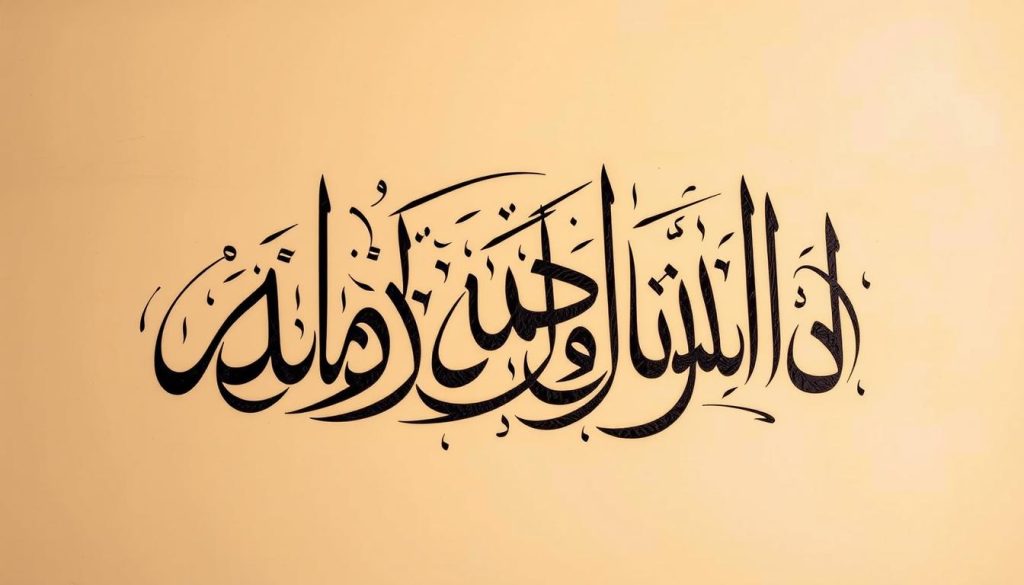
Quranic calligraphy is a highly valued art in Islamic culture. It adorns mosques and other sacred places. The detailed scripts and elegant letters represent the divine word, linking believers to the Quran’s teachings.
- Spiritual Significance: Quranic calligraphy is not just for looks; it’s the heart of Islamic faith.
- Aesthetic Appeal: Its beauty makes mosques peaceful and thought-provoking places.
Geometric Patterns and Their Symbolic Meanings
Geometric patterns are a key feature of AL-MAAJID, showing the unity and perfection of the Almighty. These patterns follow mathematical rules, showing the universe’s order and harmony.
Geometric patterns in mosques have many roles:
- They unite different parts of the design, creating a cohesive look.
- They represent the infinite and divine, focusing the worshipper’s mind on the spiritual.
- They make mosques visually striking, enhancing their beauty.
Regional Variations in Decorative Styles
Though mosque designs share some common traits, each region has its unique style. This reflects local cultures and traditions. For example, the choice of colours, materials, and patterns varies greatly.
Here are some examples of these regional differences:
| Region | Distinctive Features |
| Ottoman | Use of blue and white tiles, intricate calligraphy |
| Mughal | Incorporation of marble inlays, use of red sandstone |
| Andalusian | Intricate geometric patterns, use of arches and columns |
These differences add to the rich heritage of AL-MAAJID. They show the diversity and creativity in Islamic art and architecture.
From Mosque to Home: Islamic Architectural Influences in Wall Art
Islamic architectural motifs are now part of our homes through wall art. AL-MAAJID’s intricate designs and beauty are being brought into our living spaces. This adds a spiritual touch to our homes.
Translating Architectural Motifs to Domestic Spaces
Turning mosque designs into wall art is a careful process. Designers take inspiration from geometric patterns and calligraphy found in AL-MAAJID. They adapt these elements to fit modern tastes while staying true to their origins.
Islamic geometric patterns in wall art add spiritual depth. These patterns, inspired by mosque designs, connect our homes to sacred spaces.
Contemporary Islamic Wall Art Inspired by AL-MAAJID
Contemporary Islamic wall art is deeply rooted in AL-MAAJID’s architectural heritage. Artists and designers create pieces that reflect the beauty of these sacred spaces. From calligraphy to geometric patterns, the art is diverse and rich.
Visit https://islamicwallarts.co.uk/ to see a wide range of Islamic wall art. These pieces not only decorate our homes but also remind us of our faith and values.
Incorporating Mosque-Inspired Elements in Interior Design
Adding mosque-inspired elements to interior design can make a house feel like a home. It’s not just about wall art. Decorative items like patterned rugs, lanterns, and architectural pieces can also be used.
By carefully choosing these elements, homeowners can create a space that reflects their faith and style. The result is a home that is both beautiful and spiritually meaningful.
The Acoustic Marvels: How Mosque Architecture Enhances Sound
Mosque architecture is more than just beautiful. It’s designed to improve the sound experience for those who pray. This makes the space perfect for spiritual connection through sound.
Dome Designs for Sound Projection
The dome is a key feature of many mosques. It looks great and also helps with sound. The curved shape of the dome spreads sound evenly, so everyone can hear the Imam’s voice.
This design is a perfect example of Islamic architecture. It shows how beauty and function can go together.
The dome’s shape is great for sound. It stops the echo and makes sure the sound reaches everyone clearly. This is very important in big mosques with thousands of people.
Materials and Their Acoustic Properties
The materials used in mosques affect the sound. Marble, stone, and wood all have different effects on sound. For example, marble makes sound clear because it’s hard and doesn’t absorb sound well.
- Marble and stone: Enhance sound clarity
- Wood: Adds warmth to the acoustic environment
- Carpets and textiles: Reduce echo and reverberation
The Relationship Between Space and Sound in Prayer
The design of a mosque is crucial for good sound. Open spaces and high ceilings help sound travel well. The domes and arches add to the sound quality.
Designing mosques with care creates a perfect balance. It meets the physical and spiritual needs of worshippers. This results in an amazing sound experience.
Preserving the Heritage: Restoration Challenges of Historic Mosques
Keeping historic mosques in good shape is tricky. We must understand their history, culture, and community needs. This is key to their restoration.
Authenticity Meets Functionality
Restoring historic mosques is a big challenge. We need to keep their original look while making them useful for today’s worshippers. This means keeping old details and adding new features.
It’s important to know the mosque’s design, materials, and building methods. We also need to add modern facilities that improve the worship experience. But we must not lose the mosque’s heritage.
Leveraging Modern Technologies
Modern tech has changed how we restore historic mosques. Tools like 3D scanning and digital models help us understand and plan the restoration.
- 3D scanning creates detailed digital models of the mosque. This helps us plan and check the restoration work.
- Material analysis finds the original materials and helps choose the right ones for restoration.
- Digital modelling lets us try different restoration plans. This helps us make the best choices.
Successful Preservation Projects
Many historic mosques have been restored successfully. For example, the Blue Mosque in Istanbul was restored. It kept its beautiful Iznik tilework and improved its structure.
These examples show the value of teamwork. Architects, historians, conservationists, and local communities all play a part. By learning from these projects, we can find the best ways to restore historic mosques.
As we work to keep AL-MAAJID’s heritage alive, we remember the Almighty’s guidance. With careful restoration, these mosques will remain important places of faith and community for many years.
Conclusion: The Enduring Legacy of AL-MAAJID in World Architecture
We’ve looked into the world of AL-MAAJID, seeing their stunning architecture and deep history. These grand buildings have inspired faith and shaped modern art and architecture. The Al-Masjid Al-Haram shows the lasting impact of Al-Masjid.
AL-MAAJID’s influence is clear in Islamic art and architecture. We see it in the detailed calligraphy and the grand domes and minarets. By keeping these structures in good shape, we make sure their beauty and importance are kept alive for others to see.
The legacy of AL-MAAJID reminds us of faith and architecture’s power to inspire. As we go forward, we can use the wisdom and beauty of these structures. This will help us create spaces that show our values and heritage.
FAQ
What is the significance of AL-MAAJID in Islamic architecture?
AL-MAAJID means “the Glorious” or “the Majestic”. It shows the grandeur and majesty of Islamic architecture. It inspires faith and changes spaces.
How do mosques incorporate the concept of AL-MAAJID?
Mosques show AL-MAAJID through their grand designs. They use grand domes, minarets, and detailed calligraphy. These reflect the glory of the Almighty.
What role does calligraphy play in Islamic wall art inspired by AL-MAAJID?
Calligraphy is highly valued in Islamic art. In AL-MAAJID, it adorns mosques and homes with Quran verses. It shows the divine and earthly connection.
Can I customise Islamic wall art to fit my home decor?
Yes, at islamicwallarts.co.uk, you can customise Islamic wall art. Choose designs, sizes, and materials that match your decor. It reflects AL-MAAJID’s beauty.
How do I care for my Islamic wall art?
To keep your Islamic wall art looking great, just dust it with a soft cloth. Make sure it doesn’t get direct sunlight or moisture. This way, it will stay magnificent for many years.
Are the products available for shipping internationally?
Yes, we ship Islamic wall art all over the world. For more information on shipping and delivery times, visit islamicwallarts.co.uk.


