


Imagine stepping into a Muslim home, where the walls are adorned with elegant calligraphy. Your gaze falls on AL-QAYYOOM in beautiful Arabic script. In that moment, you feel a deep connection to something greater.
This name is more than just art on the walls. AL-QAYYOOM shows Allah’s self-sustaining nature, meaning He doesn’t need anything from us. It’s a reminder of His eternal existence and complete perfection.
For believers, this name changes how we see our faith. It makes Allah’s presence in our lives more real when we surround ourselves with spiritual art. By learning about the most beautiful names of Allah, we find ancient wisdom that enriches our lives today.
Let’s explore this amazing divine attribute together. We’ll see how knowing AL-QAYYOOM strengthens our faith and makes our homes more beautiful and meaningful.
Key Takeaways
- AL-QAYYOOM represents Allah’s self-sustaining and independent nature
- This divine name appears as “The Self-Subsisting” amongst the 99 beautiful names
- Understanding AL-QAYYOOM deepens personal spiritual connection and faith
- Islamic calligraphy featuring this name creates meaningful home décor
- The name symbolises eternal existence and divine completeness
- Incorporating spiritual art enhances both aesthetic value and religious practice
1. Understanding the Sacred Name AL-QAYYOOM
AL-QAYYOOM is a key name in the 99 Beautiful Names of Allah. It means the Self-Sustaining and Ever-Standing. This absolute divine attribute shows Allah’s independence from all creation. It deepens our spiritual understanding and appreciation for Islamic wall art.
The name AL-QAYYOOM shows Allah’s eternal self-sufficiency. Unlike creation, Allah doesn’t need constant support. This changes how we see our relationship with the divine and what we choose for our spiritual home décor.
Etymology and Linguistic Origins
AL-QAYYOOM comes from the Arabic root قوم (Q-W-M), meaning “to stand” or “to maintain.” This root adds layers of meaning beyond simple translation. It suggests continuous, unwavering action.
The Arabic pattern shows intensive action – action that never stops or weakens. This eternal quality makes AL-QAYYOOM powerful in calligraphy. The beauty of Arabic script captures this eternal nature.
Pronunciation and Transliteration Variations
Different Islamic traditions have slight variations in pronouncing this sacred name. Common transliterations are Al-Qayyum, Al-Qayoom, and Al-Qayyoom. Each keeps the essential meaning but shows regional linguistic differences.
| Transliteration | Pronunciation Guide | Regional Usage | Calligraphic Style |
|---|---|---|---|
| Al-Qayyoom | Al-KAH-yoom | South Asian | Nastaliq |
| Al-Qayyum | Al-KAH-yum | Middle Eastern | Kufic |
| Al-Qayoom | Al-ka-YOOM | North African | Maghribi |
| Al-Qayoum | Al-ka-YOOM | Contemporary | Modern Arabic |
These variations give us many choices for absolute authenticity in Islamic wall art. Knowing how to pronounce it helps us pick pieces that match our culture while keeping spiritual significance.
2. The Self-Sustaining Nature: Core Theological Meaning
At the heart of Islamic theology is AL-QAYYOOM, showing the transcendent nature of divine self-sufficiency. This attribute challenges our limited understanding but gives believers comfort and spiritual grounding. It shows the divine independence at its core.
Divine Independence from All Creation
AL-QAYYOOM shows Allah’s complete independence from creation. Unlike humans, Allah doesn’t need food, water, or rest. He exists in perpetual self-sustenance without any external help.
This divine attribute means Allah never weakens, never tires, and never needs help from His creation. The theological significance goes beyond just independence. Allah’s transcendent nature means He remains completely unaffected by His creation’s needs, actions, or existence.
Whether humanity worships or rebels, whether the universe expands or contracts, Allah’s essence remains unchanged and self-sufficient. For believers, AL-QAYYOOM in their homes through Islamic décor turns living spaces into sanctuaries of divine reliability. Each piece of art reminds us that our Creator’s strength never diminishes.
Absolute Self-Sufficiency Explained
The idea of absolute self-sufficiency is hard for humans to grasp because we’re always dependent. Every breath, every heartbeat, every moment of consciousness depends on Allah’s sustaining power. Yet Allah requires nothing in return.
This divine self-sufficiency covers all aspects of existence. Allah doesn’t need a throne, helpers, or creation to validate His greatness. His transcendent perfection remains complete and absolute, no matter what.
We find deep comfort in this theological cornerstone. When life’s uncertainties overwhelm us, remembering AL-QAYYOOM reminds us that our sustainer never fails. This understanding creates spaces of eternal stability amidst temporal challenges. It makes AL-QAYYOOM-inspired home décor both spiritually meaningful and aesthetically enriching.
3. Quranic Foundations: Where AL-QAYYOOM Appears
In the Quran, AL-QAYYOOM is a key to understanding God. It shows Allah’s endless power to sustain life. Each time it appears, it helps us see God’s self-sufficiency more clearly.
These verses are important for Islamic art and calligraphy. Many people put them in their homes. This makes their spaces both beautiful and spiritually deep.
Ayat al-Kursi - The Throne Verse Analysis
The most famous verse with AL-QAYYOOM is Ayat al-Kursi (Quran 2:255). It says: “Allah – there is no deity except Him, the Ever-Living (AL-HAYY), the Sustainer of existence (AL-QAYYOOM).”
Here, AL-QAYYOOM and AL-HAYY together show Allah’s eternal life. They say God is independent and always supports life. This shows how life and support are connected in God’s nature.
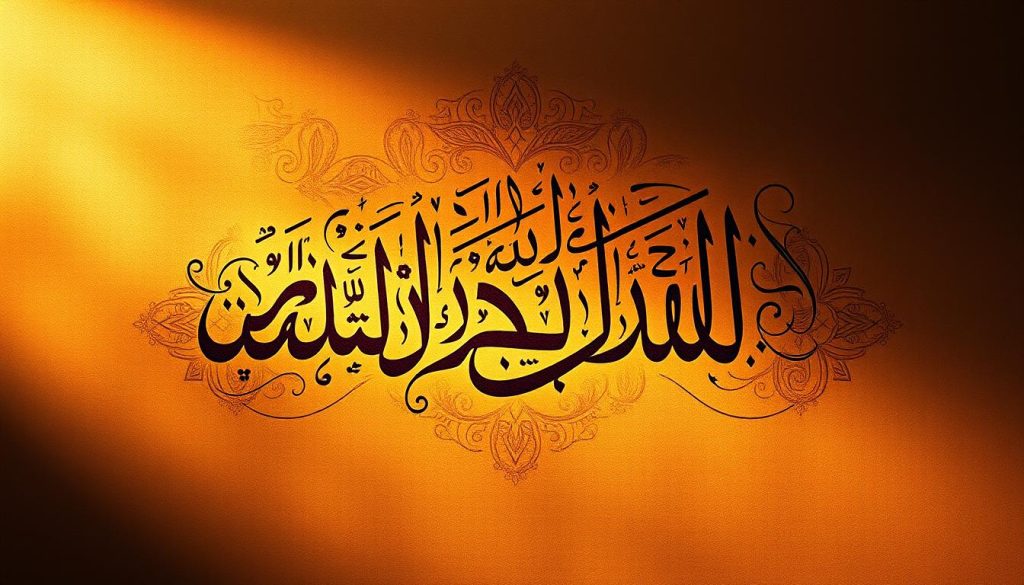
Ayat al-Kursi is loved by many for its deep meaning. It looks great on walls, reminding us of God’s constant presence.
Additional Scriptural References and Contexts
AL-QAYYOOM also shows up in other important parts of the Quran. Each time, it adds more to our understanding of God’s nature. Together, these verses give us a full picture of God’s self-sustaining power.
These foundations inspire Islamic home decor. Modern designers use these verses in their calligraphy. They make pieces that respect tradition but also fit today’s style.
Knowing these Quranic foundations helps us choose meaningful decor. Such choices make our homes places for reflection and remembrance. They connect us to God’s eternal truths every day.
4. The Universal Sustainer: How All Existence Depends on Allah
Every moment, from the smallest particle to the biggest galaxy, depends on Allah’s sustaining power. We see this in every breath and heartbeat, happening without our effort. This shows how deeply we depend on divine grace.
The omnipotent Allah works beyond what we can see, keeping everything in balance. Nothing stands alone without Allah’s support. Every atom, star, and living being lives by Allah’s will.
Continuous Divine Maintenance of Creation
Allah’s sustaining work never stops. We see this in nature’s laws that govern our world. The sun rises, seasons change, and life goes on through Allah’s plan.
This care goes beyond just physical needs. Our spiritual, emotional, and mental health also rely on Allah’s support. Knowing this brings us peace and humility.
The Concept of Perpetual Dependency
Seeing our constant need for Allah changes how we see life. We thank Allah for our successes, health, and relationships, not just our own efforts.
| Aspect of Life | Divine Sustenance | Human Recognition | Spiritual Response |
|---|---|---|---|
| Physical Health | Continuous bodily functions | Gratitude for wellness | Seeking divine protection |
| Daily Provision | Food, shelter, security | Acknowledging divine source | Sharing with others |
| Spiritual Growth | Guidance and wisdom | Humility in learning | Increased devotion |
| Relationships | Love and companionship | Appreciating connections | Treating others kindly |
This understanding builds trust in Allah’s omnipotent wisdom, even in tough times. We see that challenges help us grow spiritually.
5. Theological Significance in Islamic Doctrine
The name AL-QAYYOOM holds deep meaning in Islam. It is a key part of our faith. It helps us understand Allah’s nature.
This name shows Allah’s independence and role in sustaining all life. It’s a cornerstone of Islamic belief.
Relationship with Tawheed (Monotheism)
AL-QAYYOOM strengthens the belief in Tawheed. It proves Allah’s absolute uniqueness. No one else can sustain themselves like Allah does.
This attribute highlights Allah’s need for nothing from us. Yet, we all depend on Him. It deepens our understanding of Islamic monotheism.
“Allah – there is no deity except Him, the Ever-Living, the Self-Sustaining.”
Connection to Other Divine Attributes
AL-QAYYOOM harmonizes with other divine names. Ar-Rahman shows Allah’s kindness, while AL-QAYYOOM shows His reliability. Together, they give us a full picture of Allah’s transcendent nature.
Al-Malik shows Allah’s power, and AL-QAYYOOM shows His absolute independence. These attributes together paint a complete picture of Allah’s perfection. They inspire us to find balance in our faith.
6. Spiritual Reflections: Connecting with the Self-Sustaining Allah
Thinking about AL-QAYYOOM makes our daily lives more meaningful. It shows us Allah’s eternal presence in every moment. Through spiritual practices, we become aware of the divine support always around us.
Starting our journey to connect deeper means understanding our need for Allah’s self-sustaining power. When we really get this, even simple tasks become chances for spiritual growth and remembering Allah.

Daily Dhikr and Remembrance Practices
Reciting AL-QAYYOOM regularly anchors our spirit all day. Morning dhikr reminds us of Allah’s presence before we get caught up in the world. Evening remembrance helps us think about Allah’s support during the day.
We can add AL-QAYYOOM to our daily prayers. Saying “Ya Qayyoom, sustain me” connects our hearts to Allah’s support. These moments become spiritual experiences.
Building Trust Through Divine Awareness
Seeing Allah as the eternal sustainer builds strong trust. Knowing our Creator is always there, never weakens, and never leaves us, we find peace.
“And put your trust in the Ever-Living who dies not, and glorify His praise.”
This understanding brings us comfort. The same power that keeps the universe going cares for us too. Recognising this strengthens our faith.
Overcoming Life's Challenges with Divine Support
When we remember AL-QAYYOOM, even tough times become chances to rely on Allah more. Challenging circumstances seem less scary when we see them as chances to grow closer to Allah’s self-sustaining power.
Seeing obstacles as ways to deepen our bond with Allah changes how we face hardships. It turns despair into hope and fear into trust in Allah’s wisdom.
7. The Eternal and Everlasting Aspects
AL-QAYYOOM’s infinite qualities show us a divine attribute that goes beyond our understanding. This sacred name shows us Allah’s power that works beyond our ideas of time and limits.
The everlasting nature of divine support brings comfort to believers facing hard times. Allah’s help was there before creation and will be forever, giving us steady support in a changing world.
Timeless Nature of Divine Sustenance
Divine sustenance goes beyond time. Allah’s power never fades, needs no refresh, and is not threatened by anything outside.
This timeless quality means the same divine support is available to us today. Knowing Allah’s everlasting care is always there, no matter what, gives us strength.
This constant support helps us be patient when things get tough. Realising that Allah’s help never changes, no matter what, broadens our spiritual view.

Understanding Infinite and Absolute Qualities
The absolute nature of AL-QAYYOOM pushes our understanding but also offers a chance for growth. These infinite qualities show true completeness that our minds can’t fully get.
Thinking about Allah’s infinite power connects our everyday life with eternal truths. This view changes how we see both good times and hard times, seeing divine wisdom in everything.
| Temporal Aspects | Eternal Divine Qualities | Spiritual Application |
|---|---|---|
| Limited duration | Everlasting sustenance | Trust in permanent divine support |
| Requires renewal | Self-sustaining nature | Reliance on unchanging Allah |
| Subject to change | Absolute consistency | Finding stability in divine attributes |
| Finite understanding | Infinite wisdom | Accepting divine mystery with humility |
These everlasting aspects of AL-QAYYOOM give us a solid base for unwavering faith and spiritual strength in today’s world.
8. Classical Islamic Scholarship Perspectives
The rich tradition of Islamic commentary shows us the depth of AL-QAYYOOM’s importance. Scholars throughout history have explored this divine attribute deeply. Their work helps us today to see Allah’s self-sustaining nature.
Traditional Commentators' Interpretations
Great scholars like Ibn Kathir and Al-Tabari talked about the perpetual nature of divine care. Ibn Kathir said Allah’s self-sufficiency is different from what we need. He pointed out that while we need constant care, Allah doesn’t.
Al-Tabari showed how AL-QAYYOOM is about both the care of creation and our spiritual growth. His views give us a solid base for understanding Allah’s complete independence.
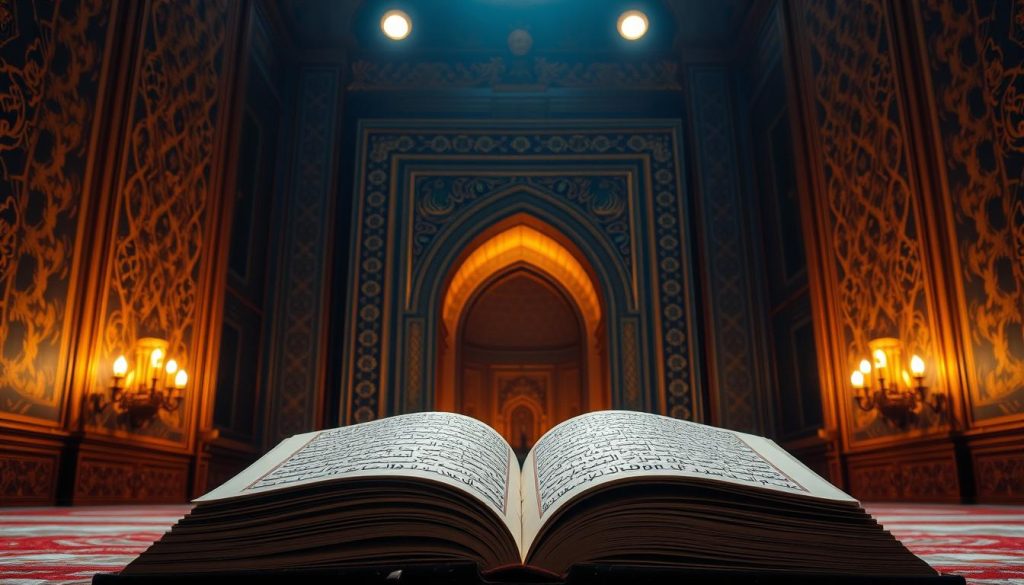
The wisdom of these scholars shows AL-QAYYOOM is more than just theory. It’s a real spiritual experience we can find through deep thinking and practice.
Sufi and Mystical Understandings
Sufi traditions see AL-QAYYOOM as a way to feel God’s presence. They believe in the perpetual sustenance that keeps creation going and feeds our souls. By remembering and purifying themselves, they aimed to connect with this divine attribute.
Mystical views highlight the omnipotent power of divine care in everything. Sufis used special prayers and meditation on AL-QAYYOOM to grow spiritually. Their teachings inspire beautiful Islamic art and thoughtful designs that reflect these deep truths.
This ancient wisdom helps us see AL-QAYYOOM as a real spiritual experience. The insights of these scholars enrich our spiritual journey while keeping true to Islamic teachings.
9. Contemporary Relevance and Modern Applications
Modern life is full of unknowns, but the sustaining power of AL-QAYYOOM is always there. In today’s fast-changing world, this divine name guides us through tough times. It helps us stay balanced spiritually.

Finding Stability in Today's Uncertain World
Many feel anxious due to economic and global issues. But AL-QAYYOOM’s transcendent nature changes how we see these problems. It reminds us that the same power that keeps galaxies going also looks after us.
This insight helps us focus on the eternal, not just the temporary. We learn to be strong, knowing that God’s help never runs out. This peace helps us stay calm, even when things are tough.
Environmental Stewardship and Social Responsibility
Seeing Allah as the ultimate sustainer makes us care more for the planet. This transcendent understanding teaches us to manage resources wisely. We trust in God’s provision, not just our own.
Understanding our shared dependence on God makes us more responsible. Communities grow stronger when we work together, knowing we’re all connected by God’s care.
“And it is He who sends down rain from heaven, and We produce thereof the vegetation of every kind.”
Personal Growth Through Divine Connection
Living in line with AL-QAYYOOM’s power helps us grow personally. We become more patient, spiritually mature, and trusting. This connection turns everyday moments into chances for spiritual growth.
Decorating our homes with meaningful Islamic décor reminds us of God’s reliability every day. These choices help us grow spiritually and show our true Islamic values in today’s world.
| Modern Challenge | AL-QAYYOOM’s Guidance | Practical Application |
|---|---|---|
| Economic Uncertainty | Divine Sustenance Never Fails | Trust-based Financial Planning |
| Environmental Crisis | Ultimate Sustainer of Creation | Responsible Stewardship |
| Social Isolation | Shared Divine Dependency | Community Building |
| Personal Anxiety | Constant Divine Maintenance | Regular Dhikr Practice |
10. Comparative Analysis with Related Divine Names
In Islamic theology, divine names are beautifully connected. This shows how AL-QAYYOOM relates to other sustaining attributes. Allah’s names work together in absolute harmony.
Each attribute complements others, giving us a full picture of divine nature. This shows the sophisticated beauty of Islamic theology. The divine attributes don’t compete but enhance each other’s meanings.

Relationship with Al-Hayy (The Ever-Living)
AL-QAYYOOM often appears with Al-Hayy in the Quran. Al-Hayy talks about eternal life, while AL-QAYYOOM highlights self-sustaining power. Together, they show Allah as eternally alive and omnipresent in His sustaining activity.
In Ayat al-Kursi, both attributes work together. Al-Hayy shows Allah’s eternal existence. AL-QAYYOOM explains how this eternal life sustains all creation.
This pairing reveals the complementary aspects of divine nature. Eternal life naturally leads to self-sustaining power. This helps believers understand Allah’s absolute independence from creation.
Connection to Ar-Rahman and Other Sustaining Attributes
The connection to Ar-Rahman shows how divine sustenance comes from mercy. Allah maintains creation out of love, not obligation. This shows the loving nature behind cosmic maintenance.
Ar-Razzaq represents the practical side of AL-QAYYOOM’s sustaining power. Through daily provisions, we see how self-sustaining power works in our lives. These connections help us understand Allah’s omnipresent care.
For those looking for meaningful Islamic art, understanding these relationships is key. We can choose art that shows multiple divine qualities. This creates spaces for deep contemplation of Allah’s complete nature.
11. Conclusion
Exploring AL-QAYYOOM shows us deep truths that change how we live every day. This sacred name highlights Allah’s eternal nature and His complete independence from all creation.
Understanding AL-QAYYOOM strengthens our spiritual base. It teaches us to trust in Allah, who keeps everything going without needing help. This lesson helps us stay strong when things get tough.
AL-QAYYOOM’s wisdom also makes our homes places of reflection. Choosing Islamic décor reminds us of these eternal truths. It helps our spiritual awareness grow in our daily lives.
Today’s Muslims find great value in this ancient wisdom. Allah’s self-sustaining nature gives us stability in a fast-changing world. It helps us balance our worldly duties with our spiritual needs, knowing Allah is our ultimate source of support.
This divine name also teaches us to be thankful for our blessings. Recognising Allah as our eternal sustainer fills us with gratitude and encourages us to live responsibly. It teaches us patience, knowing Allah’s timing is always better than ours.
Let our journey with AL-QAYYOOM continue to deepen our faith. By thinking deeply about this attribute, we build closer relationships with our Creator. We also create communities that are true to Islamic values and genuine spiritual expression.
FAQ
What does AL-QAYYOOM mean and how is it pronounced?
AL-QAYYOOM comes from Arabic, meaning “to stand” or “to maintain.” It shows Allah’s self-sustaining nature and independence from all. The way it’s pronounced can vary, but its meaning stays the same – the eternal sustainer of all.
Where does AL-QAYYOOM appear in the Quran?
You can find AL-QAYYOOM in Ayat al-Kursi (Quran 2:255). It says, “Allah – there is no deity except Him, the Ever-Living (AL-HAYY), the Sustainer of existence (AL-QAYYOOM).” This verse is a powerful statement of Allah’s attributes. It shows Allah’s infinite and absolute power.
How does AL-QAYYOOM relate to Allah's complete independence?
AL-QAYYOOM shows Allah’s independence from His creation while being the sustainer of all. This attribute means Allah is completely self-sufficient and doesn’t need anything else. Unlike us, Allah doesn’t get tired or need help.
What is the connection between AL-QAYYOOM and other divine attributes?
AL-QAYYOOM connects with other divine names like Al-Hayy (The Ever-Living). Al-Hayy talks about eternal life, while AL-QAYYOOM is about self-sustaining power. It also links to Ar-Rahman (The Most Merciful) and Ar-Razzaq (The Provider), showing how Allah’s mercy and provision are connected.
How can I incorporate AL-QAYYOOM into daily spiritual practice?
Remembering AL-QAYYOOM regularly helps you feel Allah’s eternal presence and power. Saying it in the morning and evening can be a powerful way to start and end your day. It helps you understand your dependence on Allah and can make everyday moments spiritual opportunities.
What does AL-QAYYOOM teach us about Allah's sustenance of creation?
AL-QAYYOOM shows Allah as the universal sustainer of all existence. His power keeps every atom, breath, and moment alive without pause. This understanding shows our complete dependence on Allah’s grace.
How does understanding AL-QAYYOOM help during difficult times?
Thinking about AL-QAYYOOM can bring comfort in hard times. It reminds us that Allah’s power is always with us, caring for our needs. This can turn anxiety into trust, making life’s challenges opportunities for growth.
What is the significance of AL-QAYYOOM in Islamic monotheism (Tawheed)?
AL-QAYYOOM is key in Tawheed, showing Allah’s unique and absolute nature. It proves Allah is the only one who can sustain Himself, unlike created beings. This strengthens the belief in one God, showing Allah’s independence and our dependence on Him.
How do classical Islamic scholars interpret AL-QAYYOOM?
Scholars like Ibn Kathir and Al-Tabari highlight Allah’s eternal sustenance. They explain how Allah’s self-sufficiency is different from our needs. Sufi traditions add a mystical layer, seeing AL-QAYYOOM as both external and internal. These views enrich our understanding of AL-QAYYOOM today.
What contemporary relevance does AL-QAYYOOM offer?
AL-QAYYOOM is very relevant today, giving us spiritual stability in uncertain times. It reminds us that Allah’s support is always there, no matter what. This understanding encourages us to care for the environment, help others, and grow spiritually.
How can AL-QAYYOOM inspire Islamic home décor choices?
Knowing AL-QAYYOOM helps choose meaningful Islamic wall art. Art with this name reminds us of Allah’s eternal reliability. It creates spaces that reflect divine stability, blending tradition with modern life.
What makes AL-QAYYOOM different from human concepts of sustenance?
AL-QAYYOOM is about Allah’s infinite self-sufficiency, unlike our need for external resources. It shows Allah’s power is beyond time, sustaining creation from before to after. This quality is beyond our understanding but offers constant reliability.


