Duas for Personal Well-Being & Health
Artwork carrying duas for health and healing, protection from illness, strength and patience, and seeking refuge from harm.
A dua is a supplication: words through which a person turns to Allah in prayer, asking for help, guidance, forgiveness, mercy or other needs. This page groups our dua artwork by need and life moment, so you can find words that suit a particular situation, person or room.
Each pathway opens the relevant collection. Where learning content is shown, please check the cited source, and seek qualified guidance for personal religious questions.
Artwork carrying duas for health and healing, protection from illness, strength and patience, and seeking refuge from harm.
Artwork carrying duas relating to provision (rizq), debt and financial concerns, help in difficulty, and refuge from the Hellfire.
Artwork carrying duas for parents, for a righteous spouse, for reconciliation and for protection.
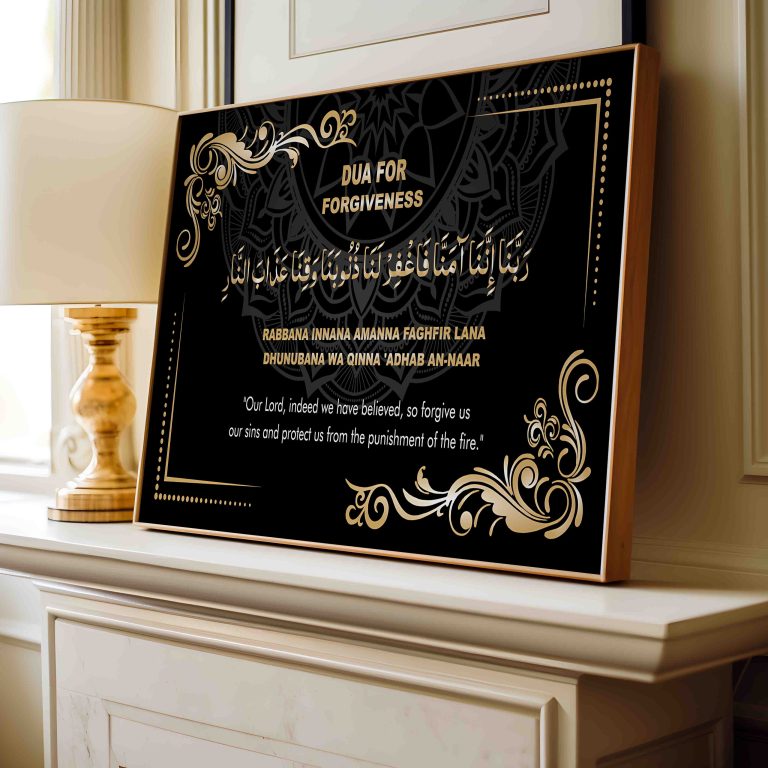
Explore this Dua collection →Artwork carrying duas for forgiveness, acceptance of repentance, increasing faith, and knowledge, honour and peace.
Dua (دُعَاء, du'a) is an Arabic word meaning "calling upon" or supplication. It is the personal act of turning to Allah: asking for help, giving thanks, seeking forgiveness or simply speaking from the heart. Outside the formal prayer, a dua can be made in a person's own words and language, at any time. Many Muslims also learn duas whose wording comes from the Qur'an or from the hadith, and these are the words most often written as calligraphy.
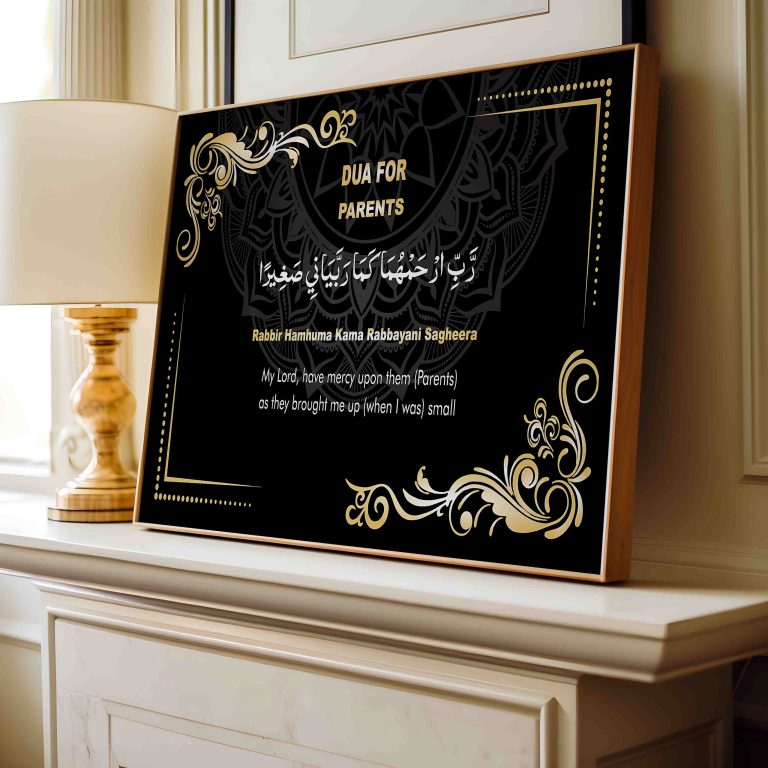
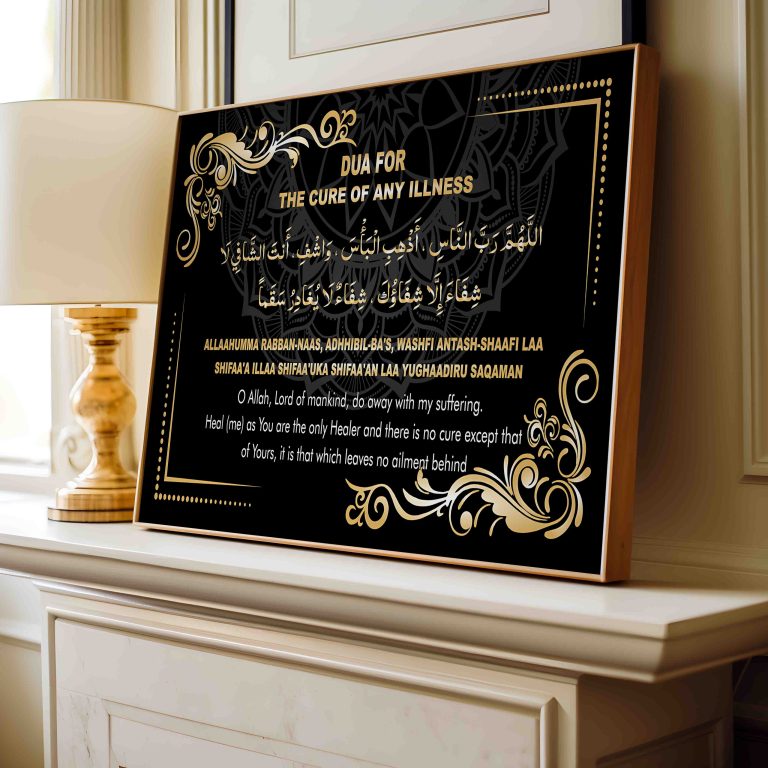
Some duas are verses of the Qur'an. For example, "My Lord, have mercy upon them as they brought me up [when I was] small" is from Qur'an 17:24 (Saheeh International), a verse about kindness to parents. Others are reported in collections of hadith: the sayings of the Prophet Muhammad ﷺ. One example is the dua for healing narrated by Aishah in Sahih al-Bukhari 5743. Hadith wording can vary slightly between narrations. Where we name a source, it is so you can check the words yourself.
Many of our designs show three things together: the dua in Arabic calligraphy, a transliteration (the Arabic sounds written in English letters) and an English meaning. A transliteration is a helpful guide to pronunciation, but it is not a substitute for learning from a teacher. Our artwork is sold as printable digital files; the frames in our photos are there for styling only.
No. Salah is the formal prayer, with set times and movements. A dua is a supplication that can be made at any time, including within salah.
No. Many people choose Arabic calligraphy for its beauty and meaning. Many Muslims prefer to hang Qur'anic words where they will be treated with respect, for example not in a bathroom.
For parents, the Qur'anic dua "My Lord, have mercy upon them" is a popular choice. For a new home or a new chapter, browse Duas for Family and Relationships or Duas for Spiritual Growth above.
Please contact us. We take the accuracy of Arabic and its meaning seriously, and our Quality Promise explains how we approach it.
Browse all dua wall art, or duas for kids for a child's room. To read about the words behind the artwork, visit our Qur'an and hadith articles, or see how to choose Islamic wall art. Please check each product page for its format and included information before ordering.