


Did you know 72% of faith-inspired homeowners report feeling greater calmness when surrounded by spiritually meaningful art? This statistic reveals a truth deeper than design preferences: what we place on our walls shapes our daily connection to the sacred.
For centuries, believers have transformed living spaces into sanctuaries through visual reminders of divine wisdom. Unlike purely decorative pieces, these creations serve as anchors for reflection – turning everyday moments into opportunities for spiritual renewal.
Modern technology now bridges tradition with contemporary lifestyles. Digital artists preserve intricate calligraphy and geometric patterns while adapting them for today’s interiors. The result? Timeless verses like Ayatul Kursi become accessible centerpieces that honor heritage and modern aesthetics.
Choosing such pieces requires intention. Each selection should balance artistic quality with theological accuracy, ensuring spaces nurture both the soul and the senses. When done thoughtfully, your home becomes more than a dwelling – it evolves into a haven where faith breathes through every detail.
Key Takeaways
- Spiritually focused art enhances emotional well-being and daily mindfulness
- Sacred designs combine aesthetic appeal with theological significance
- Digital innovations make traditional calligraphy adaptable to modern interiors
- Quality craftsmanship ensures lasting visual and spiritual impact
- Intentional decor choices transform living spaces into personal sanctuaries
Introduction: Setting the Tone for Islamic Wall Art
What transforms four walls into a space that nourishes both sight and soul? Spiritual artistry rooted in divine principles offers more than visual appeal—it creates living invitations to pause, reflect, and reconnect. This practice turns homes into environments where beauty serves higher purposes.
Sacred Visual Language Beyond Ornamentation
Traditional sacred artistry avoids human depictions, focusing instead on three core elements: nature-inspired motifs, sacred texts, and mathematical precision. These choices reflect a profound truth—the infinite cannot be contained in finite forms. As one 14th-century scholar noted:
“Geometry binds the seen to the unseen, making tangible the order inherent in creation.”
Where Belief Meets Creative Expression
Every brushstroke in these works carries intentionality. Quranic verses become visual meditations, while geometric patterns mirror cosmic harmony. This fusion achieves two vital goals:
- Strengthens daily spiritual practice through intentional surroundings
- Preserves cultural identity within modern living spaces
Contemporary adaptations maintain this essence while embracing minimalist styles. Artists reimagine classic designs using sustainable materials and digital tools, proving tradition evolves without losing its soul. The result? Pieces that feel both timeless and timely—honoring heritage while speaking to today’s seekers.
The Significance of Calligraphy in Islam
How did ink and parchment become vessels for divine expression? In Islamic tradition, the written word transcends mere communication—it becomes a bridge between earthly existence and eternal truths. This reverence for sacred texts birthed calligraphy as both spiritual practice and artistic mastery.
Historical Importance of Calligraphy in Islamic Tradition
Early Muslim scholars faced a creative challenge: how to visually express faith without figurative imagery. Their solution transformed writing into worship. Calligraphers developed scripts that honored Quranic verses while embodying cosmic harmony. A 9th-century artisan once remarked:
“Each letter carries the weight of revelation, each curve whispers Allah’s mercy.”
Exploring Calligraphic Styles: Kufic, Thuluth, Naskh, and Diwani
Four classical styles dominate this sacred art form:
- Kufic: Angular and geometric, often used in early Quran manuscripts
- Thuluth: Flowing curves ideal for architectural inscriptions
- Naskh: Clear lines perfect for everyday religious texts
- Diwani: Ornate script reserved for royal decrees
Modern artists preserve these forms while adapting them for today’s homes. Whether through minimalist metalwork or hand-painted canvases, each piece maintains theological precision. For those seeking guidance, our team crafts custom calligraphy pieces that honor tradition while fitting contemporary spaces.
Understanding Common Islamic Phrases in Wall Art
What makes certain words transform a room’s energy? Sacred texts displayed as art carry layered meanings – aesthetic beauty intertwined with divine wisdom. These creations turn blank surfaces into spaces for contemplation, blending visual harmony with spiritual resonance.
Sacred Texts as Living Guidance
Quranic selections like Ayatul Kursi dominate spiritual displays for their protective qualities. This powerful verse, often called the “Throne Verse,” serves as both decoration and divine shield. One 12th-century scholar observed:
“Whoever recites Ayatul Kursi at night finds protection until dawn – its written form extends this guardianship.”
Decoding Symbolic Language
Beyond individual verses, three core elements define meaningful displays:
- Divine Names: The 99 Names of Allah (Asma ul-Husna) invite specific blessings – Ar-Rahman (The Merciful) fosters compassion, As-Salam (The Source of Peace) cultivates tranquility
- Daily Reminders: Phrases like “Bismillah” (In God’s Name) before meals or tasks become visual prompts for mindfulness
- Faith Foundations: The Shahada declaration (“La ilaha illa Allah”) centers spaces around core beliefs
Modern materials like canvas allow these timeless messages to complement contemporary interiors. When selecting Arabic calligraphy’s importance, consider both artistic quality and theological accuracy. Properly executed pieces become family heirlooms – beautiful witnesses to faith that outlast design trends.
Embracing the "islamic wall decor trend" in Modern Muslim Homes
How do ancient traditions find fresh expression through modern technology? Digital innovation now empowers families to weave sacred symbolism into contemporary spaces. This evolution reflects a deeper truth – spiritual connection thrives when rooted in relevance.
Digital Craftsmanship Meets Sacred Symbolism
Younger generations drive demand for art that honors heritage while fitting sleek interiors. Advanced printing techniques allow precise reproduction of intricate patterns on durable materials. As one digital artist shared:
“We’re not simplifying tradition – we’re reimagining its presentation for today’s light-filled apartments and open-concept layouts.”
Harmonizing Old and New
Three principles guide successful integration:
- Material innovation: Laser-cut metal screens reinterpret classic geometric designs
- Color adaptation: Earth tones shift to muted palettes matching modern furnishings
- Scale adjustment: Oversized canvases make bold statements in minimalist rooms
Customization options let homeowners match pieces to existing color schemes. Textured finishes add depth without overwhelming spaces. The result? Rooms feel both grounded and forward-looking – sanctuaries where past and present coexist beautifully.
This approach preserves cultural identity through thoughtful evolution. By blending ancestral wisdom with current design sensibilities, families create environments that nurture faith and reflect personal style. The true measure of success? When visitors sense sacred presence before noticing the art itself.
Blending Traditional and Modern Islamic Home Decor
How does sacred mathematics shape contemporary living spaces? Geometric designs rooted in spiritual symbolism now anchor modern interiors through their timeless balance of form and meaning. These patterns create visual harmony while maintaining deep cultural resonance.
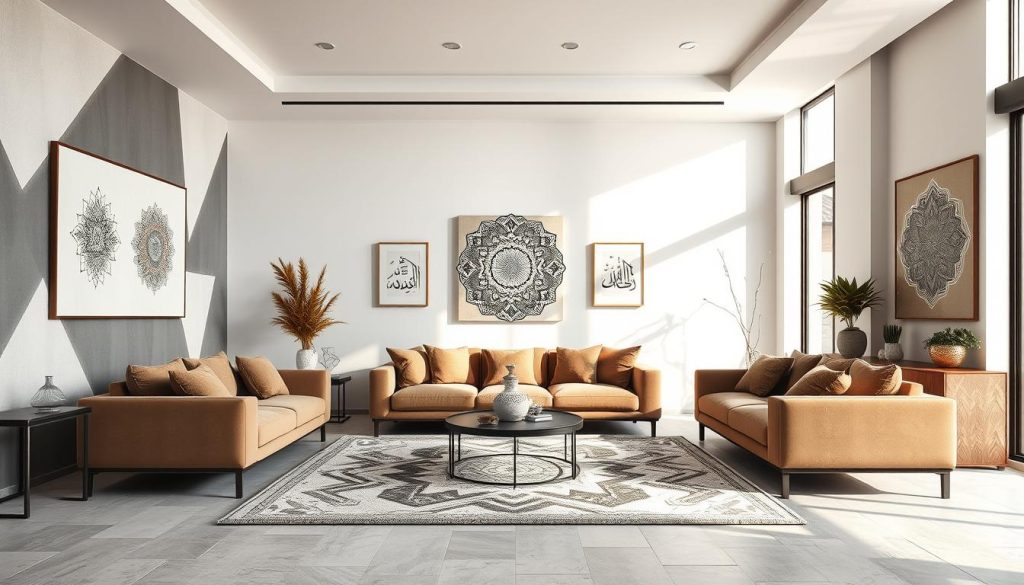
Sacred Geometry Meets Modern Minimalism
Traditional star-and-polygon motifs translate seamlessly into today’s clean-lined spaces. A 12th-century architect’s insight remains relevant:
“The compass doesn’t lie – every angle reveals divine proportion.”
Modern applications showcase this philosophy through:
- Laser-cut metal screens with fractal designs
- Textured wallpaper featuring tessellated shapes
- Monochrome artwork emphasizing structural precision
Adaptable Artistic Solutions
Versatile pieces bridge generational design preferences. Modular wall panels allow customizable arrangements, while dual-purpose furnishings like patterned room dividers merge functionality with symbolism.
| Traditional Element | Modern Adaptation | Spiritual Significance |
|---|---|---|
| Hand-painted tiles | 3D-printed wall panels | Unity through repetition |
| Wooden latticework | Acrylic laser-cut screens | Interconnected creation |
| Illuminated manuscripts | Backlit resin artworks | Divine light symbolism |
Earthy tones evolve into muted grays and navy blues, maintaining serenity while complementing contemporary palettes. These adaptations prove sacred geometry remains eternally relevant – its mathematical perfection speaking to both tradition and innovation.
Enhancing Your Living Space with Spiritual and Cultural Elements
Your home’s walls hold untapped potential to shape daily spiritual practice. Thoughtfully curated artistry creates living connections between physical spaces and eternal truths. This approach transforms ordinary rooms into environments where heritage and devotion coexist organically.
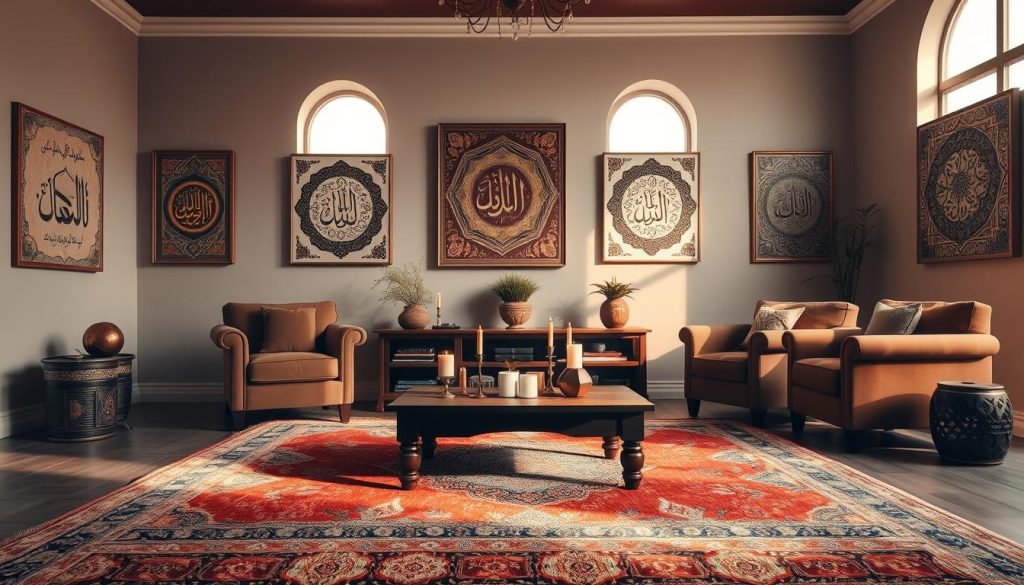
Strategic Placement for Daily Inspiration
Art placement follows intentional design principles. High-traffic areas become opportunities for reflection:
| Room | Art Type | Purpose |
|---|---|---|
| Entryway | Bismillah calligraphy | Blesses comings/goings |
| Living Room | Quranic verse canvases | Fosters mindful gatherings |
| Bedroom | Geometric patterns | Promotes restful sleep |
This methodology creates multiple touchpoints for spiritual engagement. Family meals become occasions to discuss Asma ul-Husna artworks. Morning routines gain depth when passing a handcrafted Ayatul Kursi piece.
Layering cultural elements adds richness without clutter. A vintage prayer rug paired with modern Arabic typography tells your family’s story. Such combinations honor historical roots while reflecting personal style.
Children naturally absorb values through these visual cues. A study space with “Seek Knowledge” calligraphy reinforces educational priorities. Shared areas become classrooms where heritage lives beyond textbooks.
Balance remains key. We recommend mixing statement pieces with subtle accents. Textured throw pillows featuring subtle patterns complement bold wall art. The result? Spaces that feel spiritually alive yet functionally comfortable for modern lifestyles.
Personalizing Your Islamic Wall Art Selection
What transforms a house into a home that reflects your deepest values? Your walls offer more than structural support—they become storytellers of faith. We guide families in crafting spaces where artistry and devotion coexist through intentional curation.
Choosing Custom Pieces That Reflect Your Faith
True personalization begins with pieces that resonate with your spiritual journey. Consider laser-cut metal panels featuring cherished verses or hand-painted canvases sized for your unique spaces. A client recently shared how their custom calligraphy piece became a conversation starter about heritage during family gatherings.
Mixing and Matching Art for a Unique Story
Blend sizes and textures to create visual harmony. Pair a bold Ayatul Kursi centerpiece with smaller geometric accents—this layering technique adds depth while maintaining focus. Our designers recommend balancing proportions: vertical works enhance narrow walls, while horizontal design elements anchor wider areas.
Remember, your collection should evolve as your faith deepens. Start with foundational pieces like the Throne Verse artwork, then add seasonal accents. The goal? A living gallery that grows with your spiritual narrative—one thoughtful selection at a time.
FAQ
How does calligraphy enhance the spiritual value of home art pieces?
Calligraphy transforms sacred texts into visual expressions of faith, merging divine messages with artistic mastery. Styles like Kufic or Thuluth add cultural depth while preserving Quranic authenticity, creating focal points for reflection in living spaces.
Can modern interiors harmonize with traditional geometric patterns?
Absolutely. Brands like Samawi Designs and Nur Artisans blend minimalist aesthetics with intricate motifs, offering versatility for contemporary homes. Pairing clean lines with arabesque details bridges heritage and modern elegance seamlessly.
What materials ensure durability for faith-inspired artwork?
We prioritize archival-grade canvas, hand-carved wood, and fade-resistant inks. These materials honor craftsmanship while ensuring pieces withstand daily wear, making them heirlooms that carry spiritual significance across generations.
How do I mix different art styles without cluttering my space?
Start with a central statement piece—like an Ayatul Kursi canvas—then layer smaller items. Balance bold calligraphy with subtle geometric textiles or metalwork. This creates rhythm without overwhelming the senses, maintaining both devotion and design coherence.
Why choose digital art for Quranic verse displays?
Digital platforms like Etsy and Creative Arab allow customizable sizing and framing, adapting verses to unique wall dimensions. High-resolution prints retain script clarity, ensuring reverence meets modern practicality in diverse home layouts.
Are abstract forms permissible in faith-based decor?
Yes, when aligned with Islamic principles. Artists like Ahmed Mater reimagine traditional patterns through abstract lenses, avoiding figurative representation. These pieces invite contemplation while respecting cultural boundaries, enriching spaces with symbolic depth.


