


In Islamic tradition, Allah is known by 99 beautiful names (Al-Asma ul-Husna), each revealing a unique aspect of the divine nature. These names serve as windows into understanding the Creator’s attributes and relationship with creation. Among these profound names is Al-Wadud – The Most Loving, The Affectionate – a name that illuminates the essence of divine love and its transformative power in our spiritual journey.
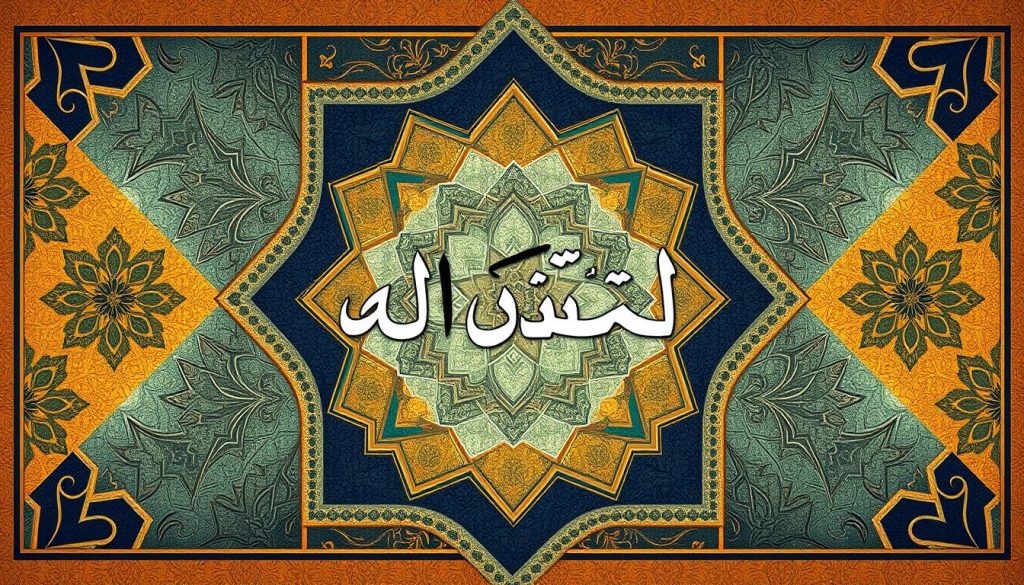
The beautiful name Al-Wadud in Arabic calligraphy
Meaning of Al-Wadud
Linguistic Roots
The name Al-Wadud (الْوَدُودُ) derives from the Arabic root “waw-dal-dal” (و د د), which carries rich connotations of love, affection, deep care, and devotion. Unlike the general Arabic word for love “hubb” (حب), which refers to the emotion itself, “wudd” (وُدّ) represents the active manifestation of that love – the outward expression of an inner feeling.
This distinction is significant because Al-Wadud doesn’t merely describe Allah as having an abstract feeling of love, but rather as actively expressing that love through His actions, mercy, and blessings upon His creation. It portrays a love that is demonstrated, felt, and experienced.

Theological Context
In Islamic theology, Al-Wadud reflects Allah’s perfect, unconditional love that encompasses all creation. This divine attribute is both active and reciprocal – Allah loves His creation and is beloved by those who recognize Him. The early Muslim scholars had two complementary perspectives on this name:
Al-Wadud has two interpretations: First, it means One Who receives affection. Al-Bukhari said in his authentic work that Al-Wadud means the Beloved. Second, it means One Who is affectionate to His servants, that is, One Who loves them.
Ibn al-Qayyim
These interpretations are not contradictory but complementary. Allah is both the ultimate receiver of love through the worship and gratitude of His creation, and simultaneously, He is constantly bestowing His love and mercy upon His servants.

Al-Wadud represents both Allah’s love for creation and creation’s love for Allah
What distinguishes Allah’s love from human love is its perfection, constancy, and unconditional nature. While human love can be fragile, conditional, or self-serving, divine love is eternal, pure, and selfless. It reaches all creation, regardless of their response, while reserving its fullest expression for those who turn to Him in faith.
Significance in the Quran and Hadith
The name Al-Wadud appears twice in the Quran, both times in connection with Allah’s forgiveness and mercy, highlighting the relationship between divine love and compassion.
Quranic Mentions
“And He is the Forgiving, the Loving (Al-Wadud).”
Quran 85:14
“Ask forgiveness from your Lord and repent to Him. Verily, my Lord is Merciful and Loving (Al-Wadud).”
Quran 11:90
In both verses, Al-Wadud is paired with attributes of forgiveness and mercy, showing that Allah’s love is inseparable from His compassion. This pairing reveals a profound truth: true love seeks to forgive and heal, not to condemn. When Allah loves His servants, He desires their well-being and return to Him, regardless of their past mistakes.

Hadith Traditions
While the name Al-Wadud is not widely mentioned in hadith collections, the concept of Allah’s love permeates many prophetic traditions. One powerful hadith illustrates how Allah’s love works in the unseen realm:
When Allah loves a servant, He calls Gabriel and says: Verily, I love so and so; you should also love him. Then Gabriel begins to love him. Then he makes an announcement in the heaven saying: Allah loves so and so and you also love him, and then the inhabitants of the Heaven (the Angels) also begin to love him and then there is conferred honor upon him in the earth.
Sahih Muslim
This hadith reveals that Allah’s love is not passive but active – it mobilizes the spiritual realm on behalf of the beloved servant. When Allah loves someone, that love becomes a source of honor, support, and blessing both in the heavens and on earth.

When Allah loves a servant, this love is announced throughout the heavens
Another beautiful hadith highlights the depth of Allah’s mercy, which flows from His love:
Allah is more merciful to His servants than a mother is to her child.
Sahih Muslim
This comparison to maternal love – often considered the purest form of human love – helps us grasp the incomprehensible depth of divine love. Yet even this powerful metaphor falls short, as Allah’s love exceeds even the most profound human attachments.
5 Spiritual Benefits of Embracing Al-Wadud
Understanding and embracing Allah as Al-Wadud can profoundly transform our spiritual journey. Here are five significant benefits that come from connecting with this divine attribute:

Reflecting on Al-Wadud brings profound spiritual benefits
1. Strengthening Faith Through Divine Love
When we truly understand Allah as Al-Wadud, our relationship with Him transforms from one based primarily on fear or obligation to one rooted in love and gratitude. This shift deepens our faith and makes worship a joyful response rather than a burden.
Ibn al-Qayyim beautifully described this balance: “The heart on its journey towards Allah the Exalted is like that of a bird. Love is its head and fear and hope are its two wings.” Love becomes the driving force of our spiritual journey, while fear and hope provide the balance needed to stay on course.
This love-centered approach to faith creates resilience during spiritual hardships and prevents the despair that can come when we focus exclusively on our shortcomings.
2. Cultivating Compassion in Human Relationships
Understanding Allah as Al-Wadud inspires us to embody divine love in our interactions with others. As the Prophet Muhammad ﷺ said: “None of you has faith until he loves for his brother what he loves for himself.”
When we recognize ourselves as recipients of divine love, we become channels of that love to others. This transforms how we view and treat people – even those who differ from us or have wronged us. We begin to see others through the lens of compassion rather than judgment.
Al-Ghazālī explained this application: “Loving-kindness among the servants of Allah involves desiring for the creation of Allah what he desires for himself, and the highest part of that is to prefer them over himself.”
3. Finding Comfort During Hardships
Recognizing Allah as Al-Wadud provides profound comfort during life’s inevitable challenges. The Prophet ﷺ said: “If Allah loves people, He afflicts them with trials.” This seemingly paradoxical statement reveals a deep truth: hardships often serve as purification and spiritual elevation for those whom Allah loves.
When we face difficulties with the awareness that they come from The Most Loving, we can endure them with patience and even gratitude, knowing they are not punishments but opportunities for growth. As the Prophet ﷺ said: “Wondrous is the affair of a believer, as there is good for him in every matter.”
This perspective transforms our experience of suffering from meaningless pain to purposeful refinement by The Most Loving.
4. Enhancing Gratitude and Worship
Understanding Allah as Al-Wadud heightens our awareness of His countless blessings. Every breath, every moment of health, every provision becomes a tangible expression of divine love rather than mere coincidence or entitlement.
This awareness naturally cultivates deep gratitude, which the Quran identifies as the proper response to divine favor: “If you are grateful, I will surely increase you [in favor]” (14:7). Gratitude then transforms our worship from ritual obligation to loving response.
When we recognize that even the opportunity to worship is a gift from Al-Wadud, our prayers, fasting, charity, and remembrance become expressions of love rather than mere religious duties.
5. Developing a Balanced Understanding of Fear and Hope
Embracing Allah as Al-Wadud helps us achieve the ideal spiritual balance between fear (khawf) and hope (raja’). Without understanding divine love, we might either become complacent in presuming Allah’s mercy or despair in fearing His justice.
Al-Wadud teaches us that Allah’s love is both vast and principled. As the Quran states: “My mercy encompasses all things. I will decree it for those who were righteous” (7:156). This balanced understanding prevents both extremes – neither taking divine love for granted nor doubting its reach for the sincere seeker.
This balance creates a healthy spiritual psychology where we neither despair of Allah’s mercy nor feel secure against His plan, but instead strive with hope and mindfulness.
Practical Ways to Reflect on Al-Wadud
Understanding Al-Wadud intellectually is only the beginning. To truly benefit from this divine name, we must incorporate it into our daily spiritual practice. Here are practical ways to connect with The Most Loving in your everyday life:

Daily dhikr practice helps us connect with Al-Wadud
Daily Dhikr Practice
Incorporate the name Al-Wadud into your daily remembrance (dhikr) practice:
- Recite “Ya Wadud” (O Most Loving) 100 times after your daily prayers
- Combine it with other divine names of mercy: “Ya Rahman, Ya Raheem, Ya Wadud”
- Reflect on the meaning while repeating the name, visualizing divine love encompassing you
- Set aside a specific time each day dedicated to this practice, ideally during the quiet hours of early morning or late evening
Incorporating into Prayers
Enrich your formal and informal prayers with awareness of Al-Wadud:
- Begin supplications with “Ya Wadud” to invoke divine love
- In your personal du’a, express gratitude for manifestations of Allah’s love in your life
- During prostration (sujood), feel yourself enveloped in divine love
- End prayers by asking Allah to make you a channel of His love to others
- When facing difficulties, call upon Al-Wadud specifically, recognizing that trials come from The Most Loving
Ethical Application
Embody the qualities of Al-Wadud in your character and interactions:
- Practice forgiveness, remembering how Al-Wadud forgives His servants
- Show compassion to all creation, including animals and nature
- Be gentle in speech and action, as the Prophet ﷺ said: “Allah is Gentle and loves gentleness”
- Love for others what you love for yourself
- Respond to harm with kindness when possible, reflecting divine magnanimity
- Visit the sick, help the needy, and comfort the distressed as expressions of divine love flowing through you
Begin Your Journey with Al-Wadud
Deepen your connection with The Most Loving through consistent practice and reflection. Start today by incorporating one of these practices into your daily routine.

Islamic art has long celebrated the beautiful names of Allah, including Al-Wadud
Reflection Exercise
Take a moment each day to identify three ways Allah’s love (Al-Wadud) has manifested in your life:
- A blessing you received
- A hardship that led to growth
- An opportunity to show love to others
Record these reflections in a journal to develop greater awareness of divine love in your daily experience.
Common Questions About Al-Wadud
How does Allah’s love differ from human love?
Allah’s love (Al-Wadud) differs from human love in several key ways:
- It is perfect and free from defects, while human love is imperfect
- It is constant and unchanging, while human love fluctuates
- It is unconditional in its general form, while human love often comes with conditions
- It is based on perfect knowledge of the beloved, while human love involves limited perception
- It is never self-serving, while human love often involves personal benefit
While human love provides a glimpse of divine love, Al-Wadud represents love in its most perfect, pure form.
Does Allah love everyone equally?
Islamic theology distinguishes between Allah’s general love for all creation and His special love for believers. Allah’s mercy and care extend to all beings as a manifestation of His general love. However, the Quran mentions specific qualities that earn Allah’s special love:
- “Allah loves those who are constantly repentant and loves those who purify themselves” (2:222)
- “Allah loves the patient” (3:146)
- “Allah loves those who rely upon Him” (3:159)
- “Allah loves those who act justly” (5:42)
This special love is earned through faith and righteous conduct, while Allah’s general benevolence reaches all creation.
How can I experience Allah’s love more deeply?
To experience Allah’s love more deeply:
- Increase in remembrance (dhikr) of Allah, especially using His name Al-Wadud
- Study and reflect on the Quran, which is a manifestation of divine love and guidance
- Follow the example of the Prophet Muhammad ﷺ, whom Allah loved deeply
- Perform acts of worship with consciousness and sincerity
- Show love to Allah’s creation through service and compassion
- Recognize and express gratitude for manifestations of divine love in your life
- Purify your heart from negative qualities that block the experience of divine love
Ibn al-Qayyim noted that love for Allah grows through knowing Him, contemplating His blessings, and witnessing His beauty in creation.
Does understanding Al-Wadud mean we should ignore Allah’s justice?
No, understanding Allah as Al-Wadud should be balanced with recognition of His justice (Al-‘Adl). The Quran presents a complete picture of Allah that includes both His boundless mercy and His perfect justice.
Ibn al-Qayyim explains this balance: “The heart on its journey towards Allah is like a bird. Love is its head and fear and hope are its two wings. When the head is healthy, then the two wings will fly well.”
True understanding of Al-Wadud includes recognizing that divine love sometimes manifests as discipline and guidance, not mere indulgence. Just as a loving parent disciplines a child for their benefit, Allah’s love includes guiding us toward what is truly best for us, even when it involves temporary hardship.

Allah’s love (Al-Wadud) exists in perfect harmony with His justice (Al-‘Adl)
Conclusion
Understanding Allah as Al-Wadud – The Most Loving – transforms our spiritual journey from a mere set of obligations to a loving relationship with our Creator. This divine name reveals that at the heart of existence lies not cold indifference or harsh judgment, but profound, perfect love.
When we embrace Al-Wadud, we begin to see Allah’s love manifested everywhere – in the beauty of creation, in the guidance of revelation, in the forgiveness of our sins, and even in the trials that refine our character. We recognize that every blessing is a love letter from The Most Loving, and every hardship is an invitation to draw closer to Him.
Moreover, understanding Al-Wadud changes how we interact with others. We become channels of divine love, treating creation with the compassion, forgiveness, and generosity that reflect our Creator’s nature. In a world often marked by division and hardness of heart, embodying the qualities of Al-Wadud offers a transformative alternative.

Divine love illuminates all of creation for those who recognize it
As we deepen our connection with Al-Wadud through remembrance, reflection, and righteous action, we open ourselves to experience the transformative power of divine love. This journey is not merely intellectual but experiential – a gradual unveiling of the heart that allows us to perceive and receive the love that has always surrounded us.
May we all grow in our understanding of Al-Wadud and allow this beautiful divine name to transform our relationship with Allah, with others, and with ourselves. For in the end, it is love – perfect, divine love – that gives meaning to our existence and guides us home to our Creator.
Continue Your Spiritual Journey
Deepen your understanding of Allah’s beautiful names and their transformative power in your life.


