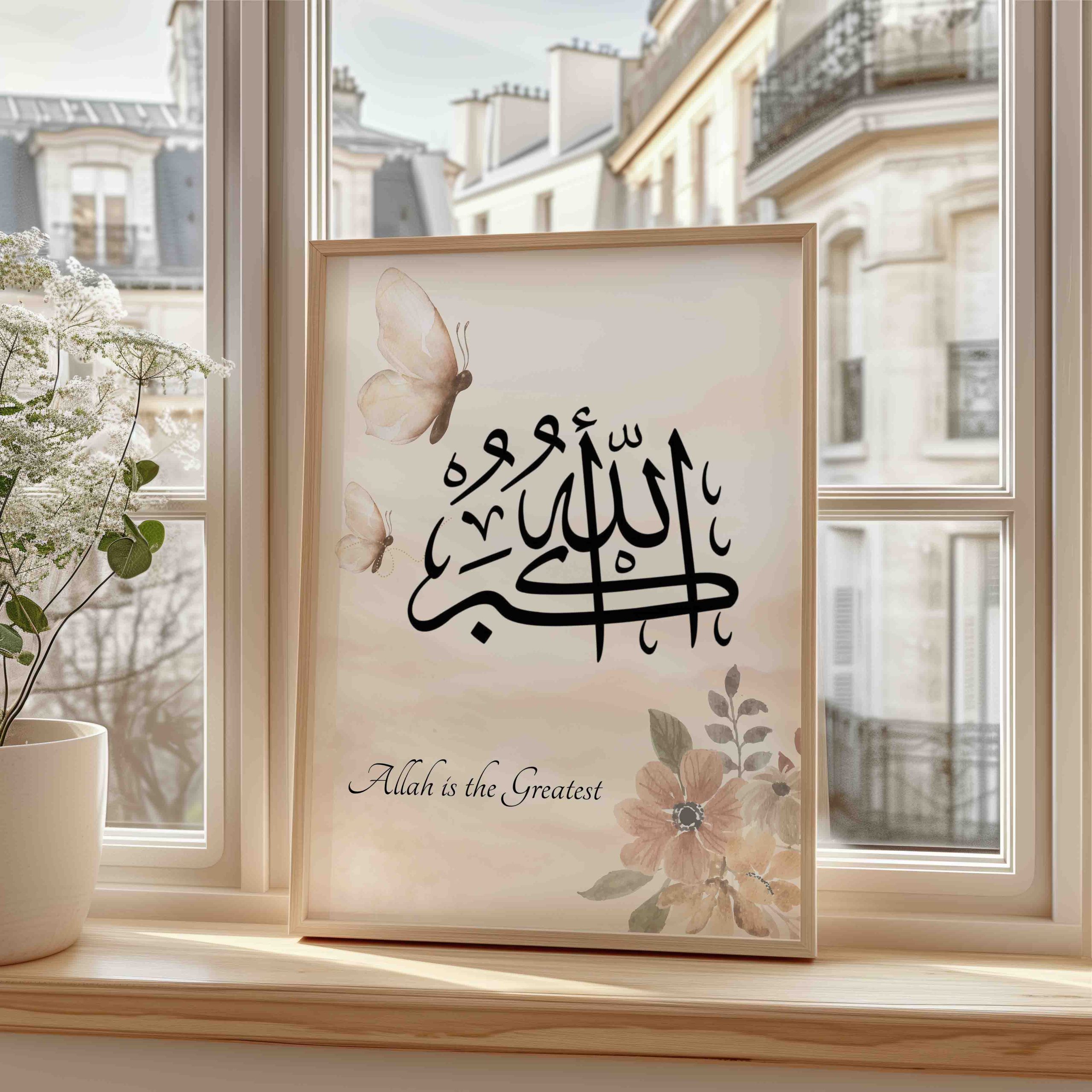
In the rich tapestry of Islamic theology, the divine names of Allah hold profound significance. Among these beautiful names stands AL-WAASI (الواسع), a concept that encompasses vastness, abundance, and limitless capacity. Allah is described as Wasi’ in around nine verses of the Qur’an, signifying its importance in understanding the nature of the Divine. As we explore this concept, we discover not just its linguistic roots, but its transformative power in shaping our worldview and spiritual journey.
The Meaning of AL-WAASI
AL-WAASI derives from the Arabic root word “wasi’a” (وسع), which carries connotations of spaciousness, expanse, capacity, abundance, and plentitude. Linguistically, it describes something that is vast, extensive, and without limitation. When attributed to Allah, AL-WAASI signifies that His attributes of knowledge, mercy, power, and provision are boundless and all-encompassing.
In the Qur’an, Allah describes Himself as Wasi’ in several contexts, usually paired with ‘Aleem (All-Knowing) or Hakeem (All-Wise). One of the best-known examples was revealed in connection with the direction of prayer:
“And to Allāh belongs the east and the west. So wherever you [might] turn, there is the Face of Allāh. Indeed, Allāh is all-Encompassing and Knowing.”
(Qur’an 2:115, Saheeh International)
The verse links Allah’s vastness to His knowledge: no place is outside His knowledge and no sincere worshipper is beyond His care.
Scholars explain that the vastness described by Al-Waasi includes several dimensions:
- Vast in knowledge: nothing, however small or hidden, is outside His knowledge.
- Vast in mercy: His mercy reaches every part of creation.
- Vast in provision and bounty: His giving never runs out and is never diminished.
- Vast in forgiveness: no sin is too great for Him to forgive for those who sincerely repent.
The angels who carry the Throne combine these meanings in their prayer for the believers:
“Those [angels] who carry the Throne and those around it exalt [Allāh] with praise of their Lord and believe in Him and ask forgiveness for those who have believed, [saying], “Our Lord, You have encompassed all things in mercy and knowledge, so forgive those who have repented and followed Your way and protect them from the punishment of Hellfire.”
(Qur’an 40:7, Saheeh International)
The Significance of AL-WAASI in Islamic Theology
Understanding AL-WAASI transforms our perception of the Divine and our place in creation. This name holds significant theological implications that resonate throughout Islamic thought and practice.
Where Al-Waasi Appears in the Qur’an
Looking at the verses that describe Allah as Wasi’ shows how broad the meaning is. It appears in passages about prayer (2:115), charity (2:261 and 2:268), leadership (2:247), marriage and divorce (4:130 and 24:32), guidance and favour (3:73 and 5:54), and forgiveness (53:32). In each case, the name reassures the reader that Allah’s bounty, knowledge or forgiveness is wider than the human situation being described.
In the context of marriage, for example, the Qur’an encourages communities to help people marry and addresses the fear of poverty directly:
“And marry the unmarried among you and the righteous among your male slaves and female slaves. If they should be poor, Allāh will enrich them from His bounty, and Allāh is all-Encompassing and Knowing.”
(Qur’an 24:32, Saheeh International)
And in describing those who avoid major sins, the Qur’an highlights the vastness of Allah’s forgiveness:
“Those who avoid the major sins and immoralities, only [committing] slight ones. Indeed, your Lord is vast in forgiveness. He was most knowing of you when He produced you from the earth and when you were fetuses in the wombs of your mothers. So do not claim yourselves to be pure; He is most knowing of who fears Him.”
(Qur’an 53:32, Saheeh International)
These verses show that Al-Waasi is not an abstract idea. It speaks to real worries about money, family, status and past mistakes, and answers them with the reminder that Allah’s resources and mercy are never exhausted.
Allah Above All Limits
Al-Waasi reminds us that Allah is not limited in the way created things are. He is above His creation, yet His knowledge, hearing and sight encompass everything. This invites humility, since our minds cannot contain the full reality of His greatness, and reassurance, since nothing we face is beyond His knowledge or ability.

Spiritual Reassurance
For believers, Al-Waasi offers deep reassurance. Even in situations of loss, such as the breakdown of a marriage, the Qur’an reminds us that Allah’s bounty is wide enough to provide for everyone involved:
“But if they separate [by divorce], Allāh will enrich each [of them] from His abundance. And ever is Allāh Encompassing and Wise.”
(Qur’an 4:130, Saheeh International)
Ethical Implications
The concept of Al-Waasi also carries ethical implications. Recognising Allah’s vast generosity encourages believers to be generous themselves. The Qur’an describes how charity given for Allah’s sake is multiplied, and closes the verse with this very name:
“The example of those who spend their wealth in the way of Allāh is like a seed [of grain] which grows seven spikes; in each spike is a hundred grains. And Allāh multiplies [His reward] for whom He wills. And Allāh is all-Encompassing and Knowing.”
(Qur’an 2:261, Saheeh International)
Benefits of Exploring the Concept of AL-WAASI
Studying and reflecting on AL-WAASI offers numerous spiritual and practical benefits that can enrich our lives in meaningful ways.
Fostering Spiritual Growth
Contemplating the vastness of Allah cultivates humility and awe. When we recognize how limited our own capacities are compared to the divine vastness, we naturally develop reverence. This perspective shift is fundamental to spiritual growth, helping us transcend ego-centered thinking and embrace a more expansive worldview.

The Qur’an encourages this contemplation:
“And decree for us in this world [that which is] good and [also] in the Hereafter; indeed, we have turned back to You.” [Allāh] said, “My punishment – I afflict with it whom I will, but My mercy encompasses all things.” So I will decree it [especially] for those who fear Me and give zakāh and those who believe in Our verses-”
(Qur’an 7:156, Saheeh International)
Reflecting on the vastness of Allah’s mercy can change how we view our own mistakes and those of others, encouraging repentance, forgiveness and compassion.
Developing Resilience
Understanding Al-Waasi builds resilience in facing life’s challenges. When fear of poverty or loss takes hold, the Qur’an reminds us where that fear can come from, and what Allah promises instead:
“Satan threatens you with poverty and orders you to immorality, while Allāh promises you forgiveness from Him and bounty. And Allāh is all-Encompassing and Knowing.”
(Qur’an 2:268, Saheeh International)

Expanding Our Capacity for Giving
One of the most practical benefits of understanding AL-WAASI is how it transforms our approach to generosity. When we recognize that all provision comes from the All-Embracing, we become less fearful of giving and more confident in Allah’s ability to replenish what we share.
The Prophet (peace be upon him) described Allah’s inexhaustible giving in a hadith qudsi:
“Allah’s Messenger (ﷺ) said, ‘Allah said, “Spend (O man), and I shall spend on you.” He also said, “Allah’s Hand is full, and (its fullness) is not affected by the continuous spending night and day.”‘”
Relevance to Modern Life
In our modern world of information overload and constant stimulation, the concept of AL-WAASI offers a valuable counterpoint. It reminds us that beyond the noise and limitations of daily life exists a vastness that can provide peace and perspective.

For those struggling with anxiety or feeling confined by circumstances, reflecting on AL-WAASI can create mental and emotional spaciousness. The recognition that we are held within something vastly greater than ourselves provides a sense of security that transcends material conditions.
Practical Applications of AL-WAASI in Daily Life
Beyond theological understanding, AL-WAASI offers practical wisdom that can be applied in everyday situations.
Supplication and Remembrance
Incorporating AL-WAASI into daily prayers and remembrance (dhikr) connects us to divine vastness. When facing financial difficulties, health challenges, or emotional distress, calling upon Allah as AL-WAASI acknowledges His unlimited capacity to provide relief and solutions beyond our imagination.

Expanding Our Perspective
When faced with seemingly insurmountable problems, remembering AL-WAASI helps expand our perspective. What seems impossible from our limited viewpoint is easily within the capacity of the All-Embracing. This shift in perspective often reveals solutions we couldn’t previously see.
Questions for Personal Reflection
- Where in my life have I assumed that Allah’s help, mercy or provision has run out?
- Have I been harsh with myself or others in a way that narrows what Allah has made wide?
- Is fear of losing money or status holding me back from generosity that I can afford?
- Which blessings have I received that were far larger than anything I asked for?
Writing short answers to these questions once a week can turn the meaning of Al-Waasi from an idea into a habit of mind: a steady reminder that the door to Allah is always wider than it seems in difficult moments.
The Qur’an describes Allah’s knowledge as encompassing all things:
“Your god is only Allāh, except for whom there is no deity. He has encompassed all things in knowledge.”
(Qur’an 20:98, Saheeh International)
No situation is beyond His knowledge or His wisdom.
Cultivating Inclusive Community
The concept of AL-WAASI encourages us to build inclusive communities that reflect divine vastness. Just as Allah’s mercy encompasses all, believers are encouraged to extend kindness beyond narrow boundaries of tribe, nation, or religion.
Vastness and Responsibility
Reflecting on Allah’s vast mercy should never become an excuse for carelessness. The same verses that speak of His wide forgiveness also call people to avoid wrongdoing, to repent and to do good. Hope and responsibility belong together: the believer trusts that Allah’s mercy is wide enough for every sincere person who turns to Him, and that trust motivates effort rather than replacing it.
The Prophet (peace be upon him) corrected a Bedouin who asked for mercy to be limited to only two people:
“Allah’s Messenger stood up for prayer and we too stood up with him. Then a bedouin shouted while offering prayer, ‘O Allah! Bestow Your Mercy on me and Muhammad only and do not bestow it on anybody else along with us.’ When the Prophet finished his prayer, he said to the Bedouin, ‘You have limited (narrowed) a very vast (thing),’ meaning Allah’s Mercy.”
This teaching reminds us not to narrow what Allah has made vast.
Embracing the Vastness: Conclusion
AL-WAASI invites us to expand our understanding of the Divine and, consequently, our approach to life. By recognizing Allah’s limitless capacity in knowledge, mercy, power, and provision, we gain a perspective that transcends the limitations of our human experience.
This divine name reminds us that we are held within a vastness that can accommodate all our needs, forgive all our shortcomings, and guide us through all our confusion. It teaches us to be more generous, more forgiving, and more inclusive—reflecting in our limited way the unlimited nature of the Divine.
Al-Waasi in Arabic Calligraphy and the Home
The name الواسع (Al-Waasi) can be a fitting reminder in a family room or entrance, places where people gather and where hospitality is offered. Many people find that a single, well-chosen piece of calligraphy speaks more clearly than a crowded wall. When choosing a design, check that the Arabic spelling is correct and that the lettering is legible at the size you plan to print.
Our Al-Waasi artwork is an digital download supplied as high-resolution JPEG files for printing at home or at a local print shop. No physical item is shipped. If you would like a different layout or colour scheme, custom designs can be requested.

Our Al-Waasi calligraphy digital download calligraphy design is an digital download; no physical item is shipped. Please see the product page for the files and print sizes included.
Explore the full 99 Names of Allah collection for other calligraphy designs.

As we navigate the complexities of modern life, the concept of AL-WAASI offers both comfort and challenge: comfort in knowing we are supported by limitless divine resources, and challenge in striving to expand our own hearts and minds to reflect this divine attribute.
May our exploration of AL-WAASI lead us to experience greater spaciousness in our spiritual lives and more abundance in our connections with others.
Frequently Asked Questions about Al-Waasi
What does Al-Waasi mean?
Al-Waasi means the All-Encompassing or the Vast. It comes from the Arabic root w-s-‘, which carries meanings of spaciousness, capacity and abundance. It describes Allah’s knowledge, mercy, provision and forgiveness as limitless.
How many times is Al-Waasi mentioned in the Qur’an?
Allah is described as Wasi’ in around nine verses, including 2:115, 2:247, 2:261, 2:268, 3:73, 4:130, 5:54, 24:32 and 53:32. It is most often paired with ‘Aleem (All-Knowing).
What does “You have narrowed something vast” mean?
The Prophet (peace be upon him) said this to a Bedouin who prayed for mercy only for himself and the Prophet. It teaches that Allah’s mercy is vast and that we should not try to limit it to ourselves (Sahih al-Bukhari 6010).
How can reflecting on Al-Waasi help with worry about money?
The Qur’an reminds believers that fear of poverty can be a whisper from Satan, while Allah promises forgiveness and bounty (2:268). Reflecting on Al-Waasi encourages trust, balanced generosity and effort, rather than anxiety.
Is there a set number of times to recite “Ya Waasi”?
No authentic hadith sets a specific number of repetitions or a guaranteed result for reciting “Ya Waasi”. It is best to call on Allah sincerely by His names and to use supplications reliably reported from the Prophet (peace be upon him).
What file do I receive with the Al-Waasi artwork?
You receive high-resolution JPEG files as an digital download, suitable for printing at standard sizes. No physical item is shipped.