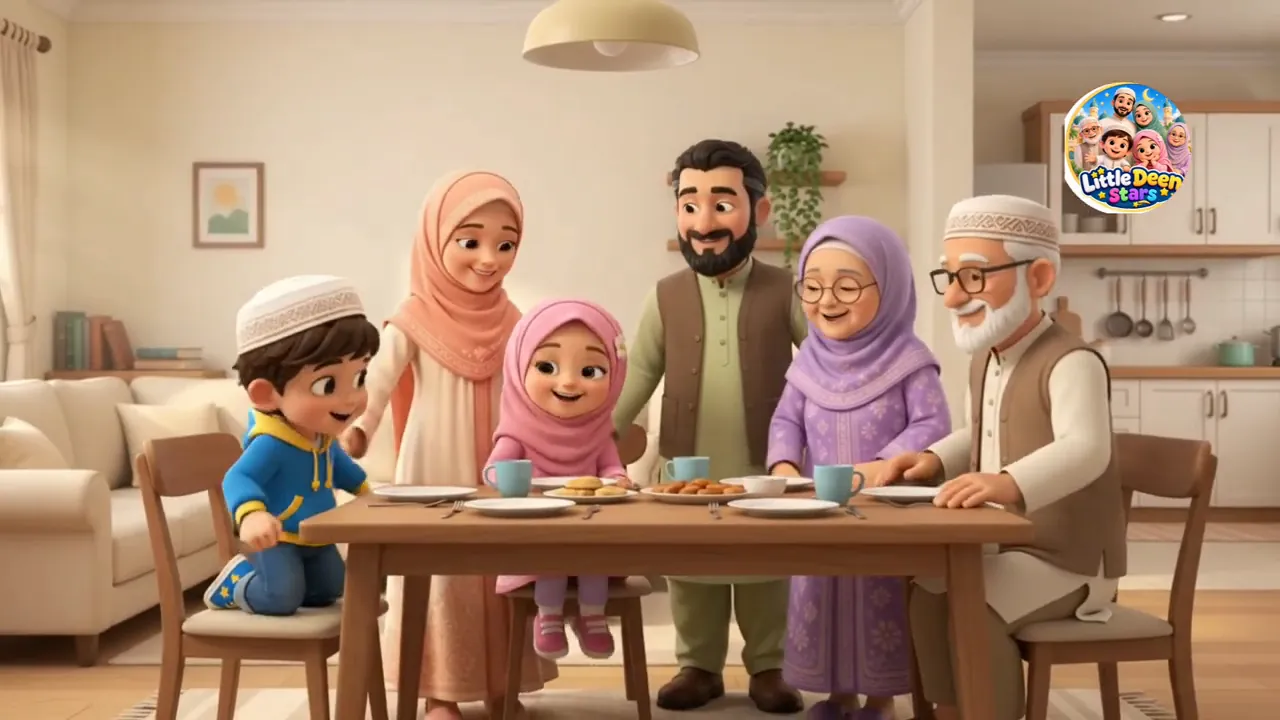
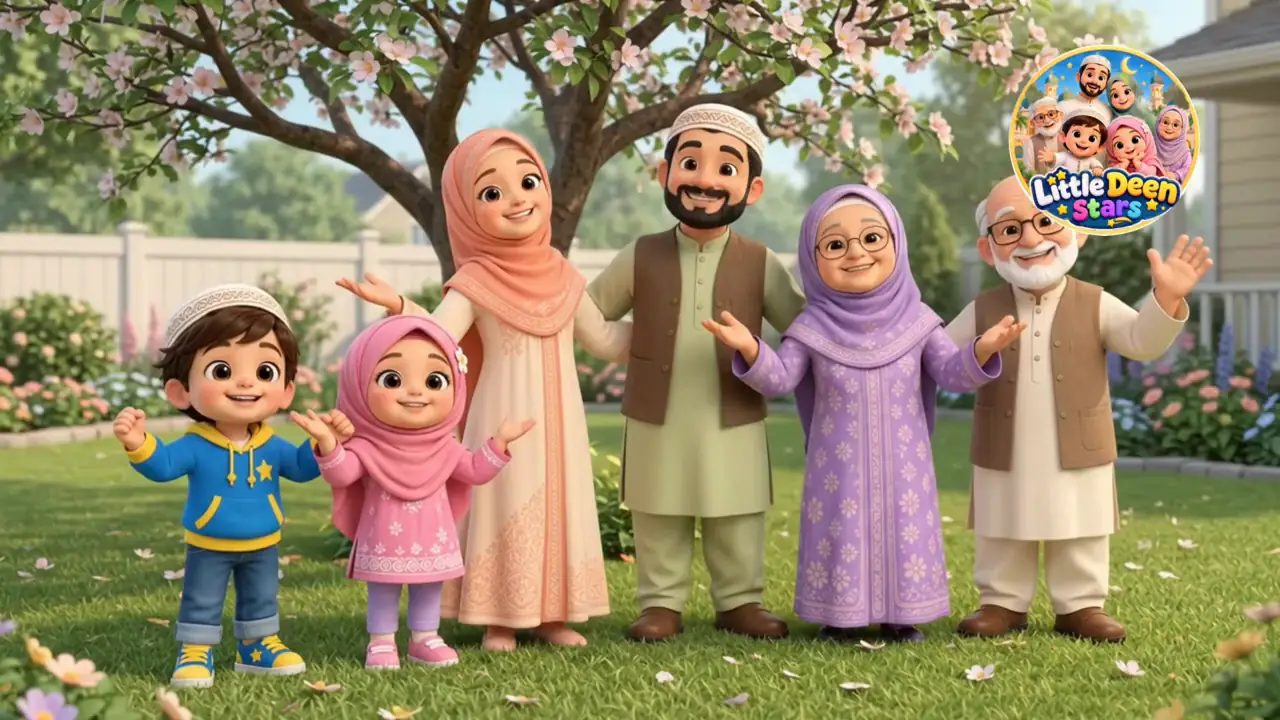
Greet your child with “Assalamu Alaikum” at everyday moments, such as when they wake up or when you collect them, and wait for them to reply “Wa Alaikum Assalam”. Practise both parts, use real moments and play, and let shy children take part in their own way.

What the greeting and the reply mean
| Arabic | Say it | Meaning |
|---|---|---|
| السَّلَامُ عَلَيْكُمْ | Assalamu Alaikum | Peace be upon you |
| وَعَلَيْكُمُ السَّلَامُ | Wa Alaikum Assalam | And upon you be peace |
“Assalamu Alaikum” is the greeting Muslims use with each other around the world. Young children sometimes shorten it to “salam”, which is a reasonable first step while you keep saying the full phrase.
Why practise the reply as well
A greeting is a two-way exchange. The Qur’an asks us to answer a greeting with a better one, or at least the same:
“And when you are greeted with a greeting, greet [in return] with one better than it or [at least] return it [in a like manner]. Indeed Allāh is ever, over all things, an Accountant.”
— Qur’an 4:86, Saheeh International translation
The Learn to Say Salam song practises both parts, so that children can start a greeting and answer one.
Start by greeting your child
One simple way to teach salam is to give it. Anas bin Malik, a companion of the Prophet, set this example with children:
Anas bin Malik passed a group of boys and greeted them with salam. He explained that the Prophet (peace and blessings be upon him) used to do the same.
Paraphrased by us from Sahih al-Bukhari 6247. Follow the link for the full translated text.
Try saying “Assalamu Alaikum” when your child wakes up, when you collect them from nursery and when you walk into the room where they are playing. Wait for a reply, and say it with them if they need help.

Everyday moments to practise
- Waking up: a quiet “Assalamu Alaikum” as you open the curtains.
- Arriving home: whoever comes through the door greets everyone inside.
- Collecting from nursery or school: greet your child before asking about their day.
- Video calls: let your child start the call with salam to grandparents or cousins.
- Visiting family: practise the greeting on the way.
- Play: greet teddies, dolls and toy figures as they “arrive” in a game.
Greeting grandparents and older relatives
There is also guidance on who greets first:
“The young should greet the old, the passer by should greet the sitting one, and the small group of persons should greet the large group of persons.”
— Sahih al-Bukhari 6231 (narrated by Abu Huraira)
For children, the first part is a lovely habit to practise: when a grandparent arrives, the little one greets first. It helps children notice the people around them and show respect.

Ways your child can take part
Many young children go quiet when a visitor arrives, even someone they love. A greeting does not need to be a performance. Children can take part by:
- Listening: hearing the greeting and reply at home every day.
- Waving: waving along while you say the spoken greeting, so they hear the words each time.
- Joining in: whispering the greeting to you, or saying it with you.
- Saying the phrase: greeting someone, or replying, by themselves.
- Practising through play: greeting a teddy before visitors come, or playing the game below.
Praise any attempt, and try again another day if your child is not ready.
Family activity: Salam at the Door
This game is from the Learn to Say Salam lesson. Use a doorway inside your home.
About 2 minutes
- Stand together on opposite sides of an open doorway, keeping your child in sight.
- Your child knocks gently on the door frame, steps through, waves and says “Assalamu Alaikum!”
- You reply with a big smile: “Wa Alaikum Assalam!”
- Swap roles, so your child practises the reply too.
- Greet a favourite teddy together, then the next person you see at home.

Watch Learn to Say Salam together
In Learn to Say Salam (2 minutes 5 seconds), Hashim and Ayesha go round their home greeting the family: at the door, in the living room and with their grandmother. Each time they hear the reply. Watch it together, wave along, and then try the doorway game. All our songs are in the Little Deen Stars children’s library.
A greeting linked with love
The Prophet Muhammad (peace and blessings be upon him) linked the greeting with love between people:
The Prophet (peace and blessings be upon him) told his companions that spreading the greeting of salam among themselves would build love between them.
Paraphrased by us from Sahih Muslim 54a, reported by Abu Huraira (the closing part of a longer hadith). Follow the link for the full translated text.
Questions parents ask
Is it fine if my toddler just says “salam”?
Yes, as a first step. Keep saying the full greeting yourself so your child keeps hearing it.
Should I make my child greet every visitor?
Let your child wave or join in quietly while you model the spoken greeting. Encourage the words without making it a performance.
How do I teach the reply?
Greet your child first and wait. If they don’t answer, say “Wa Alaikum Assalam” together. The doorway game lets you swap roles.
Share an idea
What would you like Hashim and Ayesha to learn next? Parents and carers can tell us using the Little Deen Stars suggestion form.
Sources
- Qur’an 4:86, Saheeh International translation, via Quran.com.
- Sahih al-Bukhari 6247, via Sunnah.com.
- Sahih al-Bukhari 6231, via Sunnah.com.
- Sahih Muslim 54a, via Sunnah.com.
The steps and games in this guide are suggestions for families, not religious rulings.