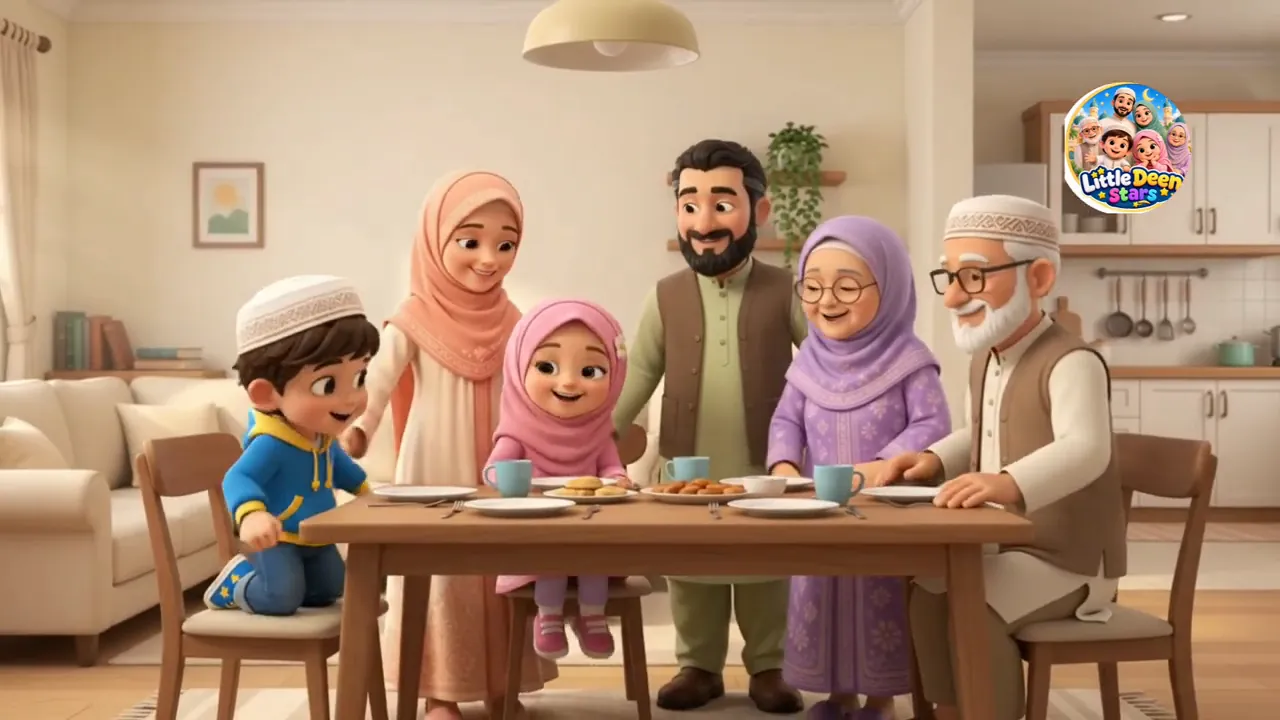
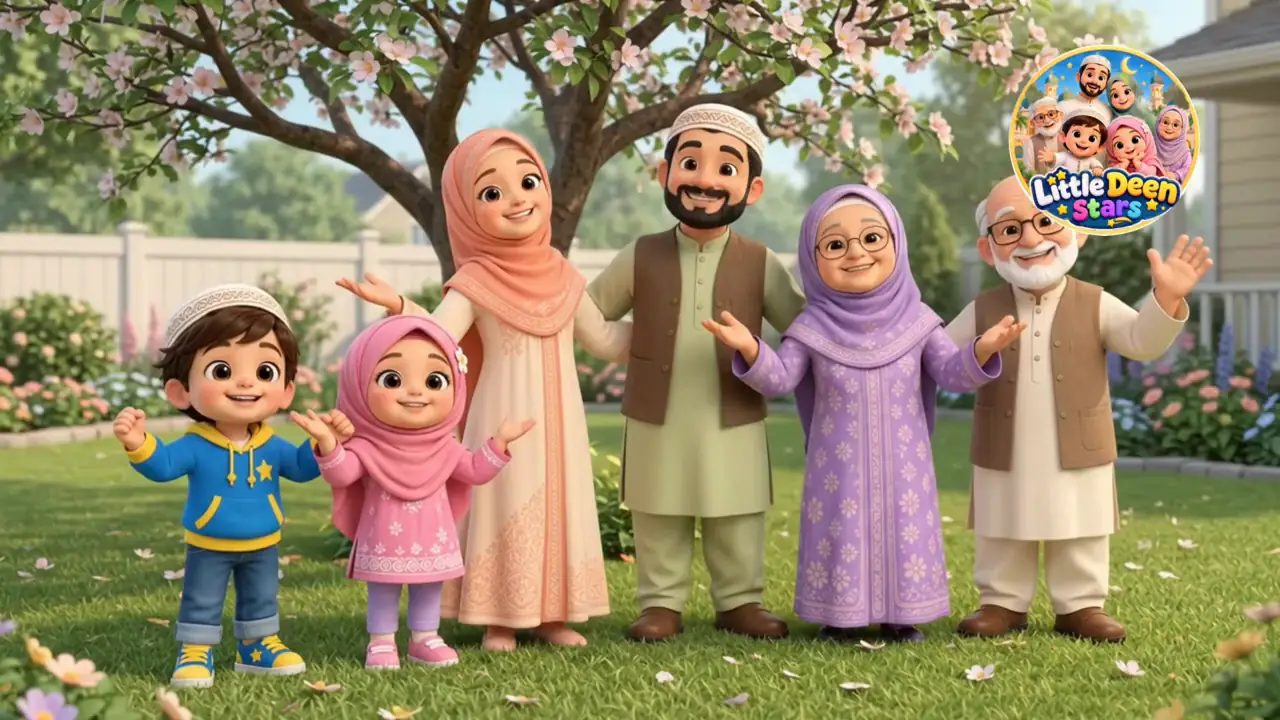
Say “Alhamdulillah” together after meals, snacks and drinks, and name specific good things out loud, such as “Alhamdulillah for this warm soup”. A short game can help your child practise noticing blessings.

What does “Alhamdulillah” mean?
الْحَمْدُ لِلّٰهِ (Alhamdulillah) means “All praise and thanks belong to Allah”. Muslims say it to thank Allah after eating and drinking, when good news arrives, and at many other moments. These are also the words that open Surah Al-Fatihah, the first chapter of the Qur’an, after the Bismillah:
“[All] praise is [due] to Allāh, Lord of the worlds -”
— Qur’an 1:2, Saheeh International translation
Many children hear these words in prayer before they understand them. Saying “Alhamdulillah” themselves helps the word become part of their own day.
Start at the table
Eating and drinking happen every day, which makes them a practical place to begin. The Prophet Muhammad (peace and blessings be upon him) said:
“Allah is pleased with His servant who says: Al-Hamdu lillah while taking a morsel of food and while drinking.”
— Sahih Muslim 2734a (reported by Anas b. Malik)
A simple routine: when your child finishes a meal, a snack or a drink, say “Alhamdulillah” together. If you also say “Bismillah” at the start, the meal has a clear beginning and end that your child can recognise.

Name specific blessings
“Be grateful” is an abstract idea for a toddler. “Alhamdulillah for these warm socks” is concrete. Young children relate to what they can see, touch, taste and hear, so name blessings specifically:
- Food: “Alhamdulillah for this sweet banana.”
- People: “Alhamdulillah for Grandma coming to visit.”
- The body: “Alhamdulillah for the things our bodies help us do.”
- Nature: “Alhamdulillah for the rain that helps the flowers grow.”
- Home: “Alhamdulillah for our cosy bed.”
Everyday prompts
- Waking up after a good sleep.
- Arriving home safely after a trip.
- Finding a lost toy.
- Seeing something beautiful, such as a rainbow, snow or a bird in the garden.
- At bedtime, naming one good thing from the day.
When your child is upset
Gratitude should not be used to dismiss a child’s feelings. If your child is sad or cross, comfort them first. Later, when they are calm, you might notice something good together. Keep “Alhamdulillah” a warm word, not something your child is told to say when they are hurting.
Ways your child can take part
- Listening: hearing you say “Alhamdulillah” after meals and good moments.
- Joining in: saying it with you.
- Saying the phrase: saying it themselves, with or without a reminder.
- Practising through play: finishing the sentence “Alhamdulillah for…?” or playing the game below.
Family activity: Alhamdulillah For…!
This is the two-minute game from the Alhamdulillah Song lesson.
About 2 minutes
- Sit together and say, “Let’s play Alhamdulillah For!”
- Take turns to name one blessing: something to eat, someone you love, or something you can see outside.
- After each one, say “Alhamdulillah!” together.
- Then keep it going in real life: say it together after your next snack or drink.
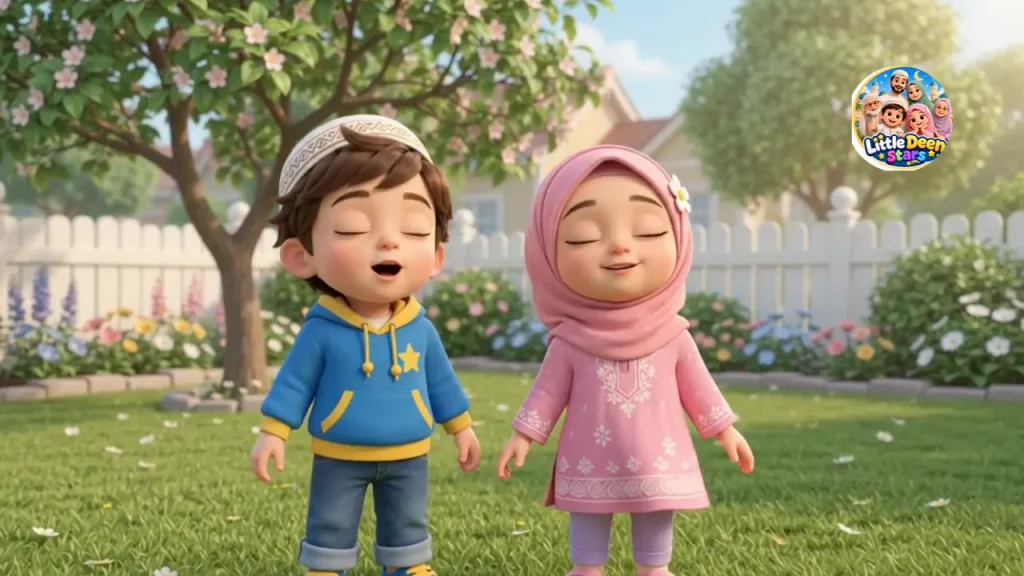
Watch the Alhamdulillah Song together
In the Alhamdulillah Song (2 minutes 34 seconds), Hashim and Ayesha say “Alhamdulillah” at the breakfast table, out in the garden and cuddled up together at home. The word comes round again and again, so little ones can sing along. All our songs are in the Little Deen Stars children’s library.
For parents: gratitude in your own day
Children notice the gratitude they see at home. If you would like to explore gratitude, or Shukr, for yourself, read our explanation of the meaning of Shukr and our guide to making Shukr part of your daily routine.
Questions parents ask
My toddler says it without understanding. Does that matter?
Children often learn words before they understand them fully. Naming specific blessings gives the word meaning over time.
How often should we say it?
There is no set number for young children. Start with meals and drinks, and add moments that feel natural for your family.
How is Alhamdulillah different from saying thank you?
“Thank you” thanks the person who helped. “Alhamdulillah” thanks Allah, from whom every blessing comes. Children can learn both: thank you to Mum for the meal, and Alhamdulillah to Allah.
Share an idea
What would you like Hashim and Ayesha to learn next? Parents and carers can tell us using the Little Deen Stars suggestion form.
Sources
- Qur’an 1:2, Saheeh International translation, via Quran.com.
- Sahih Muslim 2734a, via Sunnah.com.
The steps and games in this guide are suggestions for families, not religious rulings.