


Life can feel overwhelming at times. Challenges pile up, and our self-worth shakes. In these moments, we look for something greater than ourselves. A source of honor that no human power can take away.
Among Allah’s 99 names, AL-MU’IZZ stands out. It reminds us that true dignity comes from the Divine. This name, meaning the Bestower of Honor, touches our spiritual journey deeply.
Every believer longs for respect and recognition. Yet, true honor comes from our bond with Allah. By understanding al-mu’izz meaning, we find a truth about our place in the world.
The Islamic tradition is rich with divine names. Each name opens a window to Allah’s attributes. AL-MU’IZZ shows us the One who lifts souls, gives dignity to the humble, and grants lasting honor to those who seek Him.
Key Takeaways
- AL-MU’IZZ means “The Giver of Honor” – one of Allah’s 99 beautiful names
- This divine name emphasizes Allah’s complete control over honor and dignity
- Understanding the Bestower of Honor helps believers find true self-worth
- Regular remembrance of AL-MU’IZZ brings spiritual elevation and protection
- The name originates from Arabic roots meaning mighty, noble, and precious
- Islamic Wall Arts UK offers meaningful AL-MU’IZZ designs for spiritual home decor
Understanding AL-MU'IZZ Among the 99 Names of Allah
The 99 names of Allah show divine perfection in Islamic belief. Each name highlights a unique aspect of Allah’s nature and power. AL-MU’IZZ is a profound islamic divine attribute. It shows Allah’s power to give true honor and dignity to His creation.
The Divine Position of AL-MU'IZZ in Islamic Theology
AL-MU’IZZ is known as “The Bestower of Honor” in Islamic theology. This attribute shows Allah’s complete control over status and elevation. No earthly power can give lasting honor without Allah’s permission.
Islamic scholars like Imam Al-Ghazali have studied allah’s name al-mu’izz significance a lot. They say this attribute teaches us about Allah’s control over human affairs and social status.
Connection to Other Beautiful Names of Allah
AL-MU’IZZ is closely related to other divine names:
| Divine Name | Meaning | Connection to AL-MU’IZZ |
|---|---|---|
| Ar-Rafi | The Exalter | Both names involve elevation and raising status |
| Al-Aziz | The Mighty | Shares the concept of honor and power |
| Al-Mudhill | The Humiliator | Paired opposite showing Allah’s complete authority |
The Significance in Daily Worship and Remembrance
Using AL-MU’IZZ in daily worship has spiritual benefits. Many people say this name after Maghrib prayer. They seek divine honor and protection from shame.
Remembering the 99 names of Allah regularly strengthens faith. It connects the heart to divine wisdom.
AL-MU'IZZ meaning and the benefit of AL-MU'IZZ
The name AL-MU’IZZ holds deep meaning in Islamic faith. It connects us to a deeper spiritual level. This name shows Allah as the one who gives honor, dignity, and elevation to His chosen ones.
Linguistic Origins and Classical Arabic Roots
The name AL-MU’IZZ comes from the Arabic root ‘azza. It means to strengthen, support, and give might. In Arabic, this root talks about both physical and spiritual strength.

Theological Interpretation of Divine Honor
In Islamic theology, honor from Allah is real and lasts forever. It’s not like human recognition, which can change. The Quran talks about this in verse 3:26: “You honor whom You will and You humble whom You will.”
Practical Benefits for Believers
Reciting al-mu’izz brings many spiritual benefits:
- Protection from feeling humiliated
- Being elevated in spiritual rank
- Feeling worthy based on faith, not wealth
- Getting support from Allah in tough times
- Learning to be content and avoid greed
Remembering this name helps those facing hard times. It reminds them that true honor comes from Allah alone.
The Bestower of Honor: Core Attributes of AL-MU'IZZ
AL-MU’IZZ is a key islamic divine attribute that shapes our spiritual and worldly lives. It shows Allah’s power to give dignity and respect to His creation. Learning about allah’s name al-mu’izz significance helps us see how divine wisdom works in our lives.

This attribute touches every part of our lives. Allah gives us wealth and spiritual growth. Our social status comes from His will, but the greatest honor is our dignity before Allah.
AL-MU’IZZ teaches us that true power is Allah’s alone. When Prophet Muhammad faced insults from the Quraysh, the bestower of honor lifted him above them. This shows divine honor always wins over human attempts to belittle.
AL-MU’IZZ also means making things easy for us. The Quran says Allah made the Earth easy for us to live on. This shows Allah’s mercy in making creation serve us. Yet, it reminds us that all ease comes from Him alone.
AL-MU'IZZ Translation and Linguistic Analysis
The name AL-MU’IZZ is rich in meaning, spanning centuries of Arabic study. Its translation shows deep connections to Allah’s power, one of the 99 divine names. This exploration shows how language helps us understand divine qualities across cultures and time.
Classical Arabic Connotations
In classical Arabic, AL-MU’IZZ comes from ‘ayn-zay-zay (ع-ز-ز), meaning strength, power, and rarity. “Mu’izz” means continuous and repeated action. It’s not just about granting honor once, but doing it forever.
Old scholars saw this name as:
- Making someone mighty and invincible
- Elevating status beyond reach
- Creating something precious and rare
- Strengthening against adversity
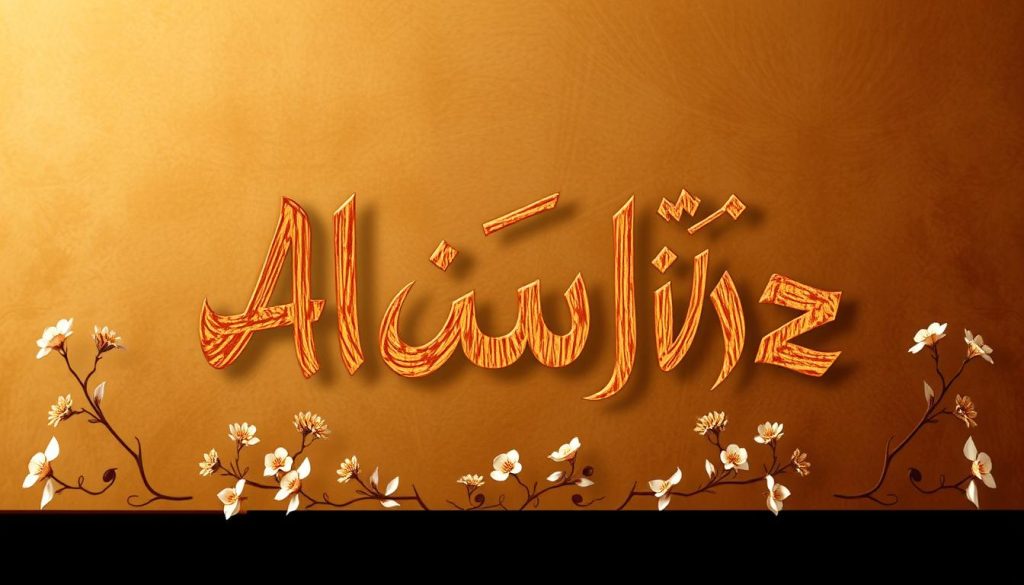
Modern Language Interpretations
Today, AL-MU’IZZ means more than just its original words. In Urdu, it’s “Izzat dene wala” — the one who gives respect. Modern Arabic speakers see it as “The Bestower of Honor and Grace,” touching on both worldly success and spiritual growth.
The way it’s pronounced, Al-M-o-o-e-e-z, adds to its beauty. The long vowels make it sound melodic.
Cross-Cultural Understanding
Dignity and respect are valued everywhere, making AL-MU’IZZ universal. While honor is a global concept, Islam makes it unique by linking it to Allah. This name speaks to those seeking success and spiritual growth, showing how Allah’s names meet human needs worldwide.
AL-MU'IZZ in Quran: Verses and Divine Context
The name Al-Mu’izz holds deep meaning in Islamic scripture. It doesn’t appear directly in the Quran, but its essence is seen in many verses. These verses show Allah’s power to give honor and dignity.
The Quran beautifully explains this divine attribute. It helps us understand what true honor is.
The most important verse about al-mu’izz is in Surah Al-Imran (3:26):
“Say, ‘O Allah, Owner of Sovereignty, You give sovereignty to whom You will and You take sovereignty away from whom You will. You honor whom You will and You humble whom You will. In Your hand is all good. Indeed, You are over all things competent.'”

This verse teaches us a key lesson: all honor comes from Allah alone. The islamic divine attributes in this verse remind us. Without Allah’s blessing, worldly status is nothing.
Other verses in the Quran also support this idea. In Surah Fatir (35:10), it says: “Whoever desires honor through power – then to Allah belongs all honor.” Surah Al-Munafiqun (63:8) adds: “And to Allah belongs all honor, and to His Messenger, and to the believers.” These verses encourage us to seek honor through good deeds, not just worldly success.
Spiritual Benefits of Reciting AL-MU'IZZ
Reciting al-mu’izz brings more than just words. It connects us directly to divine honor. This changes the hearts of believers who remember it often. Understanding al-mu’izz meaning and its benefits opens a world of spiritual growth.
Recommended Times for Recitation
The best times to say this divine name are:
- After Maghrib prayer when the day turns to night
- Before starting the day with morning adhkar
- In the evening, when it’s quiet
- When facing challenges to our dignity
Reciting al-mu’izz regularly boosts its spiritual benefits. Scholars say quality is key, suggesting 33 or 99 repetitions with deep thought.
Impact on Personal Honor and Dignity
Reciting al-mu’izz changes how we see ourselves. We stop looking for validation from others and find it in Allah. This builds a strong sense of self-worth based on divine acceptance, not social approval.
Protection from Humiliation
Knowing how to invoke al-mu’izz in prayer gives us spiritual protection. It reminds us that true honor comes from Allah, making external setbacks powerless. This practice keeps us calm in tough times, whether at work or in personal struggles.
How to Invoke AL-MU'IZZ in Prayer
Learning to invoke al-mu’izz in prayer is a way to seek divine honor and protection. It requires spiritual readiness and understanding of Islamic etiquette. When we call upon Allah through AL-MU’IZZ, we aim to elevate in His sight while staying humble.
Proper Etiquette and Preparation
Before you can invoke Allah’s name al-mu’izz, you must prepare. Start with wudu (ablution) to cleanse yourself. Face the qiblah if possible, as it connects you to the Kaaba. Your heart should be free from distractions, focused on Allah’s greatness.
Begin by praising Allah and sending blessings to Prophet Muhammad (peace be upon him). This shows respect and follows the Prophet’s example. Remember, sincerity is more important than eloquence when seeking al-mu’izz’s spiritual benefits.
Specific Duas and Supplications
Here are some powerful supplications that use AL-MU’IZZ effectively:
- “Ya Mu’izz, grant me honor in Your sight and protect me from humiliation”
- “O Bestower of Honor, elevate me through Your mercy”
- “Ya Mu’izz Ya Mudhill, You alone control honor and humiliation”

Integration with Daily Prayers
The best times to invoke AL-MU’IZZ include:
| Prayer Time | Recommended Practice | Special Benefits |
|---|---|---|
| After Fajr | Recite 21 times | Protection throughout the day |
| After Maghrib | Recite 41 times | Enhanced spiritual connection |
| During Sujud | Silent invocation | Closest position to Allah |
| Morning Adhkar | Include with daily remembrance | Consistent spiritual practice |
In sujud (prostration) during optional prayers, quietly invoke AL-MU’IZZ. This is when you are closest to Allah. Scholars suggest using AL-MU’IZZ with AL-MUDHILL to gain full understanding of divine wisdom.
Allah's Name AL-MU'IZZ Significance in Islamic History
Allah’s name AL-MU’IZZ has deeply influenced Islamic history for centuries. This divine name is among the 99 names of Allah. It has shaped lives and destinies, inspiring believers to this day.
Prophet Muhammad’s life shows the power of AL-MU’IZZ. Born an orphan in Mecca, he faced many challenges. Yet, Allah elevated him to become the final messenger to humanity. His journey from a shepherd to a leader shows the mysterious ways of islamic divine attributes.

Bilal ibn Rabah’s story is another powerful example. Once enslaved and tortured for his faith, Bilal was honored by Allah. Through AL-MU’IZZ, he became the first muezzin of Islam. His voice, once silenced by enemies, now calls believers to prayer worldwide.
In the Islamic Golden Age, civilizations were elevated by Allah. Muslim scholars preserved ancient knowledge and made major discoveries in medicine, mathematics, and astronomy. Their work showed their commitment to seeking Allah’s pleasure through knowledge.
Great leaders like Salahuddin Ayyubi knew true honor comes from Allah. Despite facing huge challenges, his faith in the 99 names of Allah, especially AL-MU’IZZ, united the Muslim world. He achieved great victories while keeping justice and mercy.
Imam Al-Ghazali wrote deeply about islamic divine attributes, focusing on AL-MU’IZZ. His teachings remind us that worldly status is nothing without Allah’s approval.
Islamic Divine Attributes: AL-MU'IZZ and AL-MUDHILL
Among the 99 names of Allah, AL-MU’IZZ and AL-MUDHILL are special. They show Allah’s power over honor and shame. These names show Allah’s balance, giving honor and taking it away as He sees fit.
The Balance of Honor and Humiliation
Understanding AL-MU’IZZ and AL-MUDHILL helps us see Allah’s plan. Allah tests us by giving us success and trials. Success tests our gratitude, while trials test our patience and faith.

Divine Wisdom in Elevation and Degradation
Allah’s wisdom is beyond our understanding. Hardship can wake up our spirit, while blessings test our character. The Prophet Muhammad (peace be upon him) faced both, showing us Allah’s ways.
| Divine Attribute | Meaning | Spiritual Lesson |
|---|---|---|
| AL-MU’IZZ | The Bestower of Honor | Remain humble in success |
| AL-MUDHILL | The Humiliator | Stay patient in trials |
Understanding Allah's Perfect Justice
These names remind us that worldly status doesn’t matter. Pharaoh was powerful but lost spiritually. Prophet Yusuf was in prison but later honored. Allah controls everything, giving us trials and blessings with perfect justice.
Practical Applications of AL-MU'IZZ in Modern Life
Living today comes with its own set of challenges for those seeking divine honor. Knowing what al-mu’izz means and its benefits helps us live spiritually upright in today’s world. It guides us in making choices, from work ethics to family ties.
Seeking Honor Through Righteous Actions
True honor comes from doing what’s right. In business, choosing integrity over profit is key. When faced with tough choices at work, remembering al-mu’izz’s spiritual benefits helps us stay true to our values.

- Keeping promises even when it costs us
- Helping colleagues without expecting recognition
- Speaking truth in difficult situations
- Treating everyone with respect regardless of status
Maintaining Humility Despite Success
Success tests our character more than failure. The bestower of honor lifts up those who stay humble and grateful. Giving to charity reminds us that our achievements are gifts to help others.
| Signs of Healthy Humility | Warning Signs of Arrogance |
|---|---|
| Crediting team members for success | Taking sole credit for achievements |
| Listening to feedback openly | Dismissing others’ opinions |
| Helping others reach their goals | Viewing others as competition |
| Expressing gratitude regularly | Feeling entitled to blessings |
Finding Strength in Times of Difficulty
In hard times, al-mu’izz’s meaning and benefits shine through. Current circumstances never define our ultimate worth. Many prophets faced rejection before being honored. Patience during trials often leads to spiritual growth.
“True nobility lies not in being superior to others, but in being superior to your former self.”
The spiritual benefits of al-mu’izz in tough times include hope, peace, and the strength to stay dignified. Each challenge is a chance to grow when we trust the bestower of honor’s wisdom.
AL-MU'IZZ in Islamic Art and Calligraphy
The name AL-MU’IZZ is a key part of Islamic art history. It shows the divine honor in stunning ways. Calligraphers turn this sacred name into beautiful works seen in mosques, manuscripts, and homes around the world.
Calligraphers use various scripts to show the beauty and meaning of al-mu’izz. The Thuluth script adds grandeur to mosques and formal displays. Naskh script is clear for prayer books and learning materials. The Diwani script makes ornamental pieces that highlight the divine name’s beauty.
Today, artists mix old techniques with new styles. They use:
- Gold leaf to show divine honor
- Geometric patterns for infinite wisdom
- Color gradients for spiritual growth
- Mixed media for both classic and digital art
Digital art has changed how we see AL-MU’IZZ in art. Artists make lively pieces that bring these divine attributes into modern homes. These works not only decorate but also remind us to seek honor through faith.
The visual art of AL-MU’IZZ turns walls into spiritual centers. It connects believers with the deep meaning in the 99 names of Allah.
Transforming Your Space with AL-MU'IZZ Wall Art
Adding the bestower of honor to your home brings a special spiritual vibe. AL-MU’IZZ wall art is both stunning and a constant reminder of divine favor. Choosing and placing Islamic art thoughtfully boosts its spiritual power and beautifies your home.
Choosing the Perfect Design for Your Home
The ideal AL-MU’IZZ piece depends on your room’s use and look. Living rooms need bold, formal art with the al-mu’izz translation in fancy calligraphy. Bedrooms should have soft, gentle designs for calm thinking. Offices and study areas benefit from art that motivates you to find honor in your work.
Colors can be traditional black and gold or modern pastels. Classic art has detailed Arabic calligraphy, while modern styles fit today’s decor.
Placement Tips for Maximum Spiritual Benefit
Placing your AL-MU’IZZ art wisely boosts its spiritual value. Entrance areas welcome honor and protection. Prayer spaces gain depth with these islamic divine attributes. Workspaces inspire you to seek honor in your job.
- Hang at eye level for easy contemplation during daily activities
- Position near natural light to highlight calligraphy details
- Create focal points in meditation corners
- Pair with complementary divine names for enhanced spiritual energy
Digital Downloads from Islamic Wall Arts UK
Get instant access to top-notch AL-MU’IZZ designs with our digital downloads. Print them on canvas, metal, or paper to fit your needs. Our collection includes single pieces and sets with Quranic verses, letting you craft your ideal spiritual space.
Conclusion
The journey into al-mu’izz meaning shows us a divine attribute that affects our lives deeply. This name teaches us that all honor comes from Allah alone. When we understand this, our view on success and dignity changes.
We stop chasing after empty praise and focus on what truly matters. We seek divine approval and spiritual growth. This shift changes everything.
The spiritual benefits of saying al-mu’izz are vast. It protects us from shame and builds inner strength and happiness. Each time we say it, we connect with Islamic wisdom through the ages.
From ancient scholars to today’s believers, Muslims have found peace. They know Allah controls all honor. This name brings comfort in hard times and keeps us humble in success.
Learning to use al-mu’izz in prayer deepens our connection with God. It helps us in seeking personal dignity, career success, or spiritual growth. Islamic Wall Arts UK offers beautiful calligraphy pieces to remind us of this.
Visit islamicwallarts.co.uk to see designs that mix traditional art with modern style. These pieces create spaces that inspire beauty and spiritual thought.
FAQ
What is AL-MU’IZZ meaning and the benefit of AL-MU’IZZ in daily life?
AL-MU’IZZ means “The Giver of Honor” or “The Bestower of Honor.” It shows Allah’s power to give dignity and elevation. It protects from humiliation and boosts self-worth through faith.
It also helps in facing challenges with divine support. Reciting it regularly helps in being content and seeking honor through good deeds, not worldly means.
Where does AL-MU’IZZ appear in Quran and what verses reference this divine attribute?
AL-MU’IZZ is not a specific name in the Quran. But its meaning is found in many verses. The key verse is Surah Al-Imran 3:26.
It says, “You honor whom You will and humble whom You will.” Other important verses include Surah Fatir 35:10 and Surah Al-Munafiqun 63:8.
How do I invoke AL-MU’IZZ in prayer properly?
Start by making wudu and facing the qiblah. Begin by praising Allah and sending blessings to Prophet Muhammad. Use specific duas like “Ya Mu’izz, grant me honor in Your sight and protect me from humiliation.”
The best times are after Maghrib prayer, during morning and evening adhkar, and in sujud during optional prayers.
What are the spiritual benefits of reciting AL-MU’IZZ regularly?
Reciting AL-MU’IZZ regularly brings many spiritual benefits. It elevates your status in both the world and spiritually. It protects you from social degradation.
It builds inner dignity, independent of material wealth. It strengthens your resolve during trials. It shifts focus from human approval to divine acceptance.
What is Allah’s name AL-MU’IZZ significance compared to other names among the 99 names of Allah?
AL-MU’IZZ is unique as it governs honor and dignity. It connects with Ar-Rafi (The Exalter) and Al-Aziz (The Mighty). Together, they show Allah’s power over elevation and degradation.
This pairing helps understand divine justice and wisdom.
How can AL-MU’IZZ help with Islamic divine attributes understanding?
AL-MU’IZZ shows Allah’s absolute power over human conditions. It covers material wealth, spiritual status, social standing, and honor before Allah. Understanding this name helps believers see that all elevation comes from Allah’s will and wisdom.
What is the proper AL-MU’IZZ translation in different languages?
AL-MU’IZZ means “The Giver of Honor” or “The Bestower of Honor” in English. In Urdu, it’s “Izzat dene wala” (one who gives respect). The pronunciation is Al-M-o-o-e-e-z, with “Mu’izz” showing continuous action of honoring.
Classical Arabic meanings include strengthening, supporting, making mighty, elevating, and making precious or rare.
When is the best time to recite AL-MU’IZZ as The Bestower of Honor?
The best time is after Maghrib prayer daily, as Islamic texts suggest. Also, during morning and evening adhkar, when facing humiliation, and in the last third of the night. Consistency is key, not just intensive sessions.


