


In Islamic tradition, Allah is known by 99 beautiful names or attributes, each revealing a unique aspect of divine perfection. These names, known as Asma ul-Husna, offer believers a framework for understanding and connecting with their Creator. Among these profound attributes is Al-Hafiz – The Preserver, The Guardian, The Protector – a name that carries deep significance for those seeking divine protection and guidance in their spiritual journey.
Al-Hafiz represents Allah’s perfect ability to preserve, protect, and safeguard all creation. This divine attribute reminds us that nothing escapes Allah’s watchful care – from the vast cosmos to the most intimate details of our lives. By exploring the meaning and significance of Al-Hafiz, we open ourselves to a deeper understanding of divine guardianship and discover practical ways to embody this attribute in our daily lives.
The Meaning of Al-Hafiz
Al-Hafiz (الحَفِيظ) derives from the Arabic root letters ح-ف-ظ (h-f-z), which carry several interconnected meanings. This linguistic foundation helps us understand the comprehensive nature of this divine attribute.

Linguistic Breakdown
The root h-f-z encompasses several key meanings in classical Arabic:
- To preserve and maintain
- To guard and protect
- To be watchful and vigilant
- To remember and retain
- To prevent something from perishing or becoming lost
When we refer to Allah as Al-Hafiz, we acknowledge His perfect ability to preserve all creation, protect it from harm, and maintain meticulous awareness of every detail within it. Unlike human protection, which is limited and temporary, divine protection is comprehensive and eternal.
In theological terms, Al-Hafiz signifies that Allah is:
- The Guardian who protects His creation from harm
- The Preserver who maintains the order of the universe
- The Protector who safeguards His servants
- The One who remembers and records all actions
- The One who preserves His divine message (the Quran)
This attribute reminds us that Allah’s protection extends to all aspects of existence – from the cosmic order of planets and stars to the preservation of faith in the hearts of believers.
Quranic References to Al-Hafiz
The Quran mentions Al-Hafiz and its derivatives in several contexts, each highlighting different aspects of divine protection. One of the most significant references appears in Surah Hud, where Allah is described as the Guardian over all things. This verse emphasises the comprehensive nature of divine protection that encompasses everything in existence.
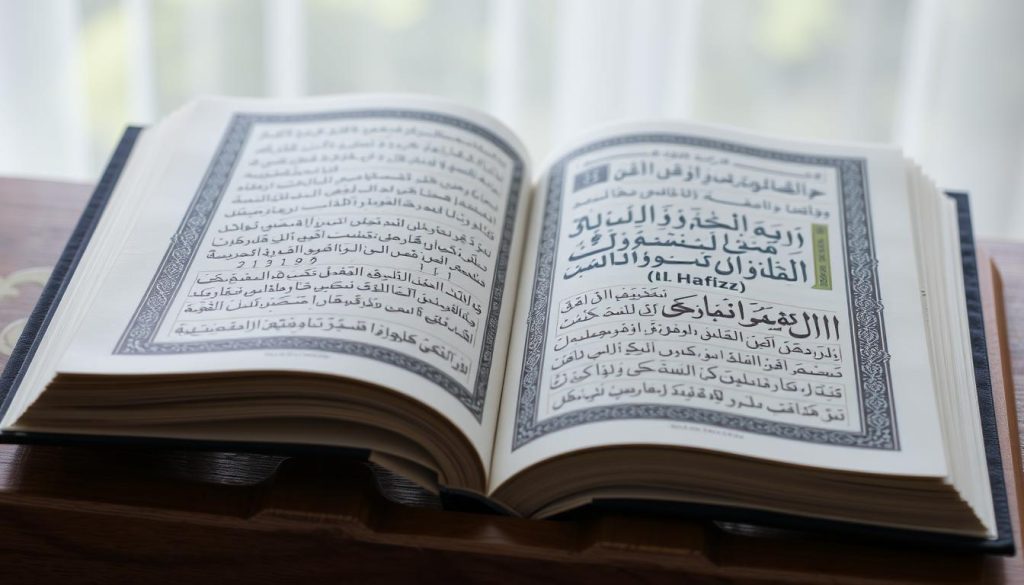
Another powerful reference appears in Surah Al-Hijr, where Allah promises to preserve the Quran from corruption or alteration. This verse highlights a specific manifestation of the Al-Hafiz attribute – the divine commitment to protect revealed knowledge throughout time.
Benefits of Studying Al-Hafiz
Understanding and reflecting on Al-Hafiz offers numerous spiritual, psychological, and practical benefits for believers. By internalising this divine attribute, we can transform our relationship with Allah and approach life’s challenges with greater confidence and peace.

Spiritual Benefits
Enhanced Trust in Divine Protection
When we truly understand Allah as Al-Hafiz, we develop tawakkul (reliance on Allah). This deep trust liberates us from excessive worry about the future, knowing that the Ultimate Protector watches over us. As the Quran states: “And Allah will protect you from the people” (5:67).
Freedom from Anxiety
Recognising Allah as Al-Hafiz helps alleviate anxiety about worldly concerns. When we internalise that nothing occurs without divine knowledge and permission, we can face life’s uncertainties with greater calm and composure, finding refuge in divine protection.
Strengthened Faith
Contemplating how Allah preserves the universe – from the cosmic order to the intricate systems within our bodies – deepens our appreciation of divine wisdom and power, strengthening our iman (faith) and spiritual connection.
Practical Applications

Ethical Living
Understanding Al-Hafiz inspires us to become protectors in our communities. This manifests through upholding justice, defending the vulnerable, and preserving the rights of others. By embodying aspects of this divine attribute, we contribute to creating safer, more compassionate societies.
The Prophet Muhammad (peace be upon him) exemplified this protective role through his care for orphans, widows, and the disadvantaged. By following his example, we honour the spirit of Al-Hafiz in our daily interactions.
Community Guardianship
Al-Hafiz encourages us to protect not only individuals but also collective goods, such as environmental resources, cultural heritage, and community welfare. This broader understanding of protection extends our responsibility beyond immediate family to society at large.
In practical terms, this might involve environmental conservation efforts, preserving beneficial knowledge, or safeguarding community institutions – all expressions of the protective attribute we learn from Al-Hafiz.
Psychological Impact

Sense of Security
Internalising Al-Hafiz creates a profound sense of security that transcends physical safety. Knowing that Allah preserves our faith, protects our spiritual journey, and guards us against harm provides emotional stability even during difficult times.
This security becomes particularly valuable during periods of uncertainty or crisis, when external circumstances might otherwise lead to despair or hopelessness.
Resilience in Adversity
Understanding divine protection builds psychological resilience. When we face challenges, the knowledge that Allah is Al-Hafiz reminds us that difficulties serve a purpose and occur within the framework of divine wisdom and care.
This perspective transforms our response to hardship, helping us maintain hope and perseverance rather than succumbing to despair or resentment.
Reflection Exercise: Think about a time when you felt protected or preserved from harm unexpectedly. How might this experience connect to the divine attribute of Al-Hafiz? Take a moment to express gratitude for this protection.
Al-Hafiz in Daily Life
Beyond theoretical understanding, the attribute of Al-Hafiz offers practical guidance for everyday living. By consciously incorporating this divine quality into our daily routines and decisions, we can transform ordinary activities into opportunities for spiritual growth and service.

Embodying Al-Hafiz as a Muslim
While divine attributes in their perfect form belong only to Allah, Muslims are encouraged to cultivate compatible qualities in appropriate human ways. Here are practical ways to embody aspects of Al-Hafiz in daily life:
Protecting Rights
Stand up for justice and defend the rights of others, especially those who cannot defend themselves. This includes speaking against oppression, advocating for fair treatment, and ensuring that vulnerable community members are protected from harm.
Preserving Knowledge
Contribute to the preservation and transmission of beneficial knowledge. This might involve memorising the Quran, teaching others, documenting important information, or supporting educational institutions that preserve cultural and religious heritage.
Environmental Stewardship
Care for the natural world as Allah’s creation. Practice conservation, reduce waste, protect wildlife habitats, and promote sustainable living as expressions of the protective aspect of Al-Hafiz in relation to our environment.
Daily Practices Connected to Al-Hafiz

Morning and Evening Adhkar
The Prophet Muhammad (peace be upon him) taught specific supplications to be recited in the morning and evening for divine protection. These protective prayers (adhkar) connect us with Al-Hafiz and invite divine guardianship over our day.
For example, reciting “Bismillahil-ladhi la yadurru ma’asmihi shay’un fil-ardi wa la fis-sama’i, wa Huwas-Sami’ul-‘Alim” (In the name of Allah, with whose name nothing can cause harm on earth or in heaven, and He is the All-Hearing, All-Knowing) three times morning and evening is a means of seeking protection.
Mindful Guardianship
Practice mindfulness about what you allow into your life. Just as Al-Hafiz preserves what is beneficial and protects against harm, we can be intentional about the influences we permit to affect our hearts, minds, and homes.
This includes being selective about media consumption, friendships, and environments that either nurture or diminish our spiritual well-being. By guarding our senses, we honour the principle of protection embodied in Al-Hafiz.
How can I invoke Al-Hafiz for protection?
You can invoke Al-Hafiz by reciting “Ya Hafiz” (O Protector) as a form of remembrance (dhikr). Many believers recite this divine name repeatedly during times when they seek protection or feel vulnerable. The name can be incorporated into your regular supplications or recited as a standalone invocation.
Remember that the effectiveness of this practice depends on sincerity and consistency rather than mere repetition. Combine the verbal invocation with conscious awareness of Allah’s protective presence in your life.
What is the relationship between human effort and divine protection?
Islamic tradition teaches a balance between reliance on divine protection (tawakkul) and taking practical measures (asbab). While we trust in Allah as Al-Hafiz, we are also expected to utilise the means of protection He has provided.
The Prophet Muhammad (peace be upon him) advised a companion: “Tie your camel first, then put your trust in Allah.” This wisdom illustrates that seeking divine protection includes taking responsible action while recognising that ultimate outcomes remain in Allah’s hands.

Embracing the Wisdom of Al-Hafiz
As we conclude our exploration of Al-Hafiz, we recognise that this divine attribute offers profound insights that can transform our spiritual outlook and daily practices. The Guardian, The Preserver, The Protector – these aspects of Allah remind us that we exist within a framework of divine care that encompasses every dimension of our lives.
Understanding Al-Hafiz helps us navigate life’s uncertainties with greater confidence, knowing that the One who preserves the cosmos also watches over our individual journeys. This knowledge doesn’t eliminate life’s challenges, but it provides a perspective that helps us face them with resilience and hope.
By reflecting on Al-Hafiz and incorporating its wisdom into our lives, we not only deepen our connection with Allah but also contribute to creating more protective, nurturing communities. We become channels through which aspects of divine protection flow into the world – preserving what is valuable, guarding what is vulnerable, and maintaining what sustains life and faith.

“And he has no authority over them, but so that We may distinguish the one who believes in the hereafter from the one who is in doubt concerning it, and your Lord preserves all things.” (Quran 34:21)
A printable Al-Hafiz calligraphy design is available as a digital download. Please see the product page for the files and print sizes included.
Explore more 99 Names of Allah artwork. Browse the printable 99 Names of Allah collection for other calligraphy designs. These are digital downloads; no physical item is shipped. Please check each product page for the files and sizes included.


