
In the rich tapestry of Islamic spirituality, the divine names of Allah hold profound significance for believers seeking to deepen their connection with their Creator. Among these beautiful names stands AL-JALEEL – The Majestic, The Sublime – a name that evokes awe and reverence while offering spiritual nourishment to those who reflect upon it. This divine attribute reveals the perfect majesty of Allah, combining elements of glory, dignity, and greatness that transcend human comprehension.
The Linguistic and Theological Meaning of AL-JALEEL
The name AL-JALEEL derives from the Arabic root letters Jeem-Laam-Laam (ج ل ل), which convey meanings of greatness, significance, and majesty. Linguistically, the verb “yujill” means to magnify or glorify someone or to deem them great. When we refer to Allah as AL-JALEEL, we acknowledge Him as the One possessing absolute majesty, glory, and honour that is beyond comparison.
The exact word al-Jaleel is not used as a name in the Qur’an. Its meaning of majesty is expressed in the description Dhul-Jalali wal-Ikram, “Owner of Majesty and Honour”, which appears twice in Surah Ar-Rahman, in verses 27 and 78. Al-Jaleel is included in the well-known list of ninety-nine names recorded by at-Tirmidhi (Jami’ at-Tirmidhi 3507). At-Tirmidhi himself described that narration as gharib (rare), and it is graded weak, so the list as a whole is not established as the Prophet’s own words. The attribute of majesty itself, however, is firmly affirmed for Allah in the Qur’an and authentic Sunnah.
“And there will remain the Face of your Lord, Owner of Majesty and Honor.”
(Qur’an 55:27, Saheeh International)
Theologically, AL-JALEEL describes the perfection of Allah’s qualities rather than just His essence. While the divine name “Al-Kabeer” (The Great) describes the perfection of Allah’s Self, and “Al-‘Azeem” (The Magnificent) refers to the perfection of His essence, AL-JALEEL specifically points to the perfection of His attributes and qualities.
The Interplay Between Majesty (Jalal) and Beauty (Jamal)
To fully appreciate AL-JALEEL, we must understand the complementary relationship between Allah’s attributes of majesty (jalal) and beauty (jamal). These qualities are interlinked yet distinct. The majesty of Allah inspires awe and reverence, while His beauty evokes love and attraction. Together, they create a balanced understanding of the divine nature.
When we contemplate Allah’s majesty through AL-JALEEL, we recognise His greatness, authority, and power. This recognition naturally leads us to acknowledge the beauty in His perfection and attributes. Conversely, when we reflect on Allah’s beauty and perfect attributes, it deepens our understanding of His majesty, revealing how His greatness is inherently tied to His perfect qualities.
Attributes of Jalal (Majesty)
- Might and power
- Dominion and authority
- Sanctification and purity
- Supreme knowledge
- Freedom from all wants
- Invincibility
Perception of Jalal
The attributes of majesty are recognised through insight and intellectual perception rather than external senses. This perception is internal, engaging our spiritual faculties to comprehend the incomprehensible greatness of Allah.
True majesty belongs only to Allah, as no created being possesses the complete collection of attributes that constitute absolute majesty.
Spiritual Benefits of Reflecting on AL-JALEEL
Contemplating and remembering Allah through His name AL-JALEEL offers numerous spiritual benefits that can transform our relationship with the Divine and enhance our daily lives. Here are key benefits of incorporating this divine name into our spiritual practice:

1. Cultivating Humility and Proper Perspective
When we truly comprehend the majesty of Allah as AL-JALEEL, we naturally develop humility. Recognising His absolute greatness helps us understand our proper place in creation – we are servants of the majestic. This perspective prevents arrogance and fosters a balanced approach to life’s challenges and blessings.

2. Finding Comfort in Divine Authority
In times of hardship or uncertainty, remembering Allah as AL-JALEEL provides profound comfort. Knowing that The Majestic One is in complete control of all affairs allows believers to surrender their worries and trust in divine wisdom. This trust becomes an anchor during life’s storms, offering psychological and spiritual stability.
After finishing the prayer, the Prophet (peace be upon him) would seek forgiveness three times and then say: Allahumma anta as-salam wa minkas-salam, tabarakta dhal-jalali wal-ikram.
“When the Messenger of Allah (ﷺ) finished his prayer, He begged forgiveness three times and said: O Allah! Thou art Peace, and peace comes from Thee; Blessed art Thou, O Possessor of Glory and Honour.”
3. Developing Awe and Reverence
Contemplating AL-JALEEL awakens a sense of awe and reverence in the heart. This spiritual awakening elevates ordinary worship into profound connection, making prayer, dhikr (remembrance), and other acts of devotion more meaningful and impactful. The quality of our worship improves as we become more conscious of whom we are addressing.
4. Strengthening Faith Through Recognition of Divine Perfection
Understanding Allah as AL-JALEEL strengthens faith by revealing the perfection of divine attributes. When we recognise that Allah’s majesty encompasses perfect knowledge, wisdom, power, and mercy, our trust in His guidance and decrees naturally increases. This recognition transforms intellectual belief into heartfelt conviction.

5. Inspiring Beautiful Character
As we contemplate AL-JALEEL, we are inspired to develop noble character traits that reflect divine attributes in our limited human capacity. While Allah’s majesty is absolute and incomparable, we can strive to embody dignity, honour, and excellence in our conduct. This inspiration leads to spiritual growth and ethical refinement.
6. Recognising True Worth Beyond Appearances
Reflecting on AL-JALEEL teaches us to value inner beauty and character over external appearances. Just as Allah looks at our hearts rather than our outward forms, we learn to appreciate the true worth of ourselves and others based on spiritual qualities rather than material attributes. This perspective fosters genuine connections and authentic self-worth.
“Verily Allah does not look to your faces and your wealth but He looks to your heart and to your deeds.”
7. Finding Peace in Divine Presence
Regular contemplation of AL-JALEEL creates a profound sense of peace through awareness of divine presence. When we recognise that we stand before The Majestic in every moment, our consciousness expands beyond worldly concerns to embrace spiritual reality. This awareness becomes a source of tranquillity amid life’s challenges.
Practical Ways to Incorporate AL-JALEEL into Daily Worship
Understanding the meaning of AL-JALEEL is just the beginning. To truly benefit from this divine name, we must incorporate it into our daily spiritual practice. Here are practical ways to connect with The Majestic in your worship:
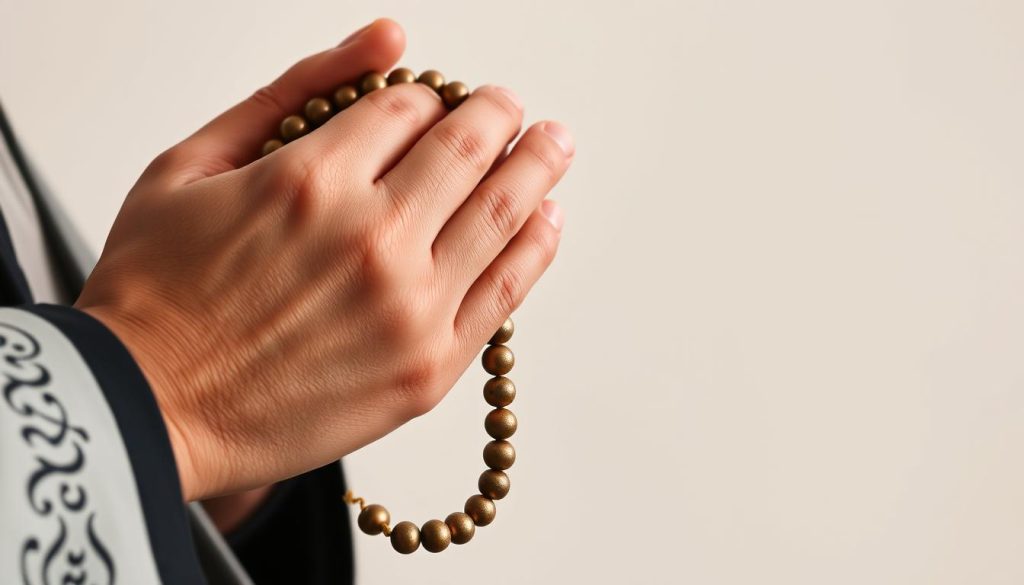
Morning and Evening Dhikr
Make remembrance of Allah’s majesty part of your daily routine. The simplest authentic way is the short dhikr the Prophet (peace be upon him) said after each obligatory prayer, which closes with tabarakta dhal-jalali wal-ikram, “Blessed are You, O Owner of Majesty and Honour” (Sahih Muslim 591). Say it slowly, reflecting on its meaning, rather than treating it as a formula with a fixed number or a promised result.
Contemplative Prayer
During your regular prayers, especially in sujood (prostration), call upon Allah using “Ya Dhal-Jalali wal-Ikram” (O Possessor of Majesty and Honour). This moment of physical lowliness is perfect for acknowledging divine majesty.
Nature Reflection
Set aside time to observe majestic aspects of nature—mountains, oceans, stars—while consciously connecting these manifestations of majesty to their Creator, AL-JALEEL. This practice transforms ordinary observation into spiritual contemplation.

Incorporating AL-JALEEL in Dua (Supplication)
When making personal supplications, address Allah as AL-JALEEL or use the phrase from the Qur’an, “Ya Dhal-Jalali wal-Ikram.” The Prophet Muhammad (peace be upon him) taught us the importance of calling upon Allah by His beautiful names, as they connect our requests to the divine attributes most relevant to our needs.
The Prophet (peace be upon him) encouraged believers to hold on to this invocation:
“Be constant with: “O Possessor of Majesty and Honor (Yā Dhal-Jalāli wal-Ikrām).””
Daily Reflection Practice
Set aside 5-10 minutes daily for focused reflection on AL-JALEEL. Consider how this divine attribute manifests in your life, in creation, and in your understanding of Allah. Journal your insights to deepen your connection with this name over time. This practice transforms intellectual knowledge into spiritual wisdom.
Community Study
Organize or participate in study circles focused on Allah’s beautiful names, with special attention to AL-JALEEL. Sharing insights and experiences with others enriches understanding and provides accountability for spiritual practice. Community learning also strengthens the bonds of faith among believers.
Quranic and Prophetic Insights on AL-JALEEL
The Qur’an and Hadith provide rich insights into the meaning and significance of AL-JALEEL. These sacred sources help us understand how to properly honor and connect with Allah through this magnificent name.
Quranic References
In Surah Ar-Rahman, Allah describes Himself as “Dhul-Jalali wal-Ikram” (Possessor of Majesty and Honor) twice, emphasizing the importance of this attribute. The repetition of this description in verses 27 and 78 highlights its significance in understanding the divine nature.
“Blessed is the name of your Lord, Owner of Majesty and Honor.”
(Qur’an 55:78, Saheeh International)
Throughout the Qur’an, Allah’s majesty is described through references to His throne, His dominion over the heavens and earth, and His supreme authority. These descriptions help us grasp something of AL-JALEEL that might otherwise be difficult to comprehend.
Musa and the Mountain: A Qur’anic Picture of Majesty
One of the most striking passages about divine majesty is the account of Prophet Musa (Moses, peace be upon him) asking to see his Lord. The Qur’an describes how the mountain could not withstand it when his Lord appeared to it, and how Musa fell unconscious before turning to Allah in repentance and faith:
“And when Moses arrived at Our appointed time and his Lord spoke to him, he said, “My Lord, show me [Yourself] that I may look at You.” [Allāh] said, “You will not see Me, but look at the mountain; if it should remain in place, then you will see Me.” But when his Lord appeared to the mountain, He rendered it level, and Moses fell unconscious. And when he awoke, he said, “Exalted are You! I have repented to You, and I am the first [among my people] of the believers.”
(Qur’an 7:143, Saheeh International)
The lesson is not that Allah can be pictured, but the opposite: His majesty is beyond anything our eyes and minds can hold in this life. Remembering this keeps a believer humble, and it explains why the Qur’an so often calls people to reflect on His signs rather than to imagine His essence.
Prophetic Teachings
After the obligatory prayers, the Prophet (peace be upon him) praised Allah as the Owner of Majesty and Honour (Sahih Muslim 591), and he urged his companions to be constant in calling upon Allah with the words Ya Dhal-Jalali wal-Ikram (Jami’ at-Tirmidhi 3524, graded hasan). This teaches us to acknowledge Allah’s majesty as a regular part of worship, not only in moments of need.
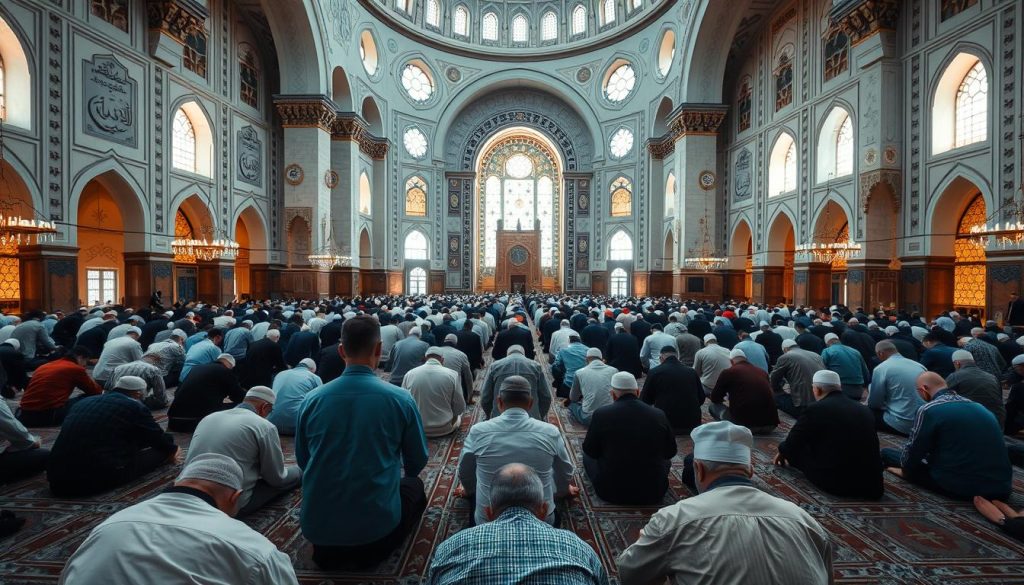
The Qur’an also warns against underestimating Allah’s greatness, reminding us how small all of creation is before Him:
“They have not appraised Allāh with true appraisal, while the earth entirely will be [within] His grip on the Day of Resurrection, and the heavens will be folded in His right hand. Exalted is He and high above what they associate with Him.”
(Qur’an 39:67, Saheeh International)
Embracing AL-JALEEL in Modern Life
In our fast-paced modern world, connecting with the divine attribute of AL-JALEEL offers a powerful antidote to materialism, superficiality, and spiritual disconnection. By recognizing and honoring Allah’s majesty, we restore proper perspective to our lives and find meaning beyond the temporary concerns of worldly existence.

For today’s Muslims, understanding AL-JALEEL reminds us that true dignity comes not from worldly status or material possessions, but from our relationship with The Majestic. This understanding helps us navigate challenges with grace, treat others with respect, and maintain inner peace regardless of external circumstances.
Al-Jaleel in Arabic Calligraphy and the Home
Many families choose to display a name of Allah as a quiet daily reminder. The name الجليل (Al-Jaleel) suits calm, uncluttered spaces such as a hallway, study or prayer corner, where a single piece of calligraphy can prompt a moment of reflection on Allah’s majesty. When choosing a design, check that the Arabic spelling is clear and correct and that the lettering is legible at the size you plan to print.
Our Al-Jaleel artwork is an digital download supplied as high-resolution JPEG files for printing at home or at a local print shop. No physical item is shipped. If you would like a different layout or colour scheme, custom designs can be requested.

Our Al-Jaleel calligraphy digital download calligraphy design is an digital download; no physical item is shipped. Please see the product page for the files and print sizes included.
Explore the full 99 Names of Allah collection for other calligraphy designs.
As we conclude our exploration of AL-JALEEL, remember that this divine name is not merely a concept to be studied, but a reality to be experienced. Through consistent remembrance, reflection, and application, the majesty of Allah can transform our hearts, elevate our worship, and guide us toward spiritual excellence in every aspect of life.
Frequently Asked Questions about Al-Jaleel
What does Al-Jaleel mean?
Al-Jaleel means “the Majestic” or “the One of Sublime Majesty”. It comes from the Arabic root j-l-l, which carries meanings of greatness, grandeur and exaltedness. It describes Allah as perfect in His attributes and far above any comparison with creation.
Is Al-Jaleel mentioned in the Qur’an?
The exact word is not used as a name in the Qur’an. Its meaning is expressed in the phrase Dhul-Jalali wal-Ikram, “Owner of Majesty and Honour”, in Surah Ar-Rahman 55:27 and 55:78. Al-Jaleel appears in the list of names recorded by at-Tirmidhi (3507), a narration graded weak as a list.
What is the difference between Jalal and Jamal?
Jalal refers to Allah’s majesty, might and greatness, which inspire awe. Jamal refers to His beauty and perfection, which inspire love. Reflecting on both helps a believer balance reverence with hope.
How can I remember Al-Jaleel in daily worship?
An authentic practice is the dhikr after each obligatory prayer ending with “tabarakta dhal-jalali wal-ikram” (Sahih Muslim 591). The Prophet (peace be upon him) also urged believers to be constant in saying “Ya Dhal-Jalali wal-Ikram” (Jami’ at-Tirmidhi 3524, graded hasan).
Is there a set number of times to recite Ya Jaleel?
No authentic hadith sets a specific number of repetitions or a guaranteed benefit for reciting “Ya Jaleel”. It is best to remember Allah sincerely and to use the invocations that are reliably reported from the Prophet (peace be upon him).
What file do I receive with the Al-Jaleel artwork?
You receive high-resolution JPEG files as an digital download, suitable for printing at standard sizes. No physical item is shipped.
May Allah, AL-JALEEL, The Majestic, guide us all to a deeper understanding of His perfect attributes and grant us the blessing of living in accordance with this knowledge. Through recognising His majesty, may we find true dignity, purpose, and peace in both this world and the next.






2 responses to “Al-Jaleel Meaning: The Majestic Name of Allah”
Your article helped me a lot, is there any more related content? Thanks!
Hi, Thanks for your kind words. If you go into Articles and the 99 Names of Allah, you will find quite a few related articles from there.