In the rich tapestry of Islamic theology, the 99 names of Allah hold profound significance, each revealing an aspect of divine perfection. Among these beautiful names stands “Al-Kareem” – a name that embodies boundless generosity, nobility, and honor. Understanding this divine attribute not only deepens our spiritual connection but also transforms how we navigate our daily lives and interact with others.
The Profound Meaning of Al-Kareem
Al-Kareem (الكريم) means the Most Generous, the Most Noble and the Most Honourable. The name comes from the Arabic root k-r-m, which carries meanings of generosity, nobility, honour and excellence. In everyday Arabic, something described as karim is precious and of high quality, and a person described as karim is generous and noble in character. When applied to Allah, Al-Kareem describes the One whose giving, forgiveness and honour are perfect.
In Islamic theology, Al-Kareem signifies that Allah’s generosity is perfect and absolute. Unlike human generosity, which may be conditional or limited, Allah’s generosity knows no bounds. He gives abundantly without expecting return, forgives despite having the power to punish, and fulfills promises with perfect faithfulness.
“O mankind, what has deceived you concerning your Lord, the Generous,”
(Qur’an 82:6, Saheeh International)
Unlike some names that are derived from verbs, al-Karim is used directly of Allah in the Qur’an. In Surah Al-Infitar, quoted above, Allah addresses the human being who has been heedless of “your Lord, the Generous”. In Surah An-Naml, Prophet Sulayman (Solomon, peace be upon him) recognises that every blessing is a test of gratitude and that Allah is not diminished by anyone’s ingratitude:
“Said one who had knowledge from the Scripture, “I will bring it to you before your glance returns to you.” And when [Solomon] saw it placed before him, he said, “This is from the favor of my Lord to test me whether I will be grateful or ungrateful. And whoever is grateful – his gratitude is only for [the benefit of] himself. And whoever is ungrateful – then indeed, my Lord is Free of need and Generous.”
(Qur’an 27:40, Saheeh International)
In the very first revelation, Allah also describes Himself with the related superlative al-Akram, “the Most Generous”:
“Recite, and your Lord is the most Generous -”
(Qur’an 96:3, Saheeh International)
Theological Significance in Islamic Texts
The concept of Al-Kareem extends beyond material generosity. In Islamic tradition it includes Allah’s forgiveness, mercy and kindness towards His servants. One of the best-known supplications taught by the Prophet (peace be upon him), which he taught to Aishah for the Night of Al-Qadr, calls upon Allah’s pardon. Some versions of the narration include the word karim:
“Say: ‘O Allah, indeed You are Pardoning, [Generous,] You love pardon, so pardon me.’ (Allāhumma innaka `Afuwwun [Karīmun], tuḥibbul-`afwa fa`fu `annī)”
One of the most beautiful aspects of Al-Kareem is that Allah gives before being asked and gives more than what is requested. This divine generosity manifests in countless ways – from the air we breathe to the guidance we receive, from forgiveness of sins to opportunities for spiritual growth.
According to Islamic scholars, Al-Kareem also signifies that Allah covers the faults of His servants in this world, not exposing their sins publicly, giving them opportunities to repent and reform. This aspect of divine generosity teaches us the importance of discretion and forgiveness in our own interactions.
Al-Kareem, Al-Akram and Dhul-Jalali wal-Ikram
Several related words in the Qur’an share the same root. Al-Karim describes Allah as generous and noble. Al-Akram, used in Surah Al-Alaq, is the superlative form and means “the Most Generous”, highlighting that no one gives as He gives. The phrase Dhul-Jalali wal-Ikram in Surah Ar-Rahman (55:27 and 55:78) describes Allah as the Owner of Majesty and Honour; ikram here means bestowing honour and generosity on others. Taken together, these words show that Allah’s generosity is not a small or occasional kindness but a constant, noble giving that flows from His perfection.
Scholars have also pointed out that generosity in Arabic is not only about the size of a gift. A karim gives willingly, gives before being asked, overlooks faults and does not remind people of what he has given. Applied to Allah, these meanings reach their fullest form: He provides for those who thank Him and those who do not, He accepts small deeds, and He leaves the door of repentance open.
Benefits of Understanding Al-Kareem
Spiritual Growth Through Embodying Generosity
Understanding Al-Kareem transforms our spiritual journey by inspiring us to reflect divine generosity in our own lives. When we recognize that all we have comes from the Most Generous, we naturally become channels of that generosity rather than mere recipients.
Generosity in the Life of the Prophet
The Prophet Muhammad (peace be upon him) is the clearest human example of generosity in the Islamic tradition. His companions described how his generosity increased in the month of Ramadan:
“Allah’s Messenger (ﷺ) was the most generous of all the people, and he used to reach the peak in generosity in the month of Ramadan when Gabriel met him. Gabriel used to meet him every night of Ramadan to teach him the Qur’an. Allah’s Messenger (ﷺ) was the most generous person, even more generous than the strong uncontrollable wind (in readiness and haste to do charitable deeds).”
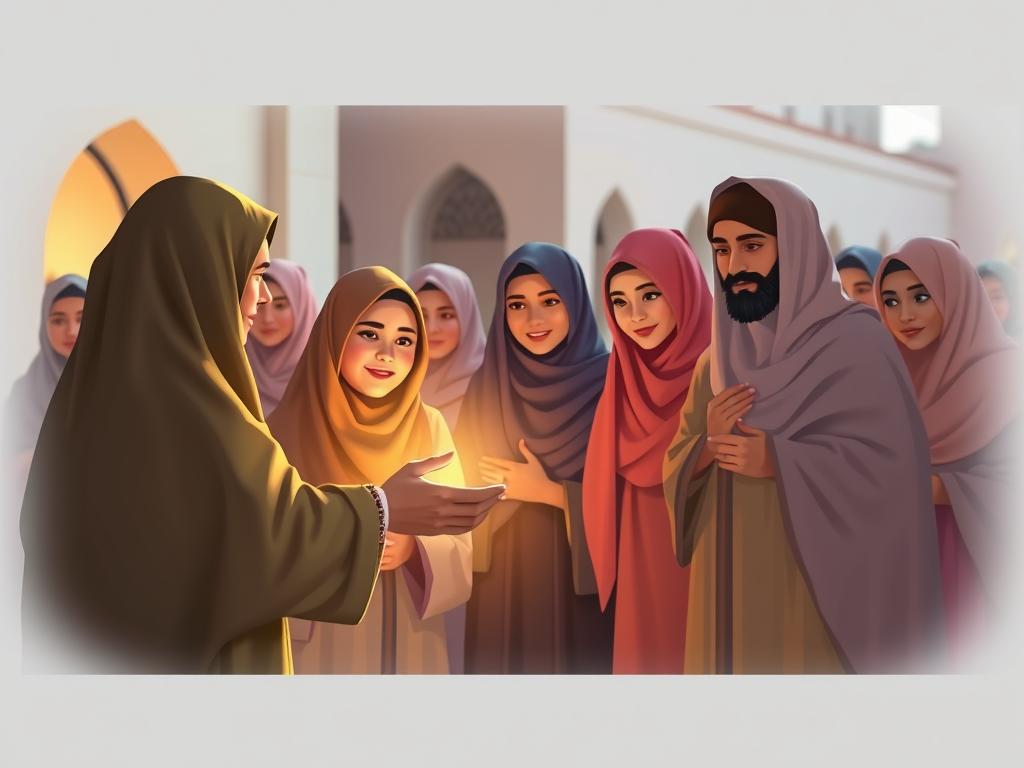
By striving to embody the qualities of Al-Kareem, believers develop:
- A generous spirit that gives without expectation of return
- The ability to forgive despite having the right to seek justice
- Patience with others’ shortcomings
- Willingness to share knowledge, resources, and time
- Discretion in covering others’ faults and mistakes
Psychological Benefits
The concept of Al-Kareem offers profound psychological benefits for those who internalize its meaning. Recognizing Allah as Al-Kareem cultivates:
Gratitude
Acknowledging the source of all blessings creates a deep sense of thankfulness that counteracts entitlement and discontent. The Qur’an repeatedly links gratitude with increase and ingratitude with loss, and many people find that a habit of noticing blessings brings greater contentment and warmer relationships.
Humility
Understanding that our abilities and resources are gifts from Al-Kareem fosters genuine humility. This balanced self-perception protects against both arrogance and self-deprecation, creating psychological resilience.
Gratitude and Increase
The Qur’an ties recognition of Allah’s generosity to gratitude, and gratitude to increase. This does not promise a particular worldly outcome for a particular deed, but it sets out a principle a believer can trust:
“And [remember] when your Lord proclaimed, ‘If you are grateful, I will surely increase you [in favor]; but if you deny, indeed, My punishment is severe.’”
(Qur’an 14:7, Saheeh International)
Reflecting on Al-Kareem therefore turns attention away from what is missing and towards what has already been given: health, time, family, faith, and the countless ordinary blessings that are easy to overlook.
Social Benefits
When communities understand and embody the essence of Al-Kareem, remarkable social transformation occurs:
- Strengthened community bonds through mutual support and generosity
- Reduced economic inequality through voluntary redistribution of resources
- Increased social trust and cooperation
- Creation of safe spaces where mistakes are forgiven and growth is encouraged
- Development of leadership characterized by service rather than dominance
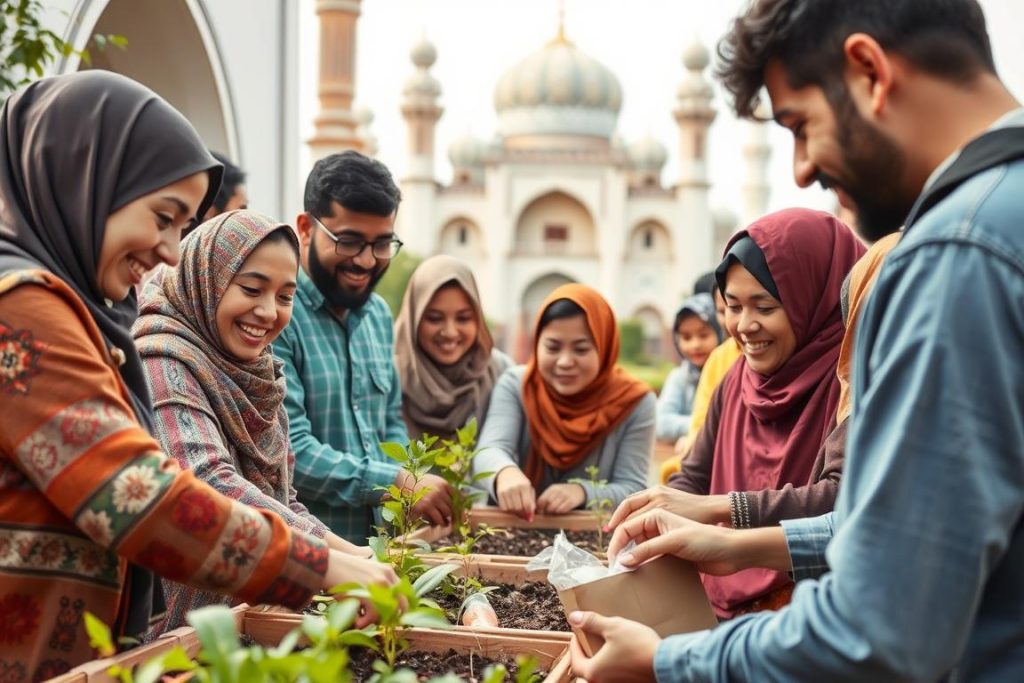
Practical Applications: Living the Essence of Al-Kareem
Understanding Al-Kareem intellectually is merely the beginning. The true transformation occurs when we integrate this divine attribute into our daily lives. Here are practical ways to embody the essence of Al-Kareem:
Financial Generosity
Beyond obligatory charity (zakat), look for opportunities to give voluntary charity (sadaqah) without announcing it. Set aside a specific percentage of your income for unexpected needs that arise in your community. Remember that true generosity in Islam isn’t measured by amount but by sacrifice and sincerity.
Islam also teaches balance. Generosity should not leave you or your family in hardship, and giving begins with those you are responsible for:
“The best charity is that which is practiced by a wealthy person. And start giving first to your dependents.”

Emotional Generosity
Practice forgiveness even when justified in anger. Give people the benefit of the doubt and assume the best about their intentions. Listen generously, giving others your full attention without interrupting or waiting to speak. Offer sincere compliments and recognition of others’ achievements without expectation of reciprocation.
Giving Without Reminders
A noble giver does not remind people of favours or make them feel small. The Qur’an praises those who spend without following their charity with reminders or hurt:
“Those who spend their wealth in the way of Allāh and then do not follow up what they have spent with reminders [of it] or [other] injury will have their reward with their Lord, and there will be no fear concerning them, nor will they grieve.”
(Qur’an 2:262, Saheeh International)
This is an important part of living by Al-Kareem. Generosity that humiliates the receiver loses its nobility. Giving quietly, speaking kindly, and protecting the dignity of the person you help are all expressions of true generosity.

Intellectual Generosity
Share knowledge without condescension. Teach others skills you’ve mastered. Give credit generously when others contribute ideas. Be open to learning from everyone, regardless of their status or background. Create opportunities for others to showcase their expertise and talents.
Hospitality
Honouring guests is one of the most visible forms of generosity in Muslim cultures around the world. Welcoming visitors warmly, offering food and drink, and making people feel valued in your home all reflect the spirit of the word karim. Hospitality does not need to be lavish; a simple meal served with sincerity and a cheerful face often means more than an expensive gesture offered reluctantly.
Generosity Within the Family
Generosity begins at home. Spending on one’s family with a good intention, showing patience with parents and children, and overlooking small mistakes between spouses are everyday ways to reflect the meaning of Al-Kareem. These acts are easily taken for granted, yet they shape the atmosphere of a home more than almost anything else.

Daily Reflection Practice
Each evening, ask yourself these three questions to align with the essence of Al-Kareem:
- How did I experience Allah’s generosity today?
- In what ways did I channel generosity to others?
- Where might I have withheld generosity, and how can I do better tomorrow?
Common Misunderstandings about Al-Kareem
Generosity does not cancel accountability. Allah’s generosity is vast, but the Qur’an also speaks of justice and of each soul answering for its deeds. Hope in Al-Kareem should lead to repentance and effort, not to carelessness.
Generosity is not only about money. A smile, patient listening, sharing useful knowledge, or forgiving a hurt are all forms of generosity that anyone can offer, whatever their income.
Generosity is not a transaction. Giving in order to be praised, or only when a return is expected, falls short of the noble character the name Al-Kareem points to. Sincere intention is what gives a gift its value.
Balance matters. Islam does not ask believers to give away what their families need. Generosity grows from contentment and trust in Allah, not from neglecting responsibilities.
The Prophet (peace be upon him) also reassured believers that generosity never truly leaves a person poorer:
“Charity does not decrease wealth, no one forgives another except that Allah increases his honor, and no one humbles himself for the sake of Allah except that Allah raises his status.”
Embracing Al-Kareem: A Lifelong Journey
Understanding and embodying Al-Kareem is not a destination but a continuous journey of spiritual growth. As we deepen our appreciation of Allah’s perfect generosity, we naturally become more generous ourselves – creating ripples of positive change in our families, communities, and the world.
Al-Kareem in Arabic Calligraphy and the Home
Displaying a name of Allah can serve as a gentle daily reminder. The name الكريم (Al-Kareem) suits spaces associated with hospitality, such as a living room or dining area, where it can prompt gratitude for what we have and generosity towards guests. When choosing a design, check that the Arabic spelling is correct and that the lettering remains legible at the size you plan to print.
Our Al-Kareem artwork is an digital download supplied as high-resolution JPEG files for printing at home or at a local print shop. No physical item is shipped. If you would like a different layout or colour scheme, custom designs can be requested.

Our Al-Kareem calligraphy digital download calligraphy design is an digital download; no physical item is shipped. Please see the product page for the files and print sizes included.
Explore the full 99 Names of Allah collection for other calligraphy designs.
The beauty of Al-Kareem lies in its transformative power. By recognizing Allah as the source of all generosity, we free ourselves from the constraints of scarcity thinking and embrace an abundance mindset that enriches every aspect of our lives.

May our understanding of Al-Kareem inspire us to become beacons of generosity in a world that desperately needs it. By reflecting this divine attribute in our daily interactions, we not only elevate our own spiritual state but also contribute to healing the divisions and inequalities that plague our societies.
Frequently Asked Questions about Al-Kareem
What does Al-Kareem mean?
Al-Kareem means the Most Generous, the Most Noble and the Most Honourable. It comes from the Arabic root k-r-m, which carries meanings of generosity, nobility and excellence.
Where is Al-Kareem mentioned in the Qur’an?
Allah is described as al-Karim in Surah Al-Infitar (82:6) and Surah An-Naml (27:40). The related superlative al-Akram, “the Most Generous”, appears in Surah Al-Alaq (96:3).
How is Al-Kareem different from Al-Wahhab?
Al-Wahhab emphasises Allah as the Bestower who gives gifts freely. Al-Kareem has a broader meaning that includes nobility, honour, forgiveness and generosity together, including giving before being asked and overlooking faults.
Is there a dua that mentions Allah’s generosity?
A well-known supplication taught by the Prophet (peace be upon him) for the Night of Al-Qadr is “Allahumma innaka ‘afuwwun tuhibbul-‘afwa fa’fu ‘anni” (Jami’ at-Tirmidhi 3513, graded sahih). Some versions add the word karim, “Generous”.
How can I balance generosity with my own responsibilities?
Islam encourages balanced giving. The Prophet (peace be upon him) said the best charity is given by someone with means and that giving should begin with one’s dependents (Sahih al-Bukhari 1426). Generosity also includes time, knowledge, patience and kindness.
What file do I receive with the Al-Kareem artwork?
You receive high-resolution JPEG files as an digital download, suitable for printing at standard sizes. No physical item is shipped.