What is Islamic etiquette? In Arabic it is called adab: good manners and right conduct in every part of life, from how we speak and eat to how we treat neighbours, guests and parents. Islamic etiquette is not a set of empty rules; it grows from faith and aims to make everyday life kinder.
Here are 9 principles of Islamic etiquette, each with its source in the Qur’an or authentic hadith.
1. Start with the Right Intention
The Prophet ﷺ said: “The reward of deeds depends upon the intentions and every person will get the reward according to what he has intended” (Sahih al-Bukhari 1). Good manners done for Allah’s sake become acts of worship.

2. Speak Good or Stay Silent
“Anybody who believes in Allah and the Last Day should talk what is good or keep quiet” (Sahih al-Bukhari 6018). The Qur’an also instructs: “speak to people good [words]” (Qur’an 2:83).
3. Greet with Peace
The Prophet ﷺ said that spreading the greeting “as-salamu alaikum” fosters love between people (Sahih Muslim 54). Islamic etiquette also sets out who greets first: “The young should greet the old, the passer by should greet the sitting one” (Sahih al-Bukhari 6231).
4. Control Your Anger
“The strong is not the one who overcomes the people by his strength, but the strong is the one who controls himself while in anger.”
5. Be Modest
Modesty (haya’) covers dress, speech and behaviour. When a man was criticising his brother for being too shy, the Prophet ﷺ said: “Leave him as Haya’ is a part of faith” (Sahih al-Bukhari 24).
6. Honour Your Neighbours and Guests
“Anybody who believes in Allah and the Last Day should not harm his neighbor, and anybody who believes in Allah and the Last Day should entertain his guest generously” (Sahih al-Bukhari 6018). The Prophet ﷺ also said Jibril (Gabriel) urged kindness to neighbours so often “that I thought he would order me to make them as my heirs” (Sahih al-Bukhari 6014).

7. Ask Permission Before Entering
“O you who have believed, do not enter houses other than your own houses until you ascertain welcome and greet their inhabitants. That is best for you; perhaps you will be reminded.”
— Qur’an 24:27, Saheeh International (quran.com)
Knocking, waiting and greeting before entering is Islamic etiquette that still applies at home and in the workplace.
8. Visit the Sick and Help the Hungry
“Feed the hungry, visit the sick, and set free the captives” (Sahih al-Bukhari 5649). A short visit, a message or a meal for someone who is unwell is a simple way to live this teaching.
9. Table Manners
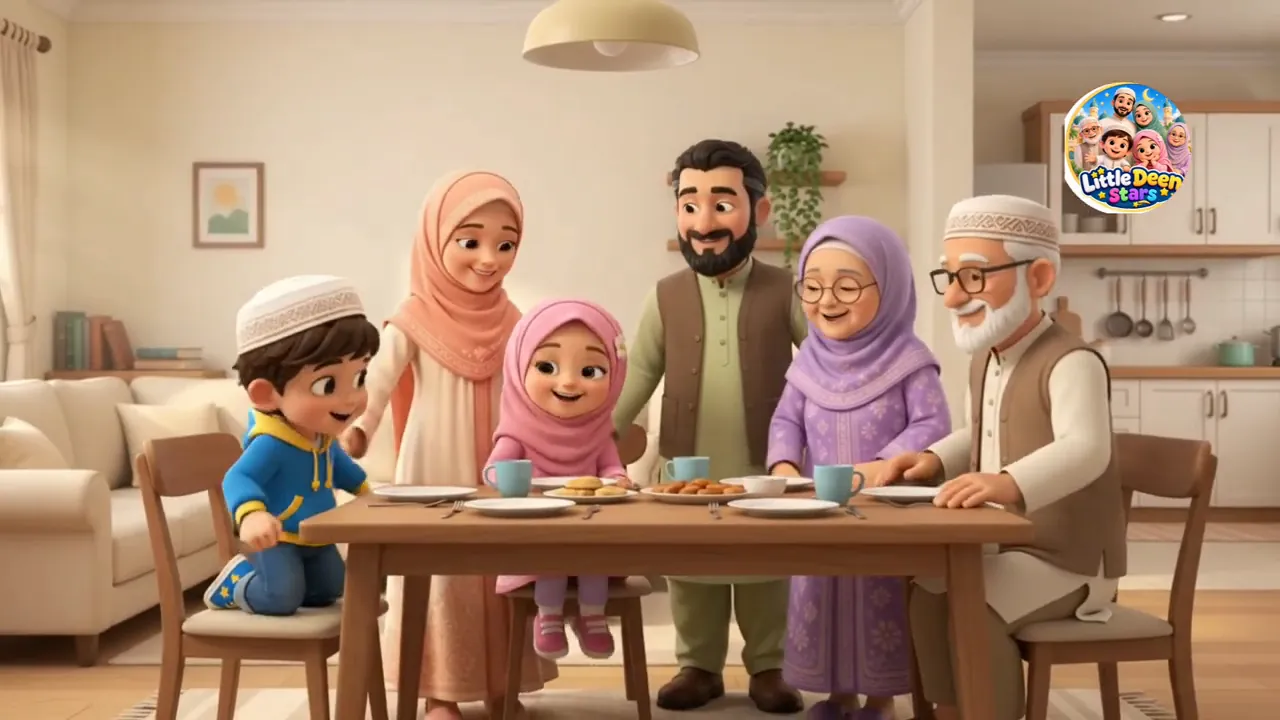
Say Bismillah, eat with the right hand and eat from what is nearest to you, as the Prophet ﷺ taught a young boy (Sahih al-Bukhari 5376). Share food, and thank Allah afterwards.

For more daily habits, see our guide to Sunnah practices.
For families with young children, our parent guide on how to teach your toddler to say Bismillah turns the first of these table manners into a simple daily habit.
Frequently Asked Questions
What does adab mean?
Adab means good manners, courtesy and right conduct. It is the Arabic term for Islamic etiquette.
Why is Islamic etiquette important?
Good character is central to Islam. The Prophet ﷺ said: “The best among you are the best in character (having good manners)” (Sahih al-Bukhari 6035).
A Reminder of Gratitude
Thanking Allah, and thanking people, sits at the heart of Islamic etiquette. Alhamdulillah (“All praise belongs to Allah”) keeps that gratitude in view.

Explore Alhamdulillah Elegant Islamic Wall Art, an digital download supplied as a high-resolution JPEG file for printing at home or at a local print shop; no physical item is shipped. Custom designs can be requested.




2 responses to “Islamic Etiquette: 9 Beautiful Principles of Adab”
Thanks for sharing. I read many of your blog posts, cool, your blog is very good.
Hi, thanks for the compliments. I’m glad you like the posts, and appreciate your taking the time to read our blog post and sharing your comments.