Prophet Zakariya (Zechariah in English), peace be upon him, was a prophet of the Children of Israel, the guardian of Maryam (Mary) and the father of Prophet Yahya (John). The Qur’an remembers him above all for his supplication: an elderly man who asked Allah for a child and was answered. This guide explains who Prophet Zakariya was according to the Qur’an, the words of his du’a, and what his story teaches about hope and prayer.

Guardian of Maryam
“So her Lord accepted her with good acceptance and caused her to grow in a good manner and put her in the care of Zechariah. Every time Zechariah entered upon her in the prayer chamber, he found with her provision. He said, “O Mary, from where is this [coming] to you?” She said, “It is from Allāh. Indeed, Allāh provides for whom He wills without account.””
— Qur’an 3:37, Saheeh International
Seeing how Allah provided for Maryam, Prophet Zakariya was moved to ask for something that seemed impossible in his own life.
The Supplication of Prophet Zakariya
“At that, Zechariah called upon his Lord, saying, “My Lord, grant me from Yourself a good offspring. Indeed, You are the Hearer of supplication.””
— Qur’an 3:38, Saheeh International
Surah Maryam records more of his words:
“He said, “My Lord, indeed my bones have weakened, and my head has filled with white, and never have I been in my supplication to You, my Lord, unhappy [i.e., disappointed].”
— Qur’an 19:4, Saheeh International
And in Surah Al-Anbiya:
“And [mention] Zechariah, when he called to his Lord, “My Lord, do not leave me alone [with no heir], while You are the best of inheritors.””
— Qur’an 21:89, Saheeh International
The Answer: A Son Named Yahya
“[He was told], “O Zechariah, indeed We give you good tidings of a boy whose name will be John. We have not assigned to any before [this] name.””
— Qur’an 19:7, Saheeh International
“So We responded to him, and We gave to him John, and amended for him his wife. Indeed, they used to hasten to good deeds and supplicate Us in hope and fear, and they were to Us humbly submissive.”
— Qur’an 21:90, Saheeh International
Read more about his son in our article on Prophet Yahya.
4 Lessons from Prophet Zakariya
Never Stop Asking
Prophet Zakariya said that he had never been disappointed in calling on Allah (19:4). Editorial reflection. His example encourages believers to keep making du’a, even for things that seem out of reach, while accepting that Allah answers in His own way and time.
Let Others’ Blessings Inspire, Not Discourage
Zakariya saw Allah’s provision for Maryam and turned it into a prayer for himself (3:37–38). Seeing good in someone else’s life can prompt hope and du’a rather than envy.
Hope and Fear Together
Qur’an 21:90 describes Zakariya’s family as hastening to good deeds and calling on Allah “in hope and fear”. Faith balances trust in Allah’s mercy with seriousness about our responsibilities.
Humility in Old Age
His words “my bones have weakened” are honest about his frailty. Humility before Allah is part of sincere supplication.
Frequently Asked Questions
What is the dua of Prophet Zakariya?
The Qur’an records several of his words, including “My Lord, grant me from Yourself a good offspring. Indeed, You are the Hearer of supplication” (3:38) and “My Lord, do not leave me alone [with no heir], while You are the best of inheritors” (21:89). Many couples hoping for children make these supplications. For personal questions, please consult a qualified scholar.
Where is Prophet Zakariya mentioned in the Qur’an?
His story appears in Surah Aal-Imran (3:37–41), Surah Maryam (19:2–11) and Surah Al-Anbiya (21:89–90). He is also named among the prophets in Surah Al-An‘am (6:85).
How was Prophet Zakariya related to Maryam?
The Qur’an says Maryam was placed in his care (3:37). He was her guardian while she devoted herself to worship.
Keeping the Qur’an’s Words in View
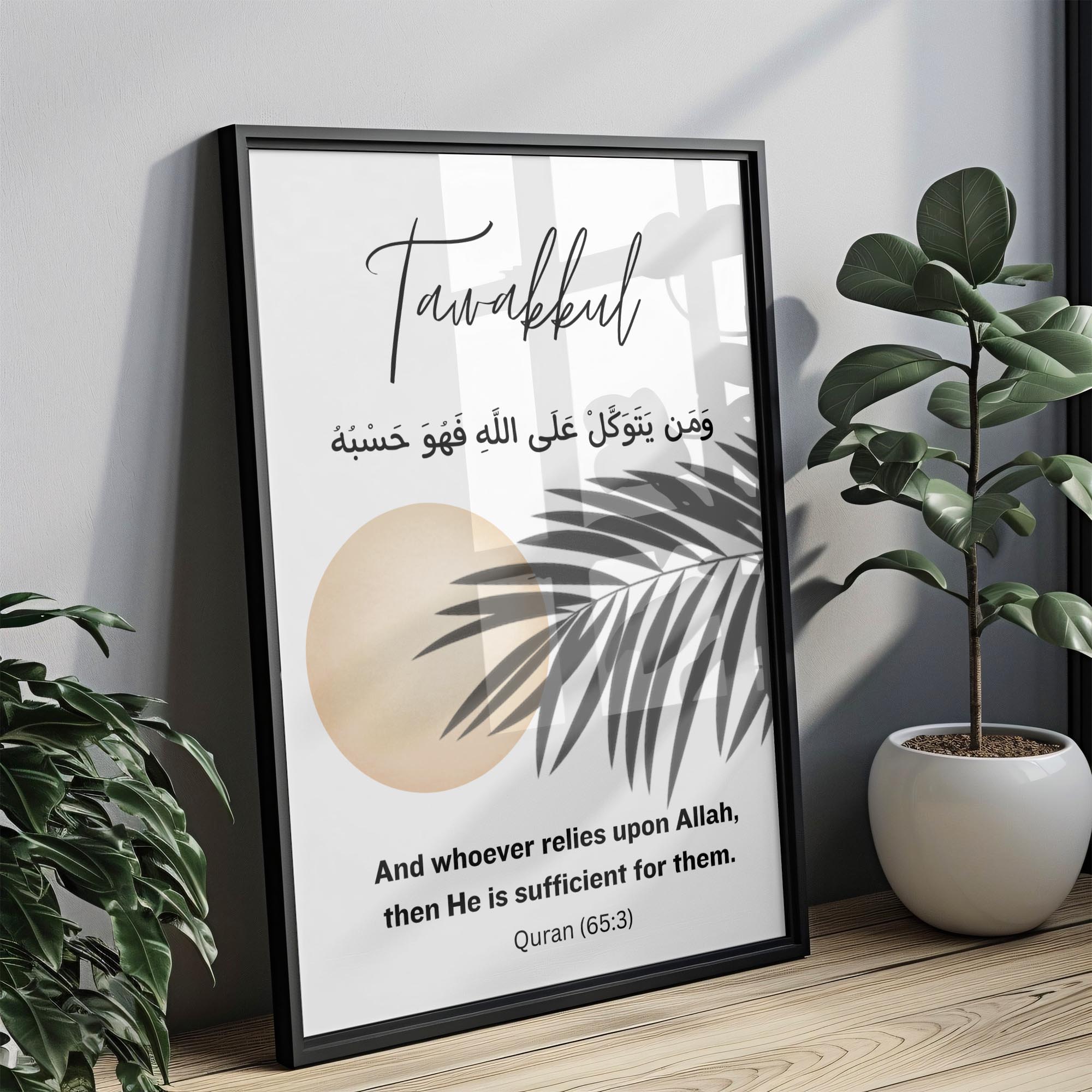
Many families keep a verse or supplication from these stories at home as a daily reminder. Our dua collection, including the Dua of Yunus design, offers instant digital downloads supplied as high-resolution JPEG files for printing at home or at a local print shop; no physical item is shipped. Custom designs, such as a verse from Surah Maryam, can be requested.