
Digital downloads and physical products are clearly identified. Product, delivery and payment details are shown before order confirmation.

Reviewed reflections appear only after source and reviewer approval.
Islamic History & Culture

Islamic History: 7 Beautiful Eras That Shaped the World

A clear overview of Islamic history, from the Prophet’s lifetime and the caliphs to Al-Andalus, the Ottomans and Mughals, plus calligraphy and Islam in Britain.

Where does Islamic history begin, and how did a faith born in Makkah shape so much of the world? Islamic history spans more than fourteen centuries and every inhabited continent. This guide gives a clear overview of the key periods, the culture they produced, and how Islamic heritage lives on today, including here in Britain.

Dates are given in the Common Era (CE) and are approximate where historians differ.

1. The Prophet’s Lifetime (c. 570–632 CE)

The Prophet Muhammad ﷺ was born in Makkah around 570 CE and received the first revelation around 610 CE (the account is recorded in Sahih al-Bukhari 3). In 622 CE he migrated to Madinah, an event called the Hijrah, which marks year one of the Islamic calendar. By his death in 632 CE, much of Arabia had embraced Islam.
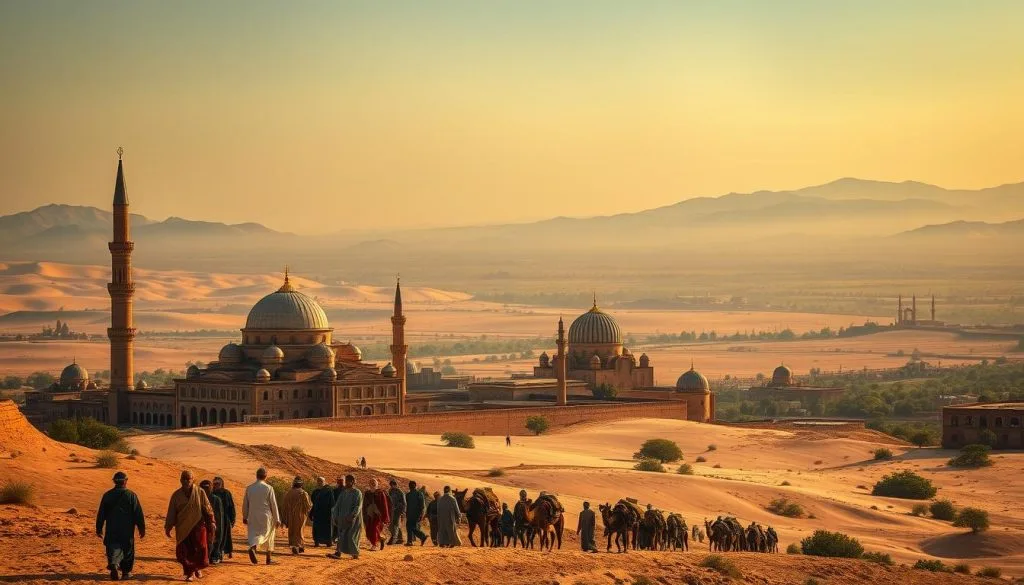
Islamic history: a caravan crossing the desert towards a distant city

2. The Rightly Guided Caliphs (632–661 CE)

After the Prophet ﷺ, Islamic history entered the era of the caliphs. Abu Bakr, Umar, Uthman and Ali led the community in turn. During this period Islam spread into Syria, Iraq, Egypt and Persia, and under Uthman a standard written copy of the Qur’an was distributed to the main cities.

3. The Umayyads (661–750 CE)

Ruling from Damascus, the Umayyads oversaw expansion from Spain to Central Asia. Early monuments of Islamic architecture, including the Dome of the Rock in Jerusalem (completed around 691 CE), date from this era.

4. The Abbasids and Baghdad (750–1258 CE)

The Abbasids founded Baghdad in 762 CE. It became a centre of learning where scholars translated, preserved and extended Greek, Persian and Indian knowledge. This period is often called the Islamic Golden Age; read more in our guide to the Golden Age of Islam. Abbasid rule in Baghdad ended with the Mongol sack of the city in 1258.
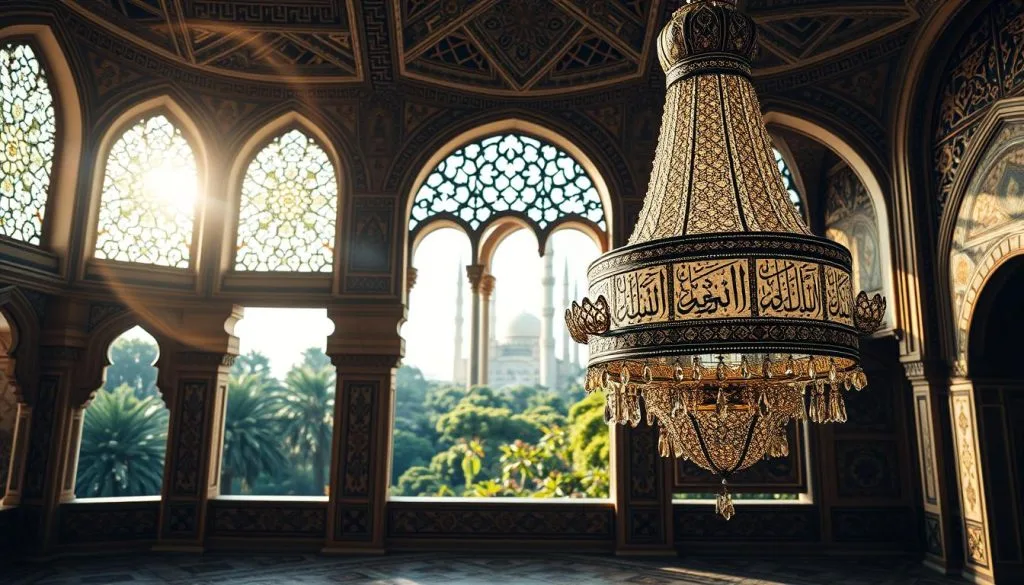
Islamic history: ornate arched windows in a historic Islamic building

5. Al-Andalus (711–1492 CE)

Muslims ruled much of the Iberian Peninsula for nearly eight centuries. Córdoba became one of Europe’s great cities, and its Great Mosque and the Alhambra palace in Granada remain among the most admired buildings in the world. Muslim rule ended with the fall of Granada in 1492.

6. Cairo, the Ottomans, Safavids and Mughals

  • Cairo: founded in 969 CE, home to Al-Azhar, one of the oldest continuously operating centres of learning.
  • The Ottomans (c. 1299–1922): took Constantinople (Istanbul) in 1453; the architect Mimar Sinan designed the Süleymaniye Mosque.
  • The Safavids (1501–1736): made Isfahan a city of blue-tiled mosques and gardens.
  • The Mughals (1526–1857): built the Taj Mahal in Agra in the 17th century.
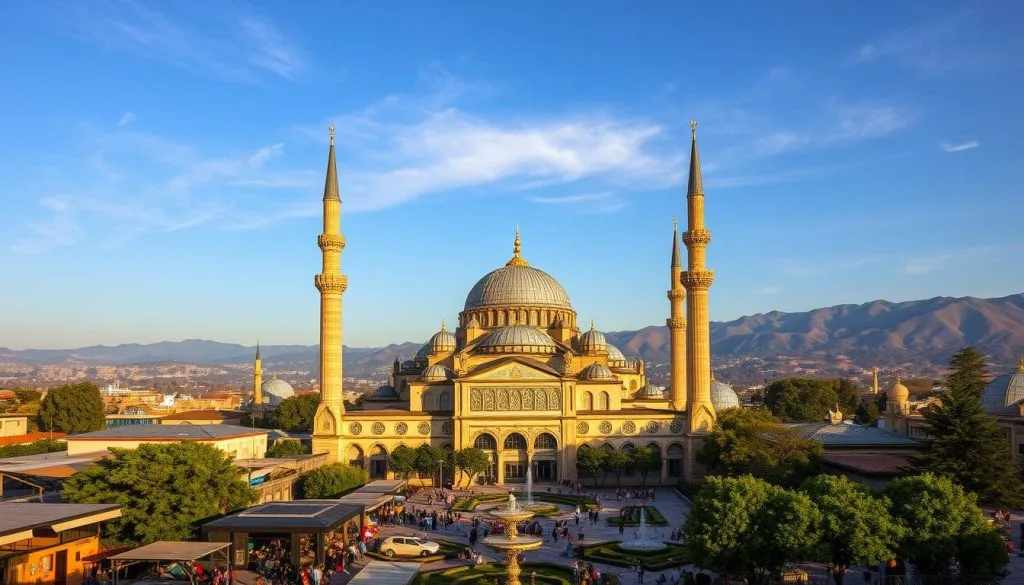
Islamic history: a domed mosque with minarets under a blue sky

7. Islam Across Asia and Africa

Islamic history is not only a story of empires. Islam also spread peacefully through trade and scholarship, along the Silk Road, across the Sahara to cities such as Timbuktu, and across the Indian Ocean to South-East Asia. Today Indonesia is the country with the largest Muslim population.

Islamic Culture: Calligraphy, Architecture and Learning

Because the Qur’an is central to Muslim life, Arabic calligraphy became one of the most honoured art forms in Islamic history. Major scripts include:

ScriptCharacter
KuficAngular and geometric; used in early Qur’an manuscripts and on buildings
NaskhClear and rounded; the basis of most printed Arabic
ThuluthTall and flowing; used for grand inscriptions
DiwaniDecorative and tightly interlaced; developed at the Ottoman court
Nasta’liqElegant and sloping; associated with Persian

Alongside calligraphy, geometric patterns, gardens with flowing water, and courtyard mosques became hallmarks of Islamic art and architecture.
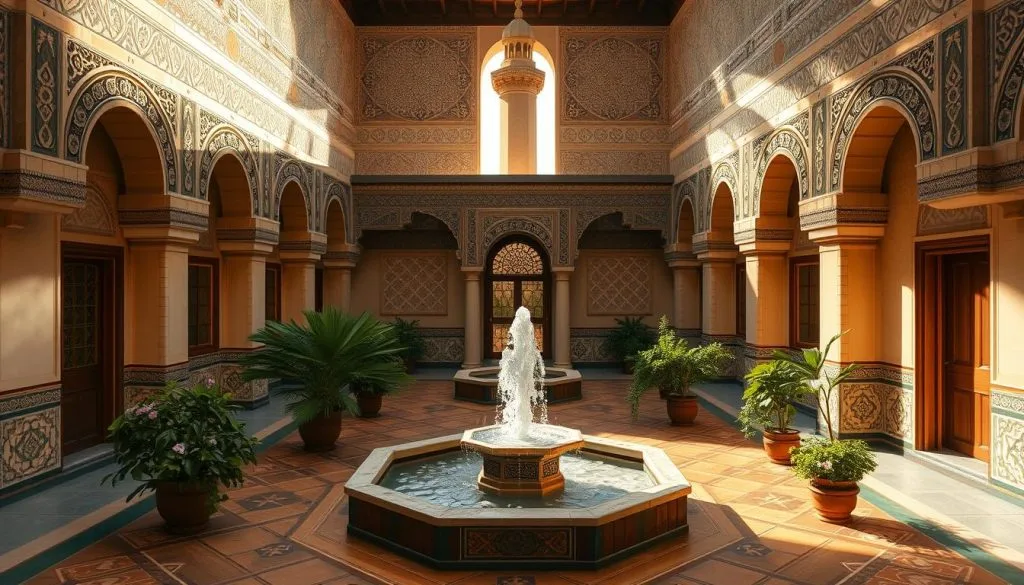
Islamic history and culture: a courtyard with a fountain

Islamic History in Britain

Islamic history in Britain is older than many people realise. Muslims have lived here for centuries. In 1889, the Shah Jahan Mosque in Woking, often described as Britain’s first purpose-built mosque, opened, and in the same year Abdullah Quilliam founded the Liverpool Muslim Institute. Today Britain’s Muslim communities continue to add to the country’s culture, from architecture to art and calligraphy.

Frequently Asked Questions

When does the Islamic calendar begin?

With the Hijrah, the Prophet’s migration from Makkah to Madinah in 622 CE.

What was the Islamic Golden Age?

A period, often dated roughly from the 8th to the 13th century, when scholars in the Muslim world made major advances in science, medicine, mathematics and philosophy.

Bring Islamic Heritage Home

Calligraphy is one of the richest threads running through Islamic history. Our designs continue that tradition for modern homes.
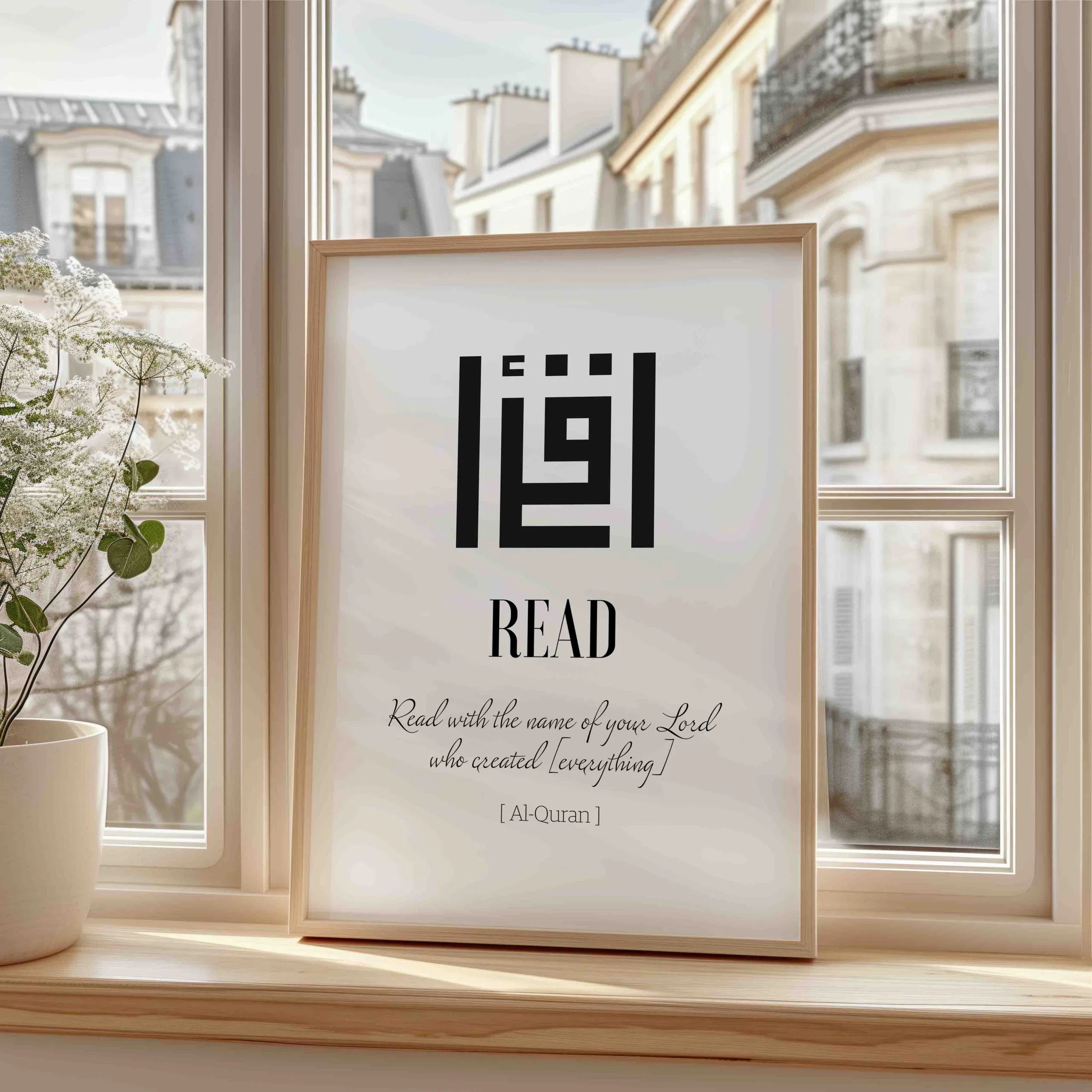
Islamic history: Iqra calligraphy wall art
Iqra Seek Knowledge Embrace Wisdom (JPEG file; frame not included).

Explore Iqra Seek Knowledge Embrace Wisdom, an instant digital download supplied as a high-resolution JPEG file for printing at home or at a local print shop; no physical item is shipped. Custom designs can be requested.


Leave a Reply