Digital downloads and physical products are clearly identified. Product, delivery and payment details are shown before order confirmation.

Reviewed reflections appear only after source and reviewer approval.
Teachings of Islam

Second Pillar of Islam: Salah, the 5 Beautiful Daily Prayers

The second pillar of Islam is Salah. Learn the five daily prayers, their times, how to prepare and pray, and why prayer matters, with Qur’an and hadith.

What is the second pillar of Islam? It is Salah, the ritual prayer that Muslims offer five times every day. After the declaration of faith, nothing shapes a Muslim’s day more than prayer. It punctuates the day from dawn to night and keeps the believer connected to Allah.

“Indeed, prayer has been decreed upon the believers a decree of specified times.”

— Qur’an 4:103, Saheeh International (quran.com)

This guide explains what Salah is, when it is prayed, how to prepare for it, and why the second pillar of Islam matters so much.

What Salah Means

Salah (also written salat) is the Arabic word for the ritual prayer. It combines intention, set movements and recitation: standing (qiyam), bowing (ruku’), prostrating (sujud) and sitting. In ruku’ a Muslim says “Subhana Rabbiyal ‘Adheem” (“Glory be to my Lord, the Most Great”).
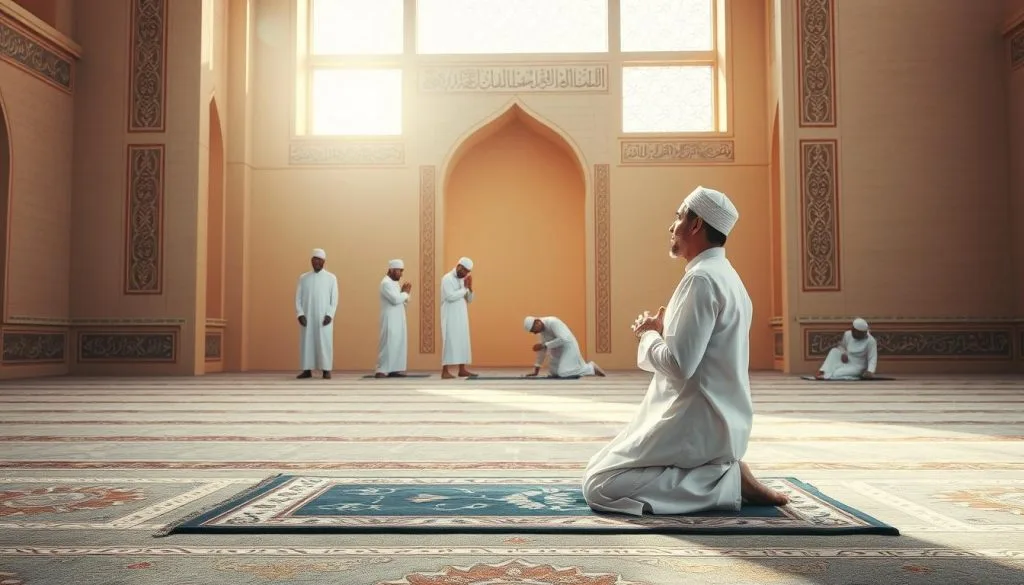
Second pillar of Islam: a Muslim performing Salah in a mosque

How the Five Daily Prayers Were Given

According to Sahih al-Bukhari, the prayers were made obligatory during the Prophet’s night ascension (the Mi’raj). They began as fifty and were reduced to five, with Allah saying: “These are five prayers and they are all (equal to) fifty (in reward)” (Sahih al-Bukhari 349).

The Five Daily Prayers and Their Times

PrayerWhen
FajrFrom true dawn until sunrise
DhuhrAfter the sun passes its highest point
AsrLate afternoon
MaghribJust after sunset
IshaAfter twilight has disappeared

Exact times change daily with the sun, so most Muslims use a local mosque timetable or a reliable prayer-time app.

Second pillar of Islam: a Muslim praying at sunset outside a mosque

Preparing for Prayer

Before performing the second pillar of Islam, a Muslim prepares in four ways:

  • Purity: wudu (ablution) means washing the hands, mouth, nose, face and arms, wiping the head and ears, and washing the feet. Ghusl (a full bath) is required in certain situations.
  • Clean place and clothing: modest clothes and a clean spot, often a prayer mat.
  • Qibla: facing the direction of the Kaaba in Makkah.
  • Intention (niyyah): knowing in your heart which prayer you are about to pray, for Allah alone.

How Salah Is Performed

Each prayer is made up of units called rak’ahs: two for Fajr, four for Dhuhr, four for Asr, three for Maghrib and four for Isha. A prayer begins with “Allahu Akbar” (“Allah is the Greatest”). In each rak’ah, the worshipper recites Surah Al-Fatihah, bows, stands again, and prostrates twice. The prayer includes sitting for the tashahhud, which contains the testimony of faith, and ends by turning the head to the right and left with “As-salamu ‘alaykum wa rahmatullah” (“Peace be upon you and the mercy of Allah”).

Beginners usually learn by praying beside family or at a mosque, and with a qualified teacher.

Why the Second Pillar of Islam Matters

The Qur’an describes prayer as a moral anchor:

“Indeed, prayer prohibits immorality and wrongdoing, and the remembrance of Allāh is greater.”

— Qur’an 29:45, Saheeh International (quran.com)

Many Muslims describe prayer as a moment of calm in a busy day: a pause to remember Allah, ask forgiveness and give thanks. Five fixed times also bring structure and discipline to daily life.
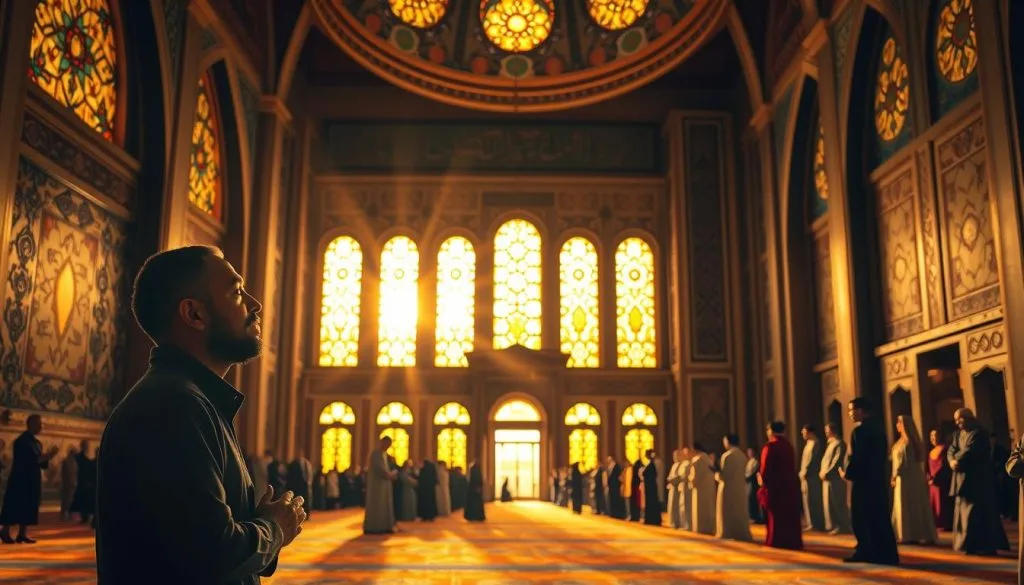
Second pillar of Islam: worshippers gathered for prayer in a mosque

Praying Together

The second pillar of Islam also has a communal side. Prayer in congregation carries special reward:

“The prayer in congregation is twenty seven times superior to the prayer offered by person alone.”

— Sahih al-Bukhari 645

On Fridays, the Jumu’ah prayer with its sermon replaces Dhuhr for those who attend it. Other prayers include the Eid prayers and, in Ramadan, the night prayer known as Taraweeh.

When Prayer Is Difficult

Islam makes prayer possible in hard circumstances. Someone who cannot stand may pray sitting, and someone who cannot sit may pray lying down. Travellers may shorten certain prayers. For questions about your own situation, speak to a qualified scholar or your local imam.

See how Salah fits with the other pillars in our guide to the Five Pillars of Islam, or read about the first pillar of Islam.

Frequently Asked Questions

What is the second pillar of Islam?

The second pillar of Islam is Salah, the five daily prayers.

How many times a day do Muslims pray?

Five: Fajr, Dhuhr, Asr, Maghrib and Isha.

Can I pray at home?

Yes. Prayer can be offered in any clean place, though praying in congregation, especially at a mosque, carries extra reward.

A Reminder in Your Prayer Space

Every prayer begins with the takbir, “Allahu Akbar”. Many families place these words where they pray as a reminder of the second pillar of Islam.

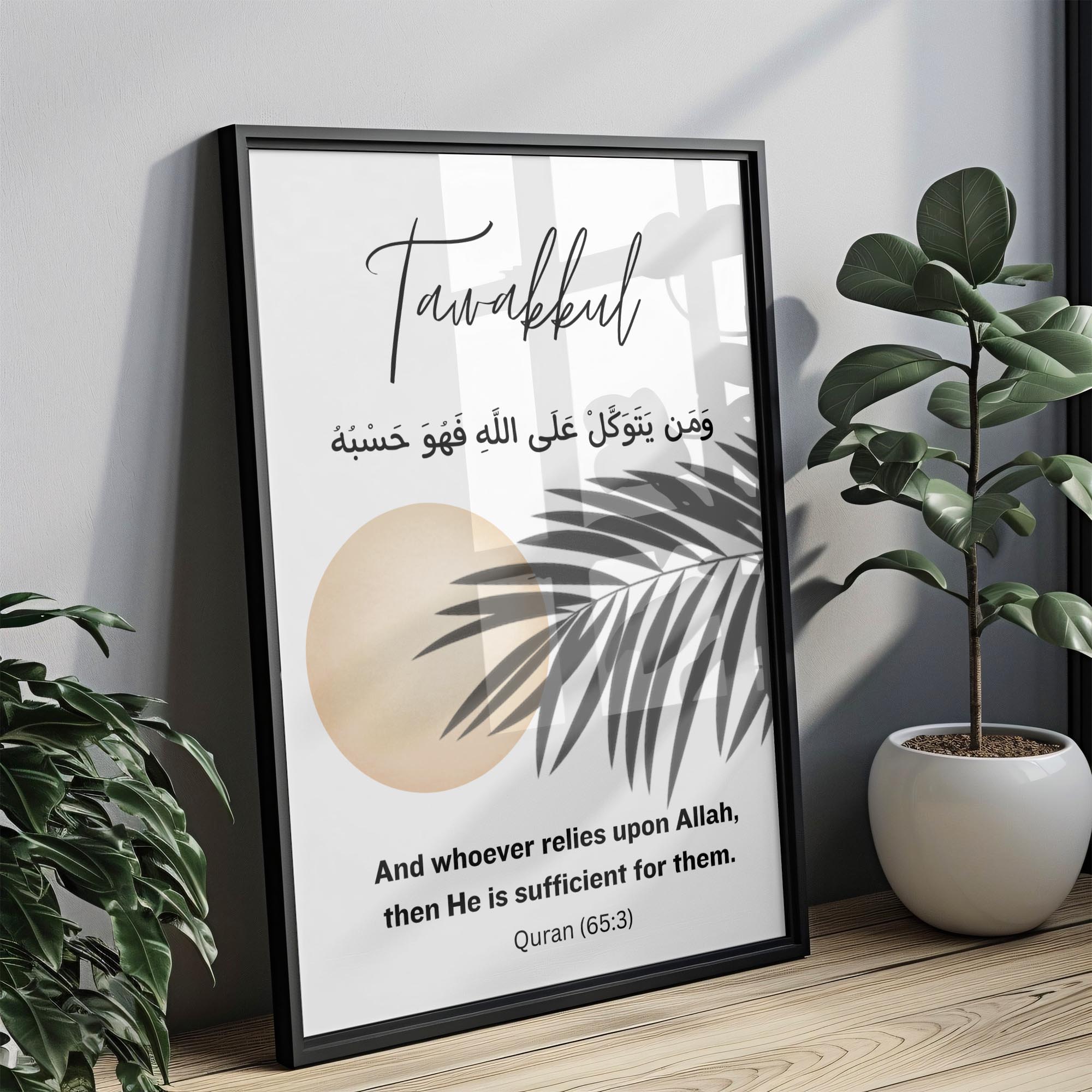
Allahu Akbar Premium Wall Art for a prayer space
Allahu Akbar Premium Wall Art (JPEG file; frame not included).

Explore Allahu Akbar Premium Wall Art, an instant digital download supplied as a high-resolution JPEG file for printing at home or at a local print shop; no physical item is shipped. Custom designs can be requested.

Leave a Reply