What are the Five Pillars of Islam? They are the five core acts of worship that every Muslim is asked to practise: the declaration of faith (Shahada), prayer (Salah), obligatory charity (Zakah), fasting in Ramadan (Sawm) and the pilgrimage to Makkah (Hajj). The Prophet Muhammad ﷺ described them in a well-known hadith:
“Islam is based on (the following) five (principles): 1. To testify that none has the right to be worshipped but Allah and Muhammad is Allah’s Messenger (ﷺ). 2. To offer the (compulsory congregational) prayers dutifully and perfectly. 3. To pay Zakat (i.e. obligatory charity). 4. To perform Hajj. (i.e. Pilgrimage to Mecca) 5. To observe fast during the month of Ramadan.”
This guide explains each of the Five Pillars of Islam in plain language, for Muslims and for anyone curious about the faith.
The Five Pillars of Islam at a Glance
| Pillar | Arabic name | What it involves |
|---|---|---|
| 1. Declaration of faith | Shahada | Bearing witness that there is no god but Allah and that Muhammad ﷺ is His Messenger |
| 2. Prayer | Salah | Five daily prayers at set times, facing the Kaaba in Makkah |
| 3. Obligatory charity | Zakah | An annual payment from qualifying wealth to those entitled to receive it |
| 4. Fasting | Sawm | Fasting from dawn to sunset during the month of Ramadan |
| 5. Pilgrimage | Hajj | The pilgrimage to Makkah, once in a lifetime for those who are able |
1. Shahada: The Declaration of Faith
The Shahada is the foundation of the Five Pillars of Islam. Shahada means “testimony” or “bearing witness”. In it, a Muslim affirms two truths: that there is no god worthy of worship except Allah, and that Muhammad ﷺ is His Messenger. Sincerely declaring the Shahada is how a person enters Islam, and Muslims repeat it in every prayer.
The first part expresses tawhid, the Oneness of Allah. The second affirms that the Prophet Muhammad ﷺ is the final messenger, whose example Muslims follow. Read more in our guide to the first pillar of Islam.
2. Salah: The Five Daily Prayers
Salah is the ritual prayer offered five times a day: Fajr (dawn), Dhuhr (midday), Asr (afternoon), Maghrib (sunset) and Isha (night). Each prayer has a time window linked to the position of the sun. Muslims face the qibla, the direction of the Kaaba in Makkah, and pray through a set sequence of standing, bowing, prostrating and sitting, reciting the Qur’an and words of remembrance.
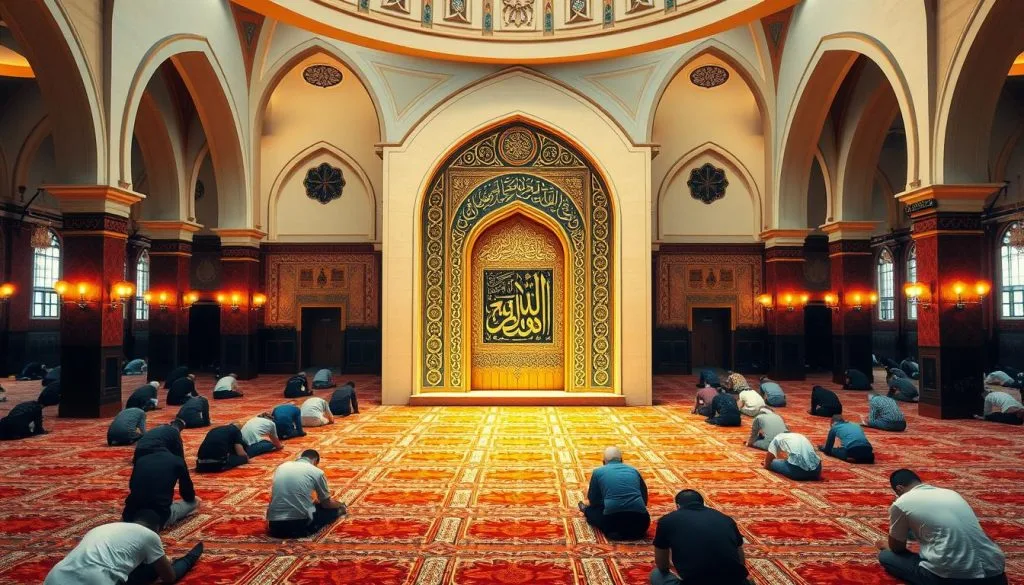
Men are expected to attend the Friday congregational prayer (Jumu’ah), and many Muslims pray other prayers in congregation too. See our guide to the second pillar of Islam.
3. Zakah: Obligatory Charity
Zakah is a yearly obligation on Muslims whose savings and certain other assets stay above a minimum threshold, called the nisab, for a full lunar year. The rate on money and trade goods is generally 2.5% (one-fortieth). Personal items such as your home and the car you use are not normally included. Because the details depend on your circumstances, it is wise to ask a qualified scholar or a reputable zakah calculator.
The Qur’an names who may receive it:
“Zakāh expenditures are only for the poor and for the needy and for those employed for it and for bringing hearts together [for Islām] and for freeing captives [or slaves] and for those in debt and for the cause of Allāh and for the [stranded] traveler – an obligation [imposed] by Allāh. And Allāh is Knowing and Wise.”
— Qur’an 9:60, Saheeh International (quran.com)
The word zakah is linked to purification and growth. Read more about the third pillar of Islam.
4. Sawm: Fasting in Ramadan
During Ramadan, the ninth month of the Islamic lunar calendar, adult Muslims who are able fast from dawn until sunset, avoiding food, drink and marital relations. The Qur’an explains its purpose:
“O you who have believed, decreed upon you is fasting as it was decreed upon those before you that you may become righteous -”
— Qur’an 2:183, Saheeh International (quran.com)
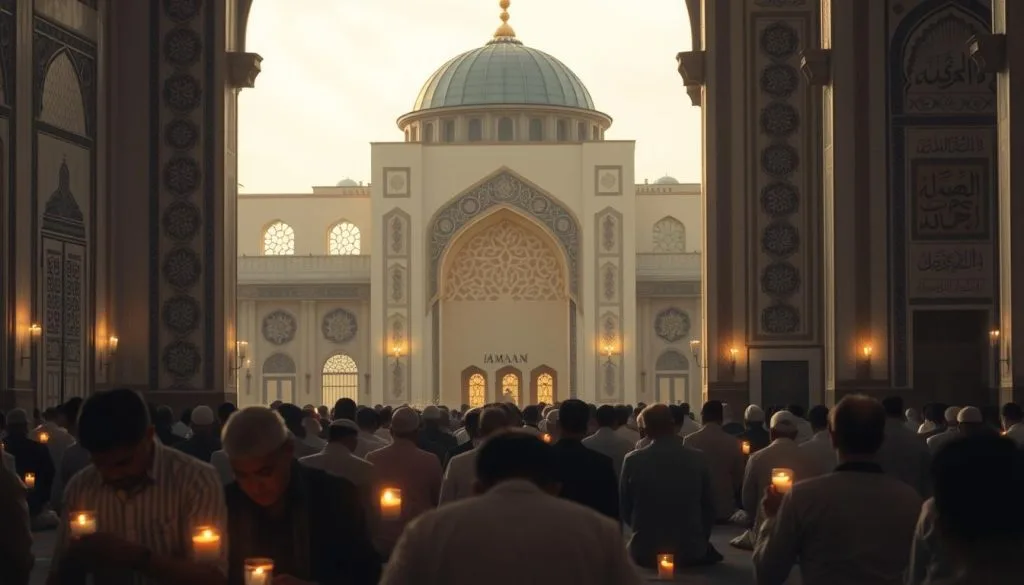
Children, people who are ill, travellers, and women who are pregnant, breastfeeding or menstruating have exemptions, and most missed days are made up later. Ramadan is also a month of extra prayer, Qur’an recitation and charity. Explore the fourth pillar of Islam.
5. Hajj: The Pilgrimage to Makkah
Hajj takes place each year in the month of Dhul Hijjah. It is required once in a lifetime of every adult Muslim who is physically and financially able:
“And [due] to Allāh from the people is a pilgrimage to the House – for whoever is able to find thereto a way.”
— Qur’an 3:97, Saheeh International (quran.com)
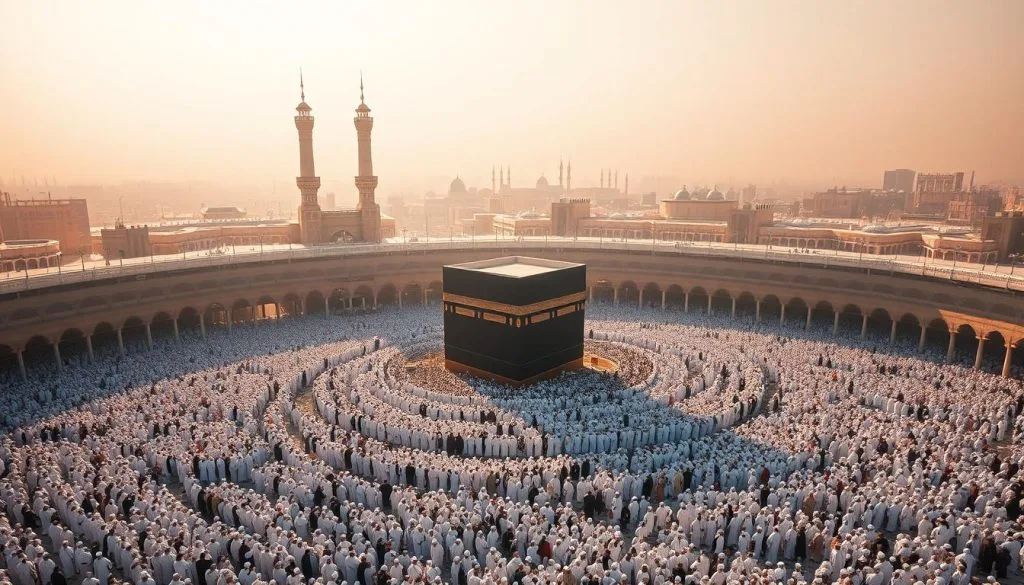
Pilgrims enter a state of ihram, circle the Kaaba (tawaf), walk between the hills of Safa and Marwa (sa’i) as Hajar once did, and stand in prayer on the plain of Arafah. Hajj is followed by Eid al-Adha, celebrated by Muslims worldwide. See the fifth pillar of Islam.
How the Five Pillars of Islam Work Together
The Five Pillars of Islam are connected. The Shahada gives meaning to the others. Prayer keeps faith present every day. Zakah and fasting train generosity, self-control and empathy for people in need. Hajj gathers Muslims from every background in the same simple clothes, a powerful picture of equality before Allah.
Together they shape a rhythm: daily (prayer), yearly (zakah and Ramadan) and once in a lifetime (Hajj).
Frequently Asked Questions
What are the Five Pillars of Islam in order?
They are usually listed as Shahada, Salah, Zakah, Sawm and Hajj. In Sahih al-Bukhari 8, Hajj is mentioned before fasting; the order of listing does not change their importance.
Are the Five Pillars of Islam the same for all Muslims?
Yes. All Muslims share the Five Pillars of Islam, although scholars differ on some practical details, such as how zakah is calculated on particular assets.
Can non-Muslims learn about the Five Pillars?
Of course. Understanding the Five Pillars of Islam is one of the best ways to understand how Muslims live their faith day to day.
Keep the Shahada in View
The first of the Five Pillars of Islam, the Shahada, is also one of the most meaningful phrases to display at home.
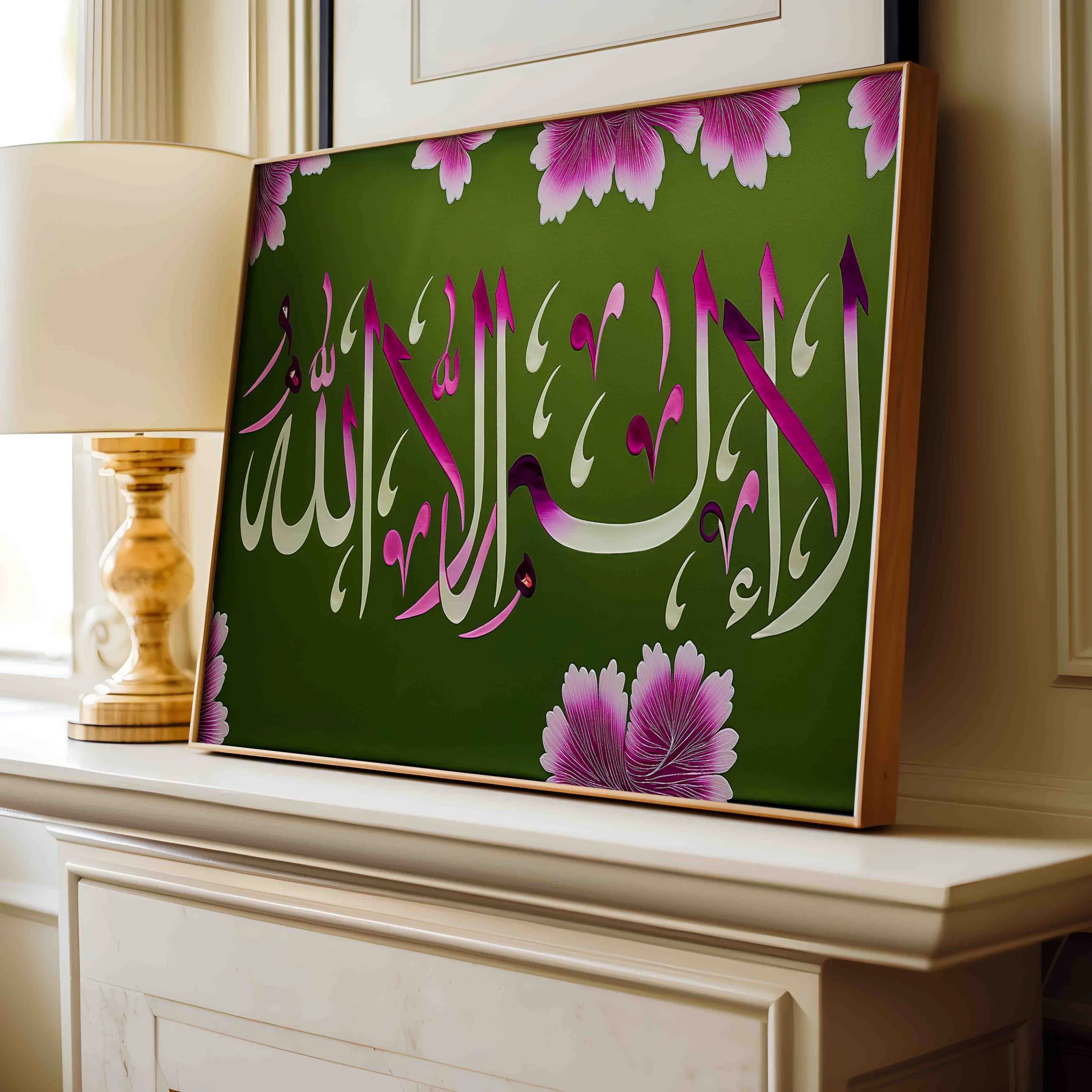
Explore Ashadu An La ilaha illallah, an digital download supplied as a high-resolution JPEG file for printing at home or at a local print shop; no physical item is shipped. Custom designs can be requested.