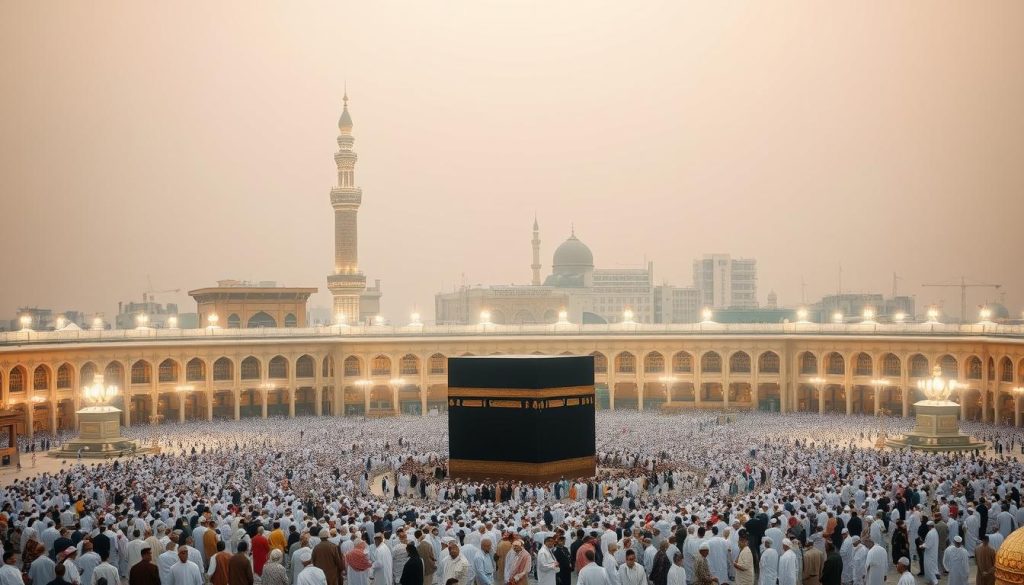
What is the fifth pillar of Islam? It is Hajj, the pilgrimage to Makkah. It is required once in a lifetime of every adult Muslim who is physically and financially able to make the journey. Each year, in the month of Dhul Hijjah, pilgrims from every part of the world gather in and around Makkah to perform the same rites.
“And [due] to Allāh from the people is a pilgrimage to the House – for whoever is able to find thereto a way.”
— Qur’an 3:97, Saheeh International (quran.com)
This guide explains the fifth pillar of Islam: its roots, who must perform it, its main rites and how it differs from Umrah.
The Roots of Hajj
Hajj is closely linked to Prophet Ibrahim (Abraham), his wife Hajar and their son Ismail. The Qur’an describes the call to pilgrimage:
“And proclaim to the people the ḥajj [pilgrimage]; they will come to you on foot and on every lean camel; they will come from every distant pass -”
— Qur’an 22:27, Saheeh International (quran.com)
Several rites remember this family. The walk between Safa and Marwa recalls Hajar’s search for water for Ismail, which ended with the spring of Zamzam (Sahih al-Bukhari 3364). The Prophet Muhammad ﷺ performed Hajj in his final year and taught Muslims its rites.
Who Must Perform Hajj
The fifth pillar of Islam is obligatory once in a lifetime for an adult Muslim who has istita’ah, meaning the ability to go. Scholars explain this as including:
- good enough health to travel and perform the rites;
- money for the journey beyond essential needs and the needs of dependants left at home;
- a reasonably safe route.
For women, scholars also discuss travelling arrangements. Anyone unsure about their situation should ask a qualified scholar.
The Main Rites of the Fifth Pillar of Islam
- Ihram: pilgrims enter a sacred state with the intention of Hajj. Men wear two simple white sheets; women wear modest everyday clothing. Certain actions become forbidden until ihram ends.
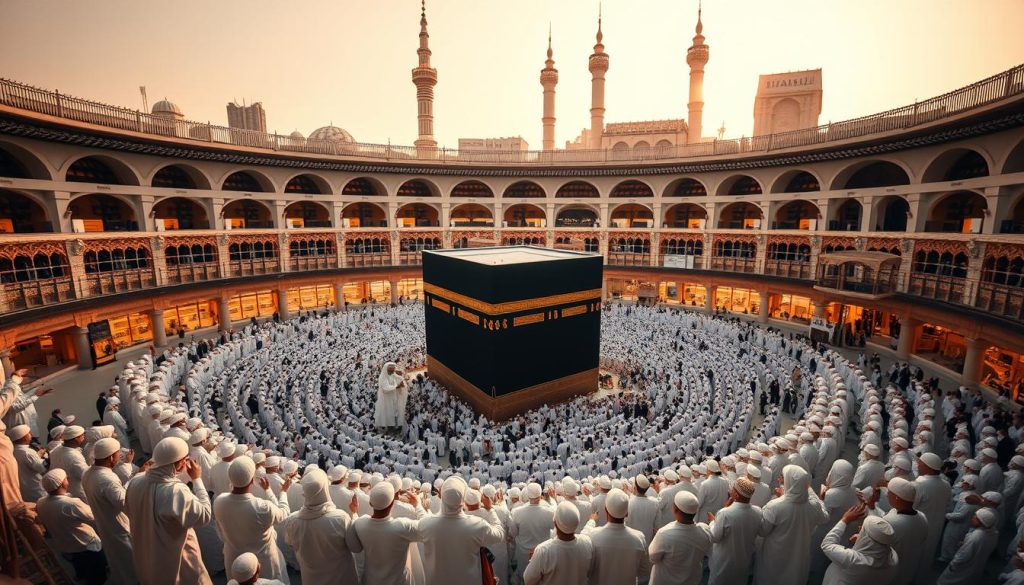
- Tawaf: circling the Kaaba seven times.
- Sa’i: walking seven times between the hills of Safa and Marwa.
- Mina: spending the 8th of Dhul Hijjah in the tent city of Mina.
- Arafah: on the 9th, standing in prayer and supplication on the plain of Arafah, the heart of Hajj.
- Muzdalifah: spending the night under the open sky and collecting pebbles.
- Jamarat, sacrifice and hair: from the 10th, pilgrims throw pebbles at stone pillars, offer an animal sacrifice, and shave or shorten their hair.
- Tawaf al-Ifadah and the days in Mina: a further tawaf in Makkah, then more stoning in Mina, ending with a farewell tawaf before leaving.
Exact sequences and details vary slightly between schools of thought, and pilgrims usually travel with a group and a knowledgeable guide.
The Reward of Hajj
The Prophet ﷺ described the reward of a sincere Hajj:
“Whoever performs Hajj for Allah’s pleasure and does not have sexual relations with his wife, and does not do evil or sins then he will return (after Hajj free from all sins) as if he were born anew.”
He also said: “the reward of Hajj Mabrur (the one accepted by Allah) is nothing except Paradise” (Sahih al-Bukhari 1773).
Equality Before Allah
Hajj is a powerful picture of equality. Millions of people of every nationality, background and income wear similar simple clothes and perform the same rites side by side, a living reminder of the Qur’anic teaching that “the most noble of you in the sight of Allāh is the most righteous of you” (Qur’an 49:13).
Hajj and Umrah: What Is the Difference?
| Hajj | Umrah | |
|---|---|---|
| Status | The fifth pillar of Islam, obligatory once for those able | Highly recommended; scholars differ on whether it is obligatory |
| Timing | Set days in Dhul Hijjah | Any time of year |
| Main rites | Ihram, tawaf, sa’i, Arafah, Muzdalifah, Mina, Jamarat, sacrifice | Ihram, tawaf, sa’i, cutting the hair |
Eid al-Adha
Hajj coincides with Eid al-Adha on the 10th of Dhul Hijjah. Muslims around the world celebrate with the Eid prayer, and those who can afford it offer a sacrifice, sharing the meat with family, neighbours and people in need.
See how Hajj completes the five in our guide to the Five Pillars of Islam, or read about the fourth pillar of Islam.
Frequently Asked Questions
What is the fifth pillar of Islam?
The fifth pillar of Islam is Hajj, the pilgrimage to Makkah.
How often must Muslims perform Hajj?
Once in a lifetime, for those who are able. Many choose to perform it more than once.
When does Hajj take place?
In the Islamic month of Dhul Hijjah, mainly from the 8th to the 13th. Because the Islamic calendar is lunar, the Gregorian dates move earlier each year.
A Reminder of the Journey
Pilgrims repeat “Allahu Akbar” (“Allah is the Greatest”) many times during the days of Hajj. It makes a meaningful reminder at home of the fifth pillar of Islam.

Explore Allahu Akbar Contemporary Calligraphy, an instant digital download supplied as a high-resolution JPEG file for printing at home or at a local print shop; no physical item is shipped. Custom designs can be requested.